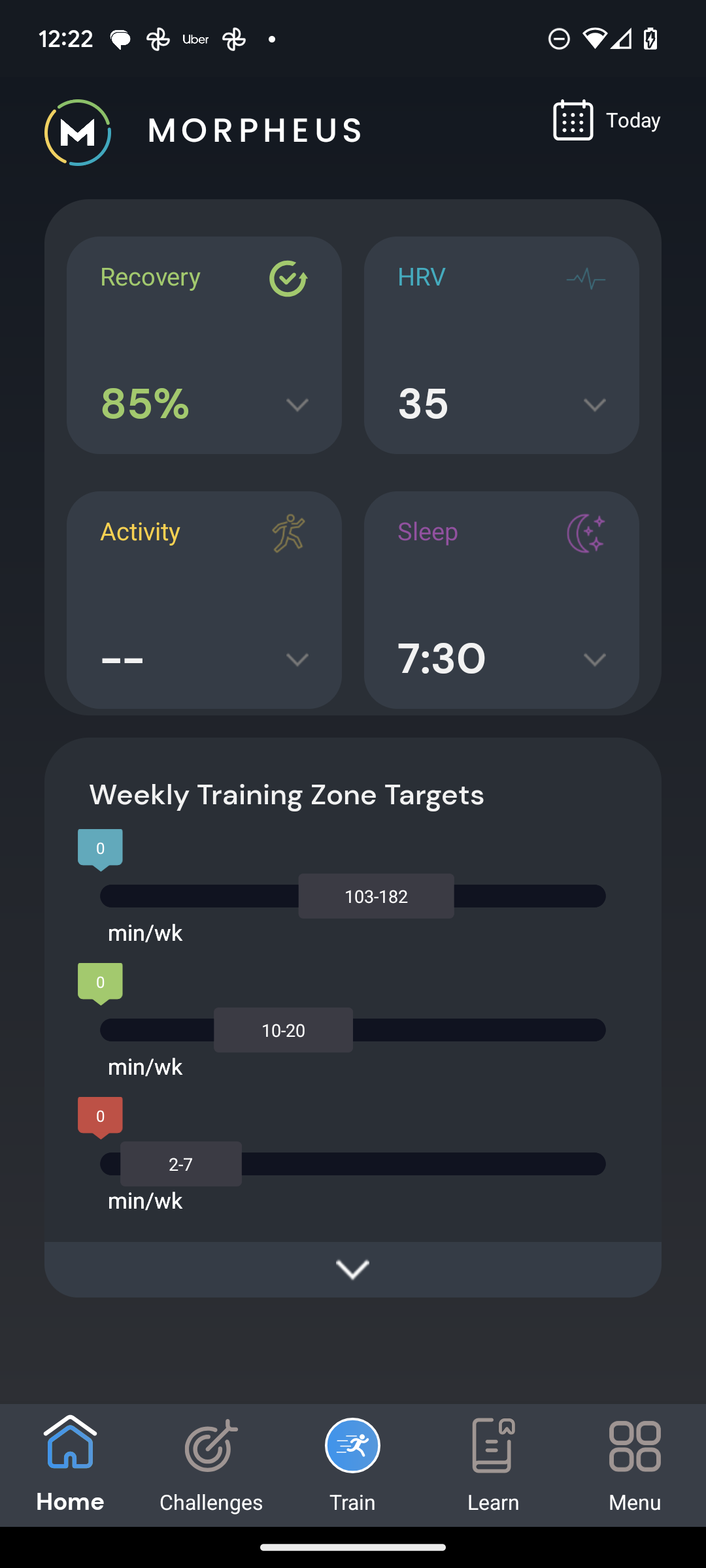
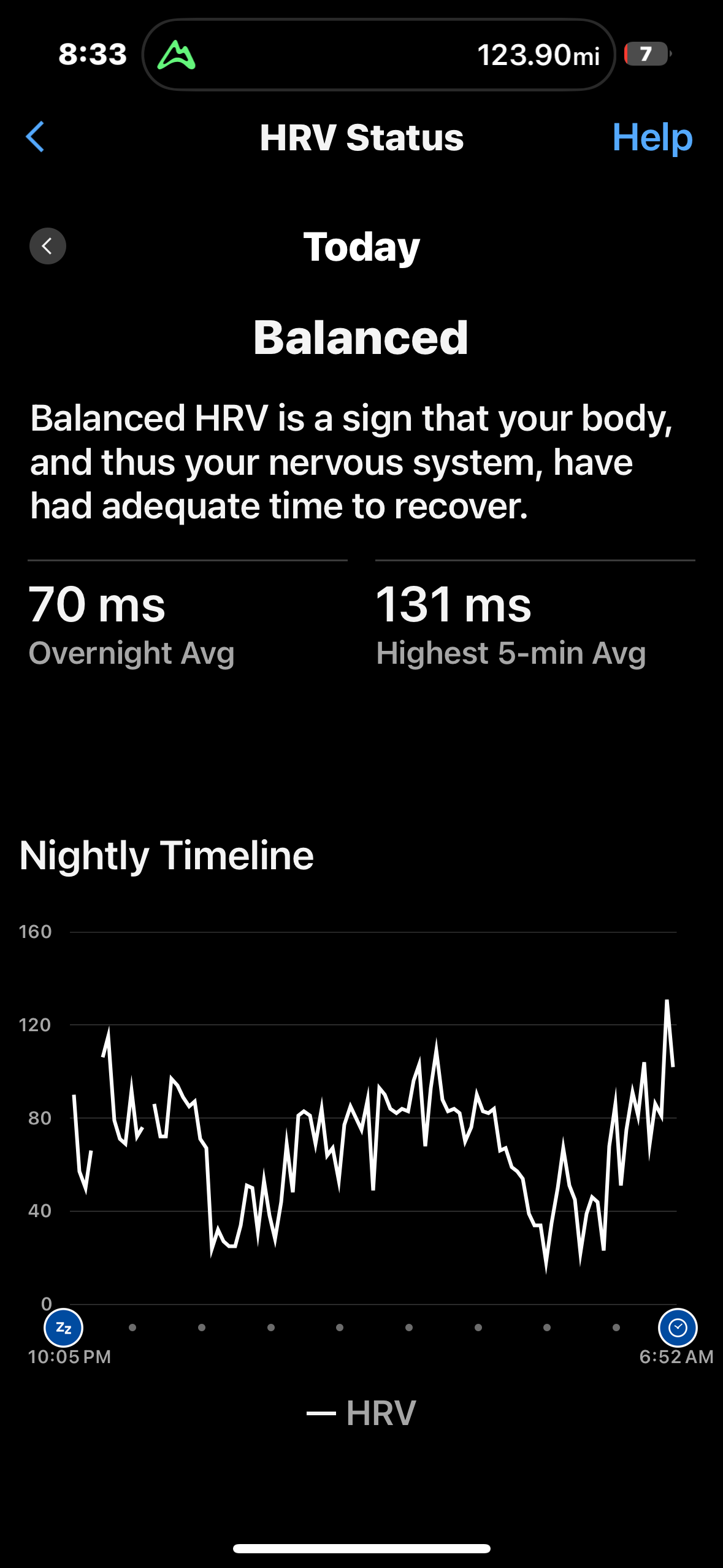
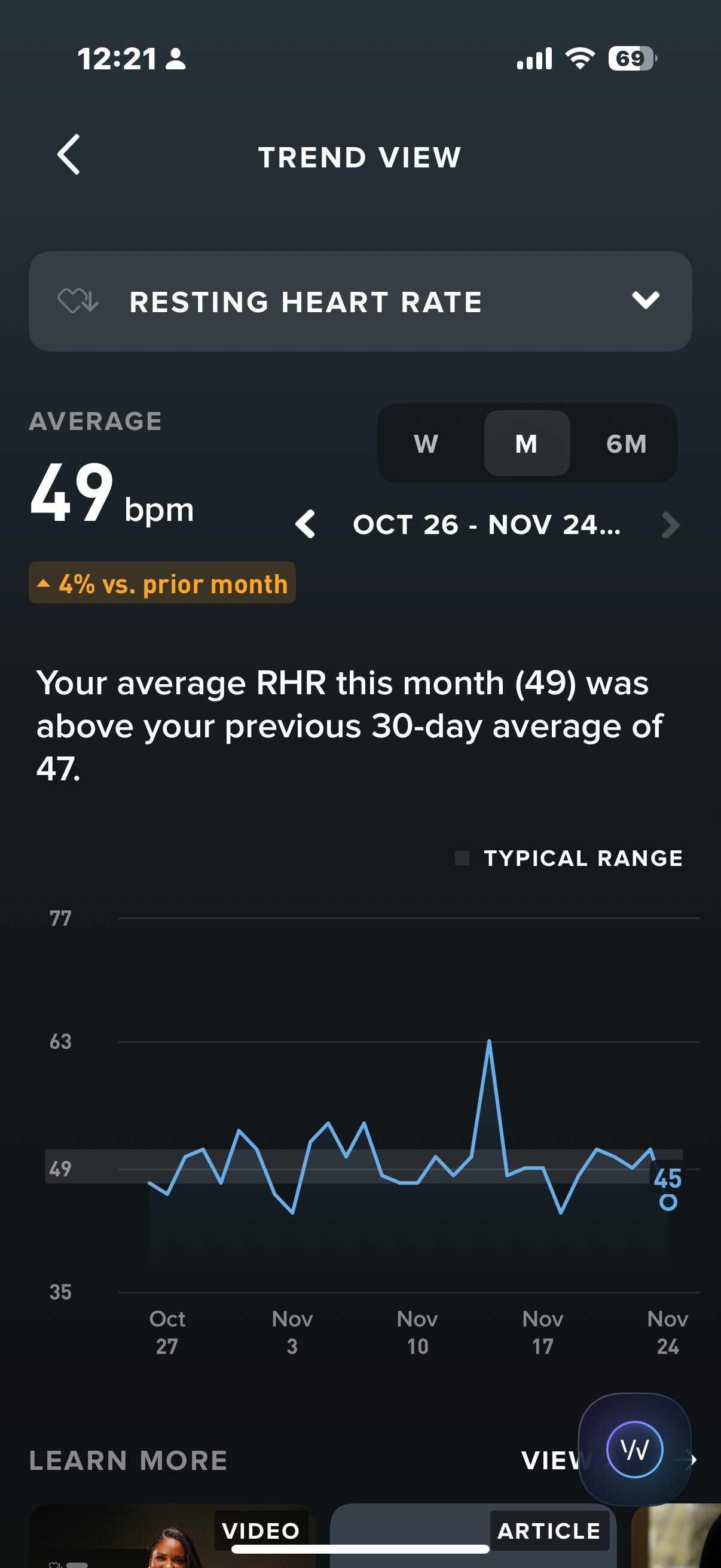
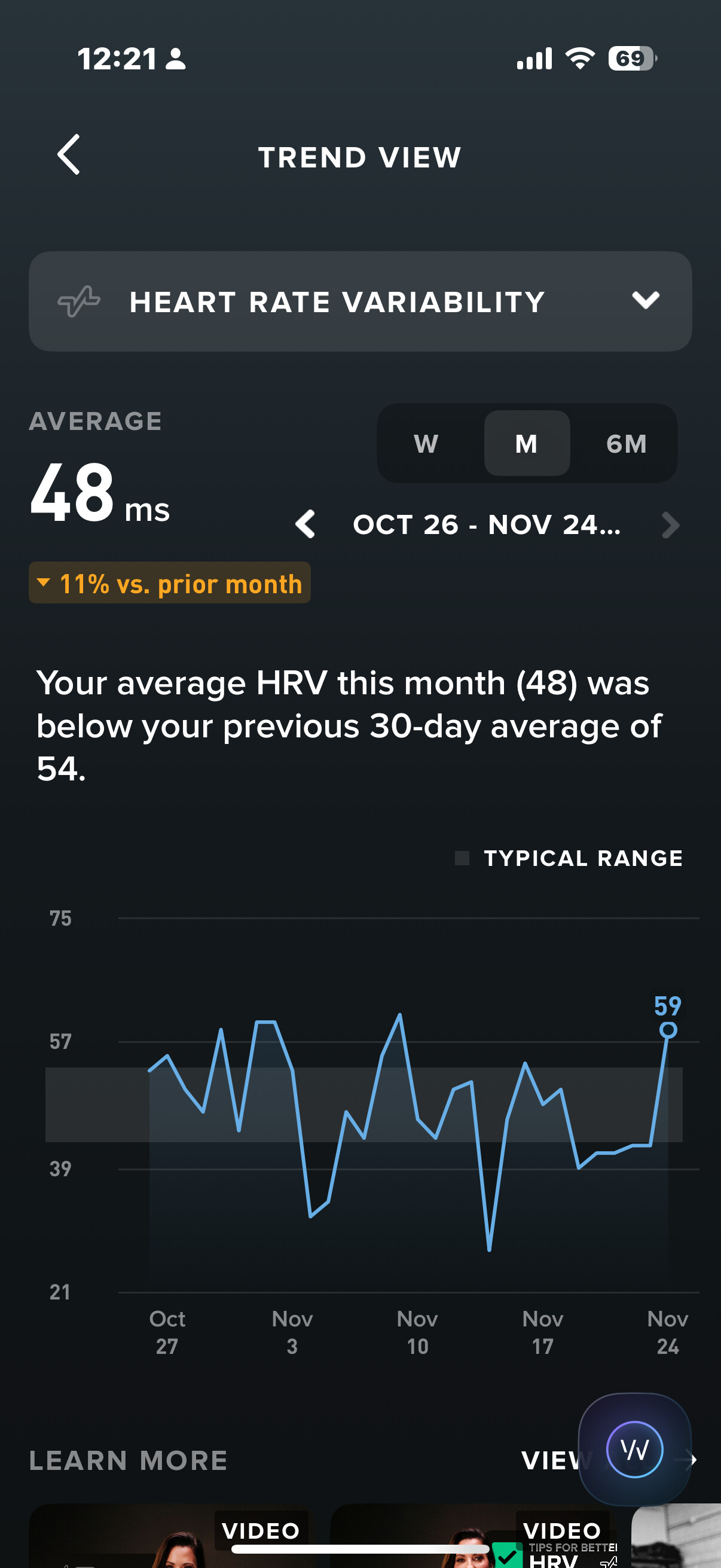
I can’t find any specific studies that show that taking rapamycin reduces HRV.
There are so many variables affecting HRV: age, time of day, activity, etc.
Single HRV measurements, even if taken at the same time daily, have little meaning.
24-hour monitoring is required, and even then more than one day is required to really establish a baseline. Single one-minute measurements from smart watches, phones, etc. are meaningless.
Practical rule of thumb
"For most people using a wearable:
If your nightly RMSSD is stable or slowly rising over months and sits above the median for your age band, that’s a “good” sign.
A sustained drop (e.g., 20–30% below your usual baseline for weeks) – especially if combined with worse sleep, fatigue, or other biomarkers – is a flag to look for stressors (illness, overtraining, meds, etc.) and possibly discuss with your clinician.
“Circadian rhythms, core body temperature, metabolism, the sleep cycle, and the renin–angiotensin system contribute to 24 h HRV recordings, which represent the “gold standard” for clinical HRV assessment.”
“Short-term / nocturnal HRV (RMSSD) – “good” ranges by age”
Most consumer wearables (Oura, WHOOP, Elite HRV, Kubios, etc.) use RMSSD, often averaged across the night.
Key points from large datasets and reviews:Global Heart+3Kubios+3BodySpec+3
-
In healthy adults, RMSSD typically sits somewhere between ~20–70 ms, but the spread is wide.
-
HRV declines with age; a “good” value for a 25-year-old is not the same as for a 75-year-old.
-
In large modern datasets (tens of thousands of users), median nightly RMSSD for men looks roughly like this:
Median nightly RMSSD by age (men, approximate)
- 18–24: mid-40s ms
25–34: low-40s ms
35–44: mid-30s ms
45–54: high-20s ms
55–64: mid-20s ms
65–74: low-20s ms
75+: ~20 ms
(10th percentile for each band is around low-20s in the young and low-teens in older age; 90th percentile can reach ~80+ ms in the young and ~40 ms in the very old.)BodySpec+1
Another synthesis aimed at health apps says: for healthy adults, “normal” RMSSD is often ~27–72 ms, with elite athletes often having higher values."
“This article briefly reviews current perspectives on the mechanisms that generate 24 h, short-term (~5 min), and ultra-short-term (<5 min) HRV.”