Notícias

RapAdmin

What they did

  • A small, open-label pilot trial with 6 healthy older men, aged 70–76, with no known heart disease.
  • Intervention: 1 mg/day oral rapamycin (sirolimus) for 8 weeks.
  • Outcomes measured before and after:

- Cardiac function via cardiac MRI (CMR)

  • Endothelial / vascular function via laser-Doppler flowmetry (cutaneously, using a thermal hyperemic test) at baseline, 4 weeks, and 8 weeks.
  • Also measured safety lab values, physical performance (grip strength, timed walk), and inflammatory mediators.

Key findings

  • Safety and tolerability:
  • The treatment was generally well-tolerated, with no significant adverse events attributed to rapamycin.
  • Lab changes: decreases in white blood cell count, mean corpuscular volume (MCV), mean corpuscular hemoglobin (MCH); increases in HbA1c and LDL. But all labs remained within normal ranges and were not deemed clinically problematic.
  • Cardiac function:
  • Systolic function: mostly little change; one parameter (end-systolic volume, ESV) increased significantly. Stroke volume showed a trend toward increase. Ejection fraction, cardiac output, etc., did not change significantly.

  • Diastolic function: several metrics improved significantly:
    • Peak left ventricular filling rate (pLVFR) was higher post-treatment.
    • Maximum local blood acceleration across mitral valve improved.
    • Total transmitral forward blood volume increased.
    • End-diastolic volume (EDV) showed a strong trend toward improvement (just above statistical significance).

  • Endothelial / vascular function:
  • No change at 4 weeks. After 8 weeks, a significant increase in the local thermal hyperemic response in skin was observed, consistent with improved nitric oxide (NO)-mediated, endothelium-dependent vasodilation in the microvasculature.
  • Inflammatory markers:
  • They assayed for TGF-β, sICAM-1, RAGE, IL-6. Some trends: in 5/6 subjects, RAGE (which can act as a decoy/inhibitor in inflammation) increased; in 5/6, sICAM-1 decreased. But none of these changes were statistically significant given the small sample size.
  • Physical performance:
  • Right hand grip strength increased significantly by 8 weeks.
  • No change in the timed walk (40 ft) measure.

What it means / Implications

  • This is evidence that short-term, low-dose rapamycin may improve age-associated declines in cardiac diastolic function and endothelial function in older men who are otherwise relatively healthy.
  • Supports the idea (from geroscience) that inhibiting the mTOR pathway in later life has potential to ameliorate cardiovascular aging. Preclinical animal studies had shown similar effects.
  • These improvements occurred within a relatively short period (8 weeks) at a low drug dose.

Limitations

  • Very small sample size (n = 6).
  • No placebo / control group (open-label pre-post design). Possible placebo or other biases.
  • Only male subjects. Sex differences in rapamycin effects noted in animals; so generalization to women is uncertain.
  • Short duration; longer-term safety and clinical relevance of the changes not established.

Open access paper:

Alpha

Hmmm…? I typically avoid discussions of politics on forums. That said, some global politics warrant concern.

Pretty certain I don’t want these guys in power until they reach 150…

“The longer you live, the younger you become,” Putin said, according to a translator who picked up the unscripted moment for China’s state broadcaster.

REUTERSREUTERS logo

Sep 3, 2025, 10:29 PM EDT

BEIJING, Sept 3 (Reuters) — When Russian President Vladimir Putin walked shoulder to shoulder with Chinese President Xi Jinping on Wednesday, a hot mic caught them discussing organ transplants and the possibility that humans could live to 150 years old.

The moment came as Putin and Xi walked with North Korea’s Kim Jong Un at the head of a delegation of more than two dozen foreign leaders to view a military parade in Beijing marking the 80th anniversary of the end of World War Two.

The moment was carried on the livestream provided by state broadcaster CCTV to other media, including AP and Reuters. China’s radio and TV administration said CCTV’s coverage of the event was viewed 1.9 billion times online and by more than 400 million on TV.

As Putin and Xi walked toward the Tiananmen rostrum where they viewed the parade with Kim, Putin’s translator could be heard saying in Chinese: “Biotechnology is continuously developing.”

The translator added, after an inaudible passage: “Human organs can be continuously transplanted. The longer you live, the younger you become, and (you can) even achieve immortality.”

In response, Xi, who was off camera, can be heard responding in Chinese: “Some predict that in this century humans may live to 150 years old.”

Kim was smiling and looking in the direction of Putin and Xi, but it was not clear if the conversation was being translated for him. Putin cannot be heard speaking clearly in Russian in the CCTV clip.

Putin confirmed later that he and Xi had discussed the subject on Wednesday.

“I think when we went to the parade, the chairman talked about it,” Putin told reporters in Beijing when asked about the leaked conversation.

“Modern means of health improvement, medical means, even surgical ones related to organ replacement, they allow humanity to hope that active life will continue differently than it does today,” he said.

RapAdmin

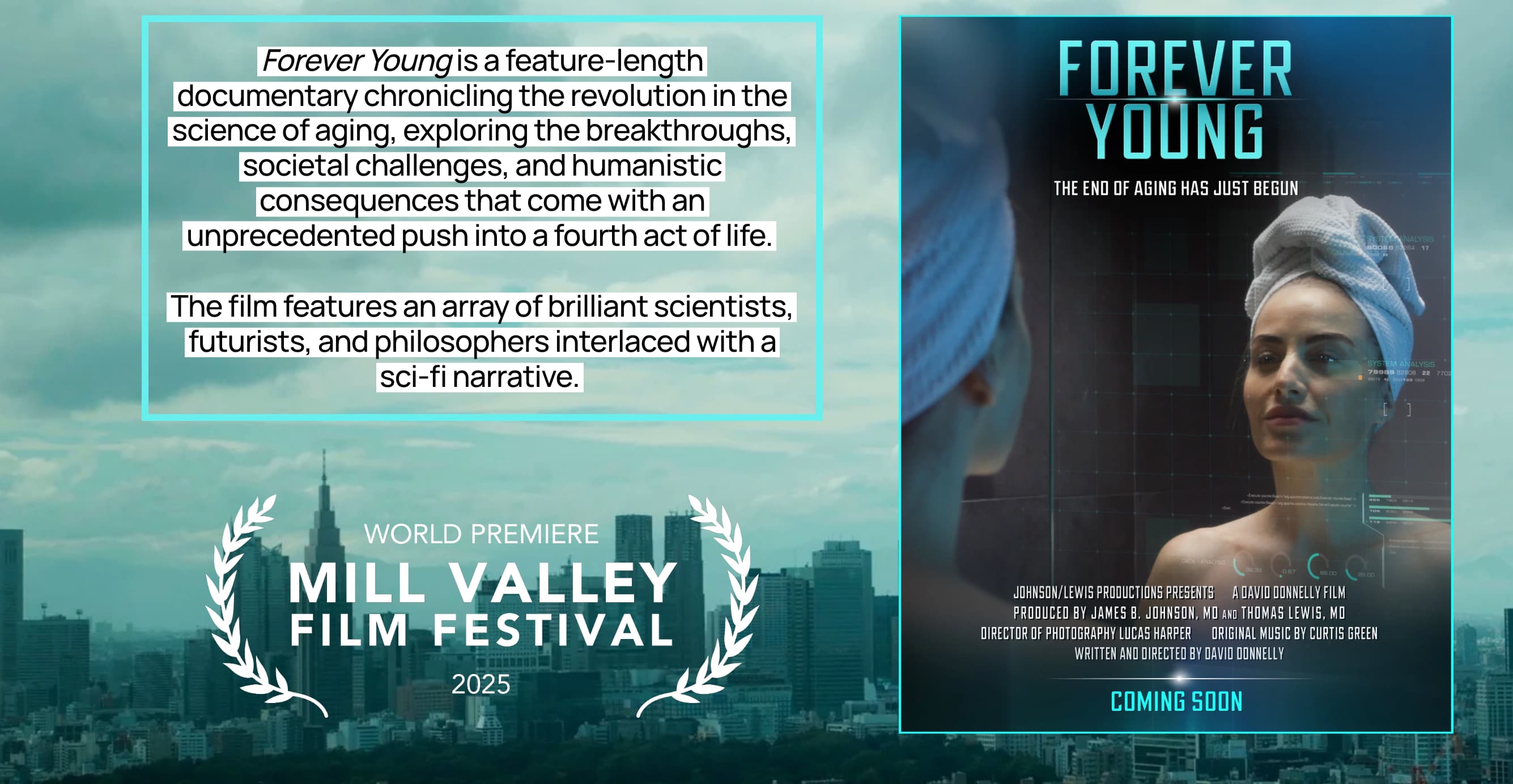
The End of Aging Has Just Begun. Forever Young is a feature-length documentary film premiering in October 2025.

This new longevity film being launched at the Mill Valley Film Festival (Oct. 2 to 12, 2025), and since its just North of San Francisco I will try to attend and provide a review.

Preview the film here at this link:

To attend, and see the film:

Mill Valley Film Festival: https://www.mvff.com

Film Website:

RapAdmin

A recent study evaluated the effects of a two week intervention using three known geroprotective drugs on middle aged house crickets. The researchers found that transient treatment with rapamycin significantly preserved olfactory memory, restored locomotor performance to juvenile levels in males, and extended overall survival. Phenylbutyrate improved endurance, while acarbose demonstrated detrimental effects on female survival, highlighting the complexity of sex specific responses in longevity interventions.

The core challenge in longevity pharmacology is finding scalable, high throughput models that accurately mimic mammalian aging phenotypes without the lengthy lifespans of murine models. Researchers at the University of Washington School of Medicine evaluated the house cricket as a potential intermediate model for geroscience. They administered rapamycin, acarbose, and phenylbutyrate to 8 week old crickets for 14 days and then subjected them to a battery of behavioral and survival tests at 10 weeks of age.

The primary finding is that short term, late life pharmacological interventions can durably alter the aging trajectory. Rapamycin emerged as the most consistently effective compound. It preserved olfactory guided decision making across both sexes. More notably, it restored male locomotor metrics, including average speed and total distance traveled, to levels statistically indistinguishable from juvenile crickets. Rapamycin also induced a distinct shift in exploratory behavior, increasing central zone engagement and freezing responses, which suggests a modulation of risk assessment or sensory processing pathways.

Acarbose and phenylbutyrate yielded mixed results. Phenylbutyrate enhanced treadmill running endurance, aligning with its known role in promoting proteostasis and reducing neuroinflammation. However, acarbose presented a severe sex specific penalty. While it modestly improved male jumping distance, it caused a substantial reduction in post treatment survival for females.

This study validates the house cricket as a viable preclinical platform that bridges the evolutionary gap between simple invertebrates like worms and complex mammals. The data strongly suggests that continuous, lifelong dosing of gerotherapeutics is not strictly necessary to achieve significant healthspan extension. A transient pulse of mTOR inhibition during middle age appears sufficient to lock in physiological benefits that persist long after the drug is withdrawn.

Insights

For individuals interested in longevity protocols, the most interesting potential takeaway is the efficacy of short term, pulsed dosing strategies. The data indicates that continuous exposure to geroprotectants may not required to reap some systemic benefits, though this is still to be tested in humans. In this study, a brief two week exposure to rapamycin resulted in a hazard ratio of 0.40 in males and 0.48 in females. This translates to a 60 percent reduction in mortality risk for males and a 52 percent reduction for females over the observation period.

Furthermore, the effect sizes for cognitive and physical preservation were massive. For olfactory memory preservation, rapamycin produced a standardized effect size (Cohen’s d) of 1.38 to 1.61. In statistical terms, an effect size over 0.8 is considered large, meaning the treated crickets performed over 1.3 standard deviations better than the control group. For treadmill endurance, the effect size was 1.22 to 1.73. These magnitude metrics demonstrate that intermittent dosing protocols can yield profound, durable improvements in both physical endurance and cognitive function without the risks associated with chronic immunosuppression.

This study demonstrates yet another model organism successfully treated with rapamycin results in positive longevity results (in addition to nematodes, flies, mice, rats and marmoset monkeys; which typically see lifespan improvement of 15% to 30%). No other drug or compound has ever consistently increased healthy lifespan in such a broad range of species, repeatedly, by so many different labs.

Full Pre-print paper: The gerotherapeutic drugs rapamycin, acarbose, and phenylbutyrate extend lifespan and enhance healthy aging in house crickets | bioRxiv
Posted: August 28, 2025.
Institution: University of Washington School of Medicine.
Country: USA.

RapAdmin

Oxford and Nottingham researchers show that low-dose rapamycin protects aging human immune cells by directly reducing DNA damage itself, a mechanism separate from its known effects on metabolism, autophagy, or cell division, and confirm the effect in a small human trial.

For fifteen years, rapamycin has been the closest thing longevity science has to a sure bet: it extends lifespan in every species tested, from yeast to mice, to monkeys. But nobody could fully explain why. The textbook story was indirect: rapamycin dials down the mTOR growth engine, slowing protein manufacturing, quieting cell division, and switching on autophagy, the cell’s recycling system. This new work argues those explanations miss the headline act.

The team, led by Loren Kell with senior scientists Ghada Alsaleh, Lynne Cox, and Katja Simon, went hunting for the source of rapamycin’s power in the immune system, the tissue whose decline arguably drags the rest of the body into old age with it. They deliberately blasted human T cells with zeocin, a chemical that shreds DNA into double-strand breaks, then watched what rapamycin did.

The result was striking. Rapamycin didn’t just clean up damaged cells after the fact; it reduced the actual burden of DNA lesions, measured by the “comet assay,” which physically visualizes broken DNA trailing out of a cell like a tail. Cells given rapamycin carried far less damage, and crucially, they survived. In untreated cultures, the genotoxic hit killed roughly 80 percent of T cells within 24 hours. With rapamycin, around 60 percent were still alive, a threefold survival advantage.

The protection was oddly forgiving of timing. Whether rapamycin was added before, during, or after the DNA-damaging insult, the cells fared better. And the team methodically ruled out the usual suspects: the benefit did not depend on slowing protein synthesis, halting the cell cycle, or boosting autophagy. Something more direct was happening at the level of the genome.

They then profiled immune cells from older people using high-dimensional cytometry, finding that aged immune subsets are enriched for markers of DNA damage, senescence, and mTOR hyperactivity, especially the DNA-damage protein p21. Finally, in a small placebo-controlled human trial, four months of 1 mg/day rapamycin significantly lowered p21 across most immune subsets versus placebo.

The big idea: rapamycin may be a genuine “genoprotector.” If it can shield DNA in a 70-year-old’s immune cells, its potential stretches beyond healthy aging toward cancer radiotherapy recovery and even radiation exposure during spaceflight.

Actionable Insights

The practical signal here is narrow but real, and it directly concerns anyone already microdosing rapamycin for longevity.

Dose and exposure. The human arm used 1 mg/day, producing a mean steady-state blood trough of roughly 3.24 nM, within the same order of magnitude as the 10 nM used in cell culture. Critically, at this dose there was no leukocyte suppression, addressing the perennial fear that rapamycin blunts immunity. This supports the “low-dose, non-immunosuppressive” microdosing philosophy rather than weekly high-dose pulsing for this particular endpoint.

Effect magnitude. The most quantifiable benefit is cellular survival under genotoxic stress: death fell from ~80% to ~40% at 24 hours, an absolute risk reduction of ~40 percentage points and a relative risk of death of ~0.5 (a 50% reduction). Framed as survival, that is a 3-fold improvement. The DNA-lesion reduction (comet Olive moment) was highly significant (p<0.0001) and appeared within 4 hours, even at the 0-hour timepoint.

Take-home. The in-human evidence is limited to a biomarker (p21 reduction), not a clinical outcome. For existing rapamycin users, it strengthens the mechanistic rationale that low-dose rapamycin plausibly defends genome integrity in the immune compartment. It also raises a genuinely novel, testable idea: short-course rapamycin around radiation exposure (medical or occupational).

Artigo completo: https://www.biorxiv.org/content/10.1101/2025.08.15.670559v1

Context / Source

  • Full title: “Rapamycin Exerts Its Geroprotective Effects in the Ageing Human Immune System by Enhancing Resilience Against DNA Damage.”
  • Access: Open access (CC-BY 4.0), both as bioRxiv preprint and published article.
  • Institutions: University of Oxford (Biochemistry; NDORMS; Kennedy Institute) and University of Nottingham (COMAP/MRC-Versus Arthritis Centre), United Kingdom; with contributions from Ritsumeikan University (Japan) and the Max Delbrück Center (Germany).
  • Publication status: Originally posted to bioRxiv (August 2025); received 25 September 2025, revised 19 December 2025, accepted 24 December 2025, now published in Aging Cell (2026, 25(2):e70364).

Summary

  • Rapamycin, an mTOR inhibitor, is the most consistent lifespan-extending drugs in animals.
  • At low (non-immunosuppressive) doses, rapamycin reduces cellular senescence but the underlying mechanism in humans was unclear.
  • DNA damage is a major driver of immune ageing (immunosenescence), which accelerates whole-body ageing.

Main Findings

  1. Rapamycin protects immune cells from DNA damage

    • In human T cells exposed to genotoxic stress (zeocin, hydrogen peroxide), rapamycin reduced DNA damage markers (γH2AX, p53, p21) and improved cell survival.
    • This protection was not due to slowing protein synthesis, halting the cell cycle, or increasing autophagy.
    • Instead, rapamycin directly lowered the DNA lesion burden—showing a “genoprotective” effect.
  2. Mechanism: direct genoprotection

    • Rapamycin reduced DNA breaks (comet assay) and improved T cell viability after DNA damage.
    • This effect was independent of classical pathways (autophagy, cell cycle arrest).
    • Suggests rapamycin enhances genome stability itself.
  3. Immune ageing is linked to DNA damage + mTOR hyperactivation

    • Blood samples from older adults showed immune cell subsets (e.g., TEMRA T cells, B cells, monocytes) enriched for DNA damage and senescence markers (p21, p53, p16, γH2AX).
    • These age-related cells also showed overactive mTOR signalling.
  4. In vivo human trial (pilot study, NCT05414292)

    • Older men (50–90 years) received 1 mg/day rapamycin or placebo for 4 months.
    • Rapamycin significantly reduced p21 (DNA damage-induced senescence marker) in immune cells compared to placebo.
    • Rapamycin also reduced immune exhaustion markers (KLRG1, LAG3, NKG2A) without immunosuppression.
    • Blood levels of rapamycin were low but within the protective range.

Implications

  • Rapamycin acts as a genoprotector, a newly recognized mechanism that may explain its strong anti-ageing effects.

  • Potential applications:

    • Healthy ageing: slowing immunosenescence.
    • Medicine: protecting healthy cells from DNA damage during radiation/chemotherapy.
    • Space travel: mitigating cosmic radiation damage.
    • Pandemic preparedness: boosting immune resilience in older adults (e.g., against viruses that induce DNA damage).

:white_check_mark: Bottom line:
The study demonstrates for the first time that low-dose rapamycin directly protects human immune cells from DNA damage and reduces senescence in vivo, positioning it as a potential therapy to slow immune ageing and enhance resilience in contexts of DNA damage.


RapAdmin

Study finds rapamycin shows greatest longevity effect in 20-year NIH Interventions Testing Program

The first comprehensive review of two decades of research from the National Institute on Aging’s Interventions Testing Program highlights 13 interventions that show promise in preclinical studies for significantly extending lifespan and improving healthspan.

Aging is the major risk factor for most chronic diseases including cancer, cardiovascular disease, neurodegenerative disease and metabolic disorders. Extending healthspan — how long we live without serious disabilities or disease — is a central goal of modern aging research.

Breakthrough of rapamycin

A landmark publication in the July 2025 issue of the Journal of Gerontology: Biological Science, is the first comprehensive review of the ITP’s discoveries using genetically heterogeneous mice. The paper’s first author, Nisi Jiang, PhD, who recently graduated from Nelson’s lab, conducted much of the analysis and proposed the idea to compile the landmark review.

The review found that the most effective compound tested through the ITP so far is rapamycin. Rapamycin was chosen because it inhibits the mammalian target of rapamycin (mTOR), a key protein that integrates signals from nutrients and hormones to regulate whether cells prioritize growth or shift toward repair and maintenance. Overactivation of mTOR has been linked to aging and age-related diseases.

“Scientists are beginning to understand that too much emphasis on growth comes at the expense of repair and maintenance,” Nelson said.

Rapamycin was first discovered in the 1960s, after it was isolated from bacteria found in the soil at Easter Island. It was discovered to suppress the mTOR pathway, thereby shunting energy from growth to maintenance. Rapamycin was first highlighted as a potential longevity drug by the Interventions Testing Program. The compound extended the lifespan of animal models by up to 28%, even when delivered in middle age or later in life. Ideally, drugs that extend lifespan would be effective late in life, not something you have to take your entire life,” Nelson said.

Looking ahead

All the ITP’s studies are published, and the data are freely available, hopefully encouraging further investigation and validation of compounds by the broader scientific community.

Nelson noted a surge in interest surrounding longevity and aging research in recent years. In the past three years, the ITP went from an average of four annual proposals to more than 28. Nelson said he’s also seen a significant uptick in PhD candidates entering the field of biology of aging research.

To identify interventions that extend lifespan and delay aging, the National Institute on Aging launched the Interventions Testing Program (ITP) in 2004. This multi-site effort uses genetically heterogeneous UM-HET3 mice to evaluate the effects of candidate compounds. Over the past two decades, the ITP has tested 54 agents in more than 30, 000 mice. This is the first comprehensive review of the program’s results, with particular emphasis on a striking pattern of sex-specific responses. By presenting the full scope of the findings, readers can better understand the overall impact of the program and easily access detailed information on specific drugs of interest. Notably, most compounds that extended lifespan were effective primarily or exclusively in male mice. Dosage and age of treatment onset influenced efficacy and were also sexually dimorphic. These sex differences suggest that mechanisms of aging are sexually dimorphic and highlight the importance of recognizing biological sex as a modifier of treatment efficacy. Investigating the basis for these differences should enable more targeted and effective geroprotective strategies for both sexes.

Read the full open access paper:

Sex as a major determinant of pro-longevity drug efficacy: a review of two decades of the NIA Interventions Testing Program

https://academic.oup.com/biomedgerontology/article/80/8/glaf138/8213622

RapAdmin

A new paper from Dudley Lamming’s group: (and I bet Brad Stanfield’s research in humans shows the same)… its all good news.

An increasing number of physically active adults are taking the mTOR inhibitor rapamycin off label with the goal of extending healthspan. However, frequent rapamycin dosing disrupts metabolic health during sedentary conditions and abates the anabolic response to exercise. Intermittent once-weekly rapamycin dosing minimizes many negative metabolic side effects of frequent rapamycin in sedentary mice. However, it remains unknown how different rapamycin dosing schedules impact metabolic, physical, and skeletal muscle adaptations to voluntary exercise training. Therefore, we tested the hypothesis that intermittent rapamycin (2 mg/kg; 1×/week) would avoid detrimental effects on adaptations to 8 weeks of progressive weighted wheel running (PoWeR) in adult female mice (5-month-old) by evading the sustained inhibitory effects on mTOR signaling by more frequent dosing schedules (2 mg/kg; 3×/week). PoWeR improved maximal exercise capacity, absolute grip strength, and myofiber hypertrophy with no differences between vehicle or rapamycin-treated mice despite greater voluntary running volume with intermittent rapamycin treatment. Conversely, frequent and intermittent rapamycin-treated mice had impaired glucose tolerance and insulin sensitivity compared to vehicle-treated mice after PoWeR; however, intermittent rapamycin reduced the impact on glucose intolerance versus frequent rapamycin. Collectively, these data in adult female mice suggest that (1) rapamycin is largely compatible with the physical and skeletal muscle benefits of PoWeR and (2) the detrimental effects of rapamycin on glucose metabolism in the context of voluntary exercise may be reduced by intermittent dosing.

Open Access Paper

https://onlinelibrary.wiley.com/doi/10.1111/acel.70183

RapAdmin

Key findings:

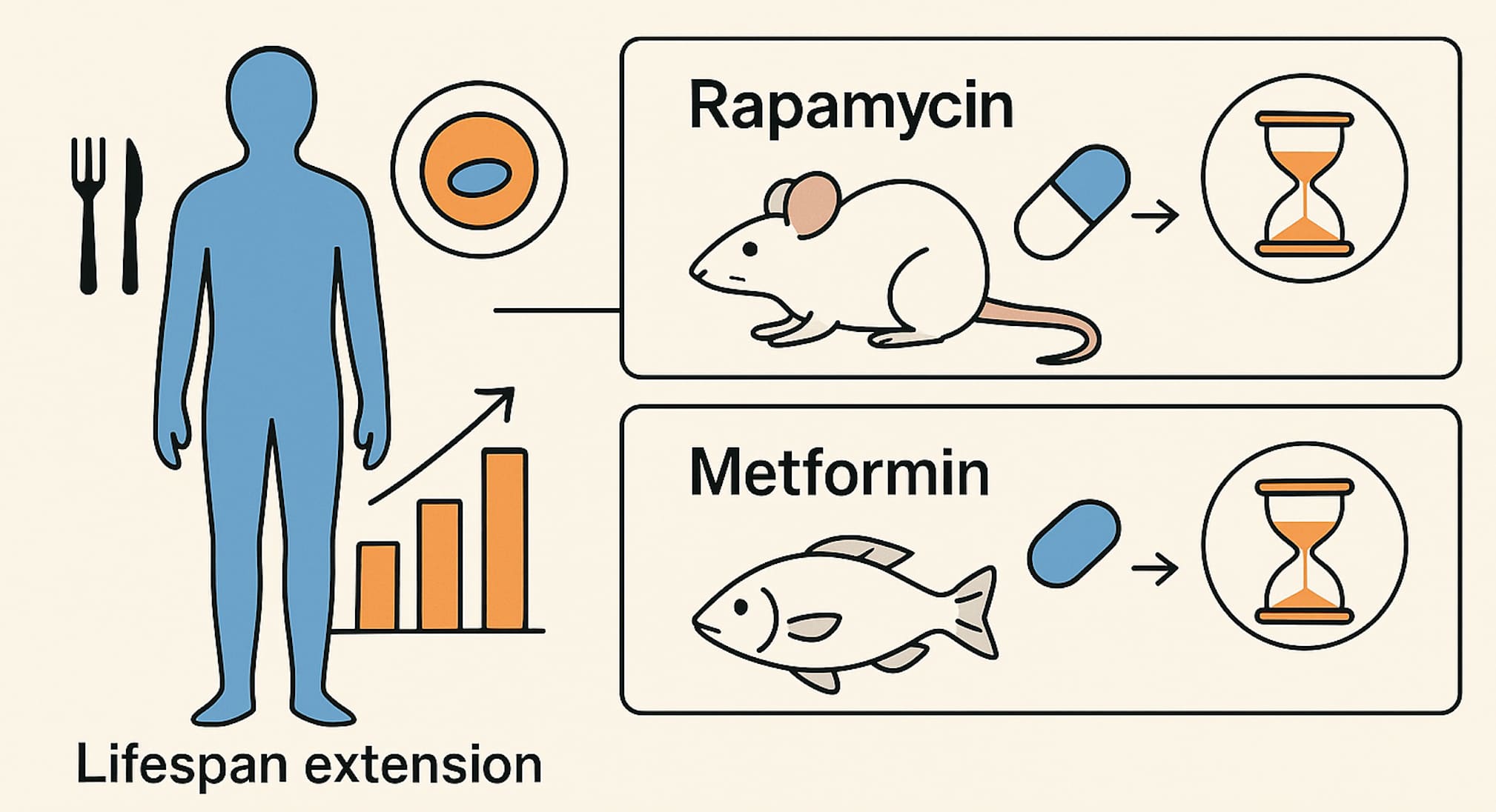
  • Dietary restriction - from intermittent fasting to cutting calories - consistently extended lifespan across all vertebrate species analysed in this study.
  • Rapamycin increased lifespan to the same extent as dietary restriction.
  • Metformin showed no clear longevity benefit although it is widely used for type 2 diabetes.
  • Lifespan gains were the same for males and females, and did not depend on the type of diet restriction.

The anti-aging drug Rapamycin (sirolimus) has the same life-extending effect as eating less, according to new research from the University of East Anglia and University of Glasgow.

Dietary restriction has long been considered one of the most reliable methods for increasing lifespan across species.

But if fasting for hours sounds unpleasant, science may suggest another route to achieving a longer and healthier life.

A new study published today reveals compelling evidence that Rapamycin, a compound originally developed as an immunosuppressant, offers comparable life-extending benefits in eight species of vertebrates, not including humans. [Note: this study did not include the most recent, successful marmoset study that has yet to be published: Breaking: 15% Healthy Lifespan improvement via Rapamycin seen in Marmosets ]

Co-lead researcher Dr Zahida Sultanova, from UEA’s School of Biological Sciences, said: “Dietary restriction - for example through intermittent fasting or reduced calorie intake - has been the gold standard for living longer. But it’s difficult for most of us to maintain long-term.

“We wanted to know if popular anti-aging drugs like Rapamycin or Metformin could offer similar effects without the need to cut calories.”

The research team looked at data from 167 studies of lifespan across eight vertebrate species including fish, mice, rats and primates – in this, the largest study of its kind.

They investigated the effect of dietary restriction on longevity - as well as that of Rapamycin and Metformin, both of which have been touted as life-extending drugs.

The team found that Rapamycin extends lifespan almost as consistently as eating less, while the Type 2 diabetes medicine, Metformin, does not.

We found that eating less still came out on top as the most consistent way to prolong life in all animals but rapamycin was close behind. Metformin, in contrast, showed no clear benefit. The life-extension effect of eating less was the same in both sexes, and it didn’t matter whether the diet plan involved eating smaller portions or intermittent fasting.

That makes rapamycin one of the most exciting leads for new anti-ageing therapies. Ageing might not be considered a disease, but it is a risk factor behind many diseases from cancer to dementia. If we slow that underlying process, the benefit will be extra years of quality life and lower healthcare bills as the world’s population grows older.

https://www.eurekalert.org/news-releases/1087826

More information: Open Access Paper Rapamycin, not metformin, mirrors dietary restriction-driven lifespan extension in vertebrates: a meta-analysis, Aging Cell (2025).

RapAdmin

Adam Gries and Nathan Chang and their Vitalism team have pulled together an excellent two-month Longevity & Biology of Aging focused Pop-up City in Berkeley, California starting April 4th. I encourage anyone within traveling distance of San Francisco to find the days/ events that appeal to you most and make a visit. They’ve got virtually all the experts in the longevity field speaking, so there is bound to be a lot we can learn from the event. I’m definitely going to be heading over to visit and attend what I can.

Vitalist Bay will feature eight themed weeks, each addressing a critical area of longevity science and its intersections with technology, investment and ethics. Weekly conferences will delve into subjects such as artificial intelligence’s role in biotechnology, healthcare policy and the future of longevity investment. Among the notable themes are Unlimited Health, AI x Bio and Longevity Era, the last one serving as the event’s closing conference.

The event is not confined to academic discourse; it offers a practical environment for participants to immerse themselves in the lifestyle practices associated with extended healthspan. Residents of the program’s co-living spaces – 70 in total –will have access to gym facilities, saunas and shared indoor and outdoor spaces designed to promote wellness and collaboration. These facilities are complemented by state-of-the-art diagnostic tools, such as DEXA scans and VO2 max testing, ensuring participants can actively engage with health optimization in real time.

And Vitalist Bay is giving some fast-acting Rapamycin News members a special deal; see below for details:

Vitalist Bay is an ambitious 8-week conference & event series focused on extending human health and lifespan, hosted at a private longevity campus in Berkeley, California (April 4 – May 29). As a special offer to the Rapamycin News community, the first 5 people who use code RN75 get 75% off tickets to any of the first two main conferences at Vitalist Bay:

• Unlimited Health Conference (April 5-7) – a deep dive into cutting-edge health optimization.

• Longevity Science Conference (April 12-13) – featuring research breakthroughs in aging and extending lifespan.

Also coming up:

The Main Conference / Apr 25 - May 1 - See more details here: Vitalist Bay Summit / Main Conference

Connect with top experts while exploring all the Vitalist Bay private longevity campus has to offer (sauna, cold plunge, genome sequencing, biotracking, etc)

Grab your discounted ticket before they run out!

Learn more about the Vitalism group: https://www.vitalism.io

RapAdmin

If you live in the San Francisco Bay Area and are deep into the biology of aging science (the meeting is PHDs and PostDocs presenting very technical papers on the biology of aging), I encourage you to attend this free biology of aging meeting… always some good information. Here is my report covering some of the presentations and posters at one of the last BAAM events: BAAM Presentations - GLYLO, and Meclizine mTORC1 Inhibitor

Dear BAAM participants,

We are excited to host the 25th Bay Area Aging Meeting (BAAM) at UCSF Mission Bay campus on Tuesday, May 27th, 2025. Registration is now open. Please mark your calendar and register at the link below if you plan to attend. Registration is free, but it helps us better plan for the meeting (especially for the meals). Please register as soon as you can!