Notícias

RapAdmin

From today’s Guardian Newspaper, an update on the Columbia University fertility study with rapamycin:

Dr. Suh said early results suggested it was realistic to hope the drug could decrease ovary ageing by 20% without women experiencing any of the 44 side-effects rapamycin can have, which range from mild nausea and headaches to high blood pressure and infections.

In fact, Suh said, participants in the randomised, placebo-controlled study had self-reported improvements in their health, memory, energy levels and in the quality of their skin and hair: health improvements consistent with other studies into rapamycin that have suggested the medication can increase lifespan by 9-14% while revitalising the immune system and organs that deteriorate in old age.

“The results of this study – the first in human history – are very, very exciting. It means that those with age-related fertility problems now have hope when before, they didn’t,” said Suh.

Ovaries release eggs continuously: women lose about 50 every month, with just one reaching ovulation. A small, weekly dose of rapamycin slows ovaries down, so they release only 15 eggs a month. Suh and Williams estimate this decreases the organs’ ageing by 20%.

Read the full story here:

More information on this topic, and our forum members experiences:

Skilton

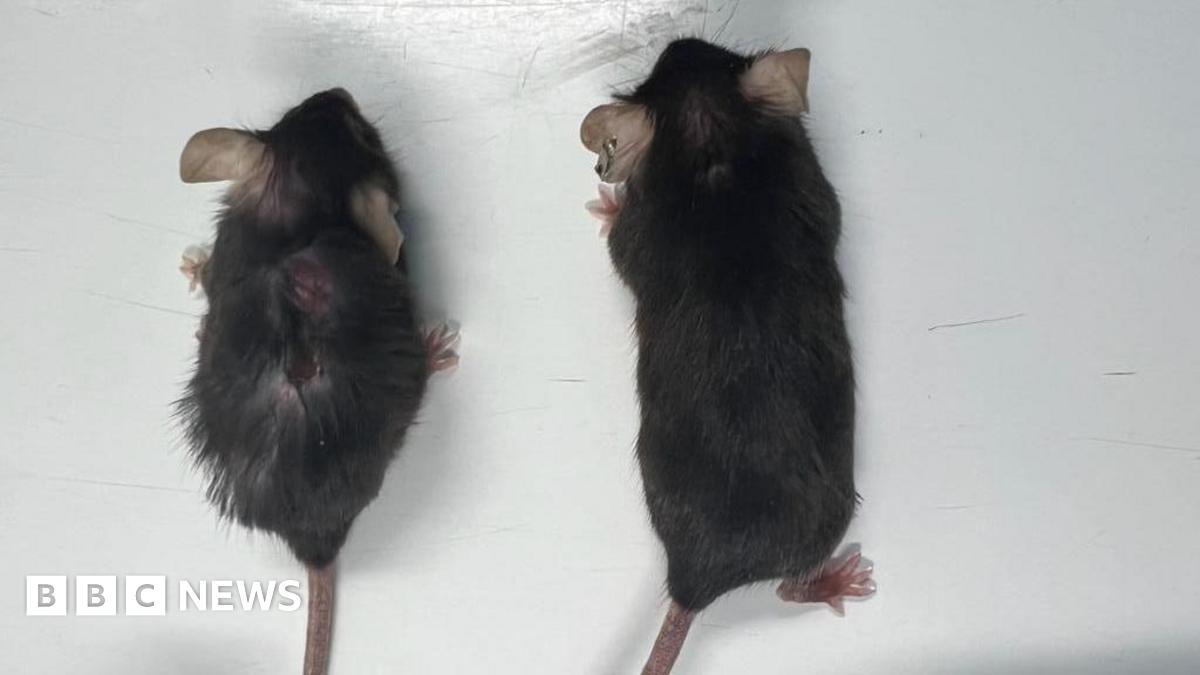
A drug that inhibits inflammation helped mice live longer and reduced the animals’ incidence of cancer and age-related health problems

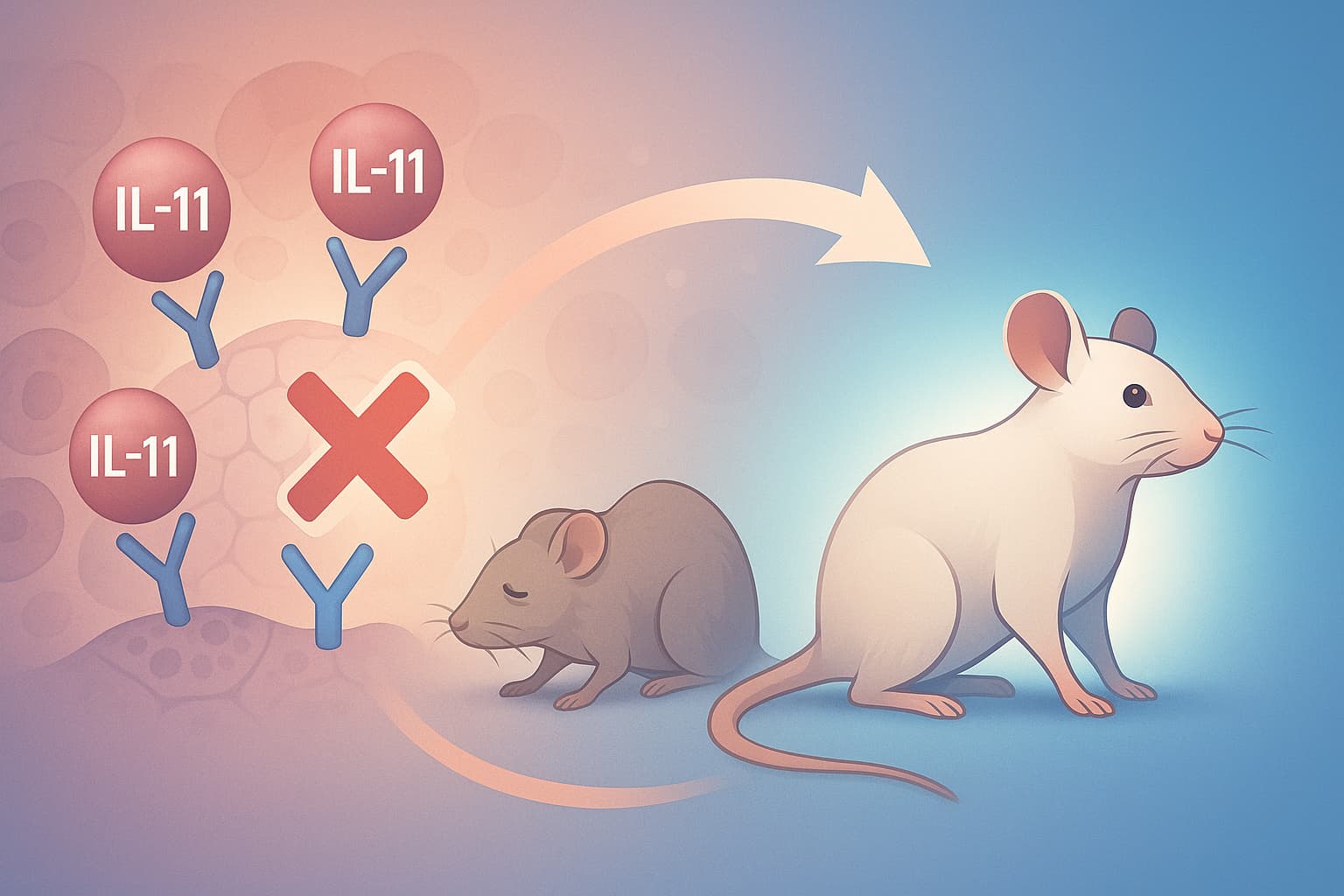
Scientists at the Medical Research Council Laboratory of Medical Science and Imperial College London have discovered that ‘switching off’ a protein called IL-11 can significantly increase the healthy lifespan of mice by almost 25%.

The scientists, working with colleagues at Duke-NUS Medical School in Singapore, tested the effects of IL-11 by creating mice that had the gene producing IL-11 (interleukin 11) deleted. This extended the lives of the mice by over 20% on average.

They also treated 75-week-old mice – equivalent to the age of about 55 years in humans – with an injection of an anti-IL-11 antibody, a drug which stops the effects of the IL-11 in the body.

The results, published in Nature, were dramatic, with mice given the anti-IL-11 drug from 75 weeks of age until death having their median lifespan extended by 22.4% in males and 25% in females. The mice lived for an average of 155 weeks, compared with 120 weeks in untreated mice.

Previously, scientists have posited that IL-11 is an evolutionary hangover in humans, as while it is vital for limb regeneration in some animal species, it is thought to be largely redundant in humans.

However, after about the age of 55 in humans, more IL-11 is produced and past research has linked this to chronic inflammation, fibrosis in organs, disorders of metabolism, muscle wasting (sarcopaenia), frailty, and cardiac fibrosis. These conditions are many of the signs we associate with ageing.

While small doses of inflammation can protect us from disease or injury, excessive amounts damage cells, which is believed to accelerate ageing.

The drug used in this study not only increased lifespan but also reduced cholesterol levels, frailty and body weight in the treated animals, and it improved their muscle strength and metabolism. Together, these findings suggest that blocking IL-11 may minimize age-related health declines in mice as well as improving lifespan.

Few approaches have been shown to robustly increase life span in mice by more than 20%, and now IL-11 inhibition adds to that small selection of interventions. As reported, IL-11 inhibition may work through essentially the same pathways as mTOR inhibition. The degree of life extension is similar to that achieved via mTOR inhibitors such as rapamycin. (from “Fighting Aging”)

RapAdmin

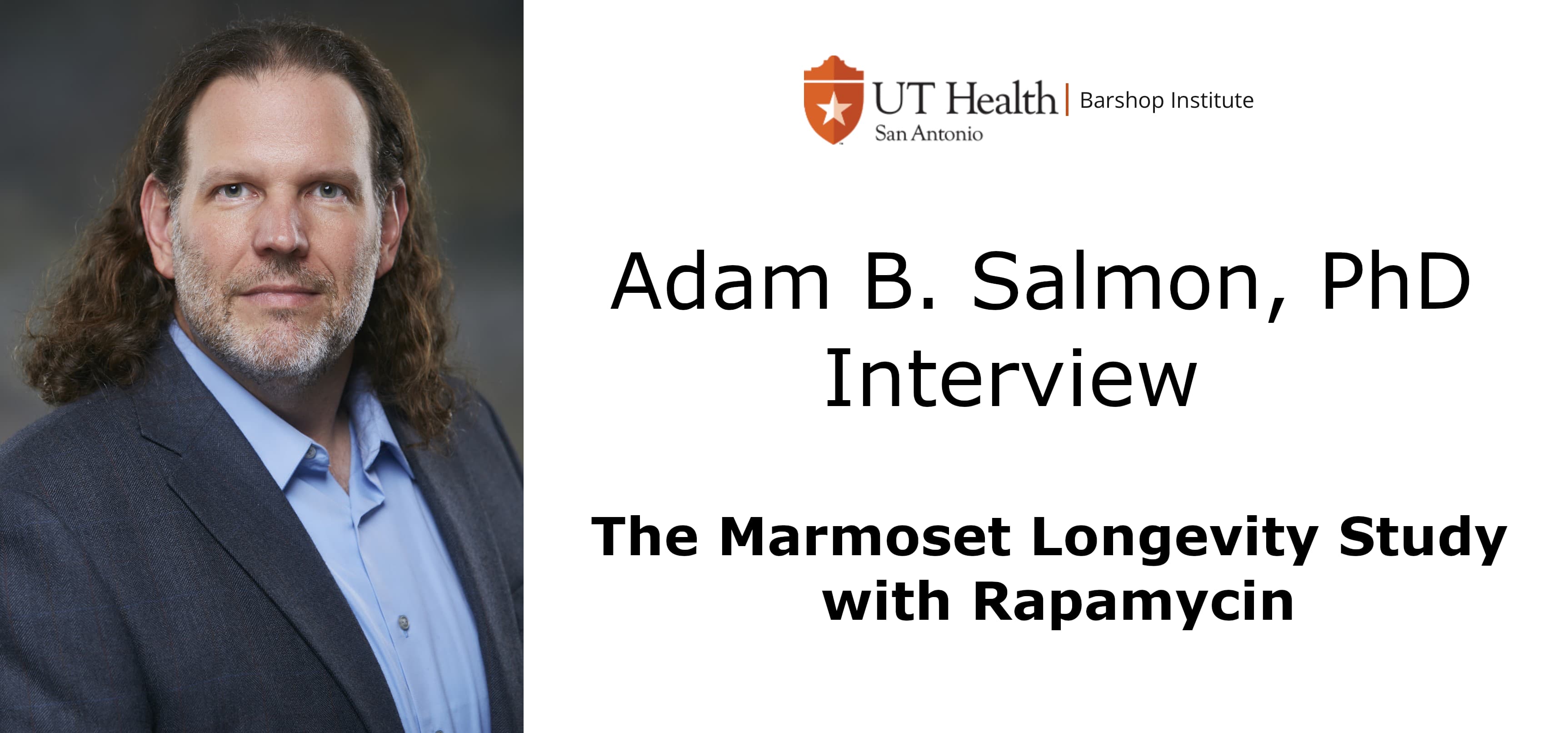
Adam Salmon is getting popular suddenly, as he should be. The longevity outcomes data on rapamycin just keeps getting better! Here is another new interview with Adam brought to us by the Aging Science Podcast of VitaDoa.

Kamil Pabis, a postgraduate student at the National University of Singapore Center for Healthy Longevity, has this to say about his new podcast:

… we discuss the as-of-yet unpublished rapamycin data in marmosets which makes me very optimistic about this longevity drug.

Meet the man who secretly ran the most important rapamycin study you [have almost] never heard of. In this episode of the Aging Science Podcast I interviewed Prof. Adam Salmon. We talked about AMPK, caloric restriction (CR) mimetics and multistress resistance in aging. We also talked about the promise and disappointment with invertebrate models of aging. In the last part of the podcast we discussed the preliminary findings of a marmoset study that is testing whether rapamycin can extend the lifespan of a primate. This is definitely one of the most important ongoing studies in biogerontology. Check out the podcast to learn more.

Short Bio — Prof. Adam Salmon

Adam is a Professor with Tenure in the Barshop Institute and Department of Molecular Medicine at University of Texas Health San Antonio (UTHSA) with a joint appointment as Research Health Scientist in the Southwest Texas Veterans Health Care System. He is also a deputy director for the Interventions Testing Program.

Marmosets ARE a good model of aging

These primates are much longer lived than rodents at an average lifespan of 8–10 years yet not much larger than rats. They die of a much wider range of disease than mice do. Also in contrast to mice they do not constantly graze and are hence less likely to get obese.

Some 10 years ago Adam and colleagues started a study in marmosets to test whether rapamycin will extend their lifespan. The study randomized 66 marmosets and is powered to detect a lifespan difference of 10 to 15%.

Some people have asked why the study uses such a high dose of rapamycin and in response Adam points out that the study was designed before low dose and intermittent rapamycin regimes existed. This explains a lot. As for the choice of animal model? He decided to use marmosets instead of other primates because he could partner with other researchers who already had a large marmoset colony. Setting up a colony by yourself would be prohibitive.

Either way, there is no perfect small primate model. Rhesus monkeys are well studied but too long-lived and expensive. Now this knowledge gap is closing as more people turn towards small primate models like marmosets or mouse lemurs.

No evidence of immunosuppression, lipid and glucose abnormalities even though mTOR signaling was clearly suppressed in these primates. Kidney disease was improved but not epigenetic aging (Horvath et al. 2021) judged by a marmoset clock co-developed with Steve Horvath.

If rapamycin works in marmosets this would be groundbreaking. Check out the podcast for more details and discussion of survival data!

Listen to the full interview at link below:

The discussion about the marmoset rapamycin study begins at the 55 minute mark:

RapAdmin

A little over a year ago I did an interview with Adam Salmon, of UT Southwestern, about the marmoset longevity study they have been doing with rapamycin. I view this as one of the most important and exciting rapamycin longevity studies that is currently in-process because its the first rapamycin longevity study in primates, and the results from this study should be a good proxy for human clinical studies (we seem unlikely to get any human clinical studies funded due to the lack of financial incentive for companies to do one because rapamycin is off-patent, and pharma companies can not make much money off it).

About 15 months after my interview, Adam announced some preliminary results of his study (see earlier post on the 15% median lifespan improvement reported in the marmoset study), but the final results are not yet published.

Prior to talking to Adam I asked our forum members to provide feedback on ideas for specific questions, which you can see in this thread: Do You Have Questions About the Marmoset (monkey) Rapamycin Studies?

Due to my frustration with some of the audio editing tools, and other unrelated delays and priorities, the interview has only now become available. Now that I’ve identified some good audio editing tools and I know how to edit audio files, the turn-around time should be much shorter. I’m not a podcaster, this is the first audio recording of an interview I’ve ever done, but in the interests of not further delaying people’s access to the interview, I’m making it available in an admittedly rough form.

The audio file you can listen to is posted (attached) immediately below in MP3 format, and you can either download and listen to it, or listen to it directly in this message post.

Adam Salmon Interview:

Transcript of interview: here

RapAdmin

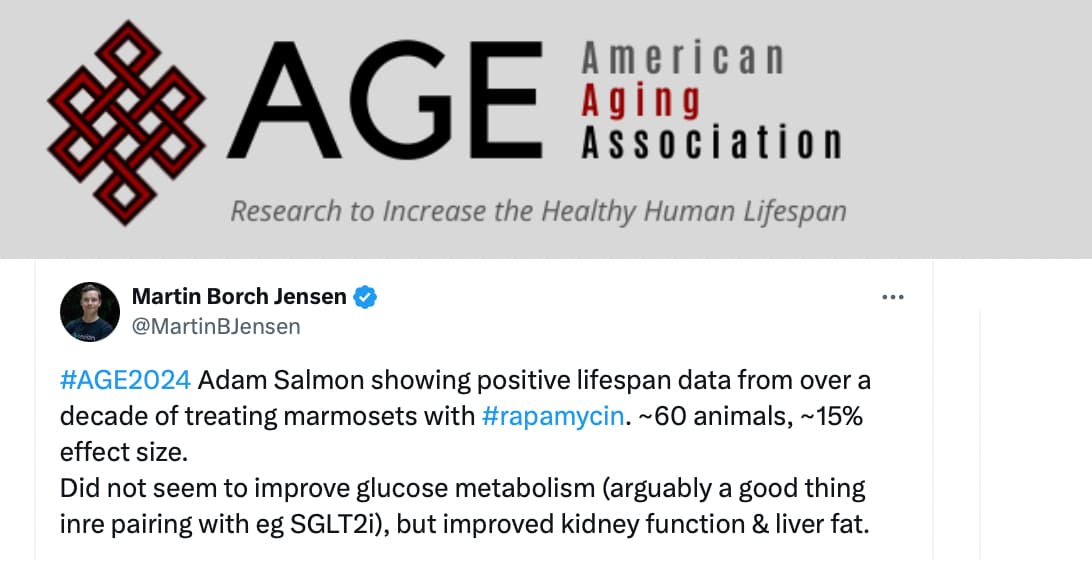
Some very good preliminary news on rapamycin was presented today at the American Aging Association Conference in Wisconsin. This is a groundbreaking development as its the first time we’ve seen primate lifespan improvement with rapamycin (or any other compound TTBOMK) in a well-designed study. It is based on the long-term study of rapamycin-dosed marmosets at UT Southwestern being done in the lab run by Adam Salmon.

This new announcement is important because while rapamycin has been proven effective in lengthening healthy lifespan in every organism its been tested in (including yeast, flies, worms and mice… by dozens of different labs around the world) it has never been tested in primates before for lifespan extension. Some people have questioned whether rapamycin, which has performed so well at lifespan extension in shorter-lived species, would do as well in longer-lived species. This study seems to resolve this question.

The newly announced results (an increase in the median lifespan by approx. 15% for the Rapamycin-dosed marmosets) would seem to be strong evidence that rapamycin works well in primates, and thus there is a very high probability it works similarly well in humans. I’ve contacted Adam Salmon for more information but he says the information presented at this conference is still preliminary so he wasn’t about to give me any survival curve data or other information yet. The research paper covering these results is in process, so we should see more details on the study soon.

The results of rapamycin for healthy longevity increase in primates as reported in this study seem to be generally in line with the mouse studies (which with higher doses get up to the 28% lifespan increase range, and 34% when combined with Acarbose), and also in line with the expectations of many experts in the longevity field, as reported here: 80% of Longevity Experts Predict Significant Benefits for Rapamycin in Humans

The challenge that this news presents to us is that the dosing level and frequency for the marmosets was quite high compared to what we usually dose rapamycin in longevity applications as people are practicing it today. The marmosets received 1mg/kg dosing in their food daily, which given the typical animal to human dosing translations, seems to equate to around 10mg/day for a a 60kg person [Updated; perhaps closer to 30mg every day or two equivalent in humans, per Adam Salmon interview]. Most people in longevity applications right now are dosing around 6mg to 8mg once per week. This new marmoset study suggests that a higher dose may be required for humans to get the same level of benefit, but with higher doses of rapamycin we tend to see higher rates of side effects (diarrhea, gastro-issues, etc.) and if higher doses are taking on a regular basis you typically get some level of immune suppression, and potentially some lipid and blood sugar disregulation; all of which tend to increase health risks in humans. So this may be the key challenge for human translation of this research, how to get higher levels of rapamycin into the blood system, while minimizing the undesirable side effects and risks.

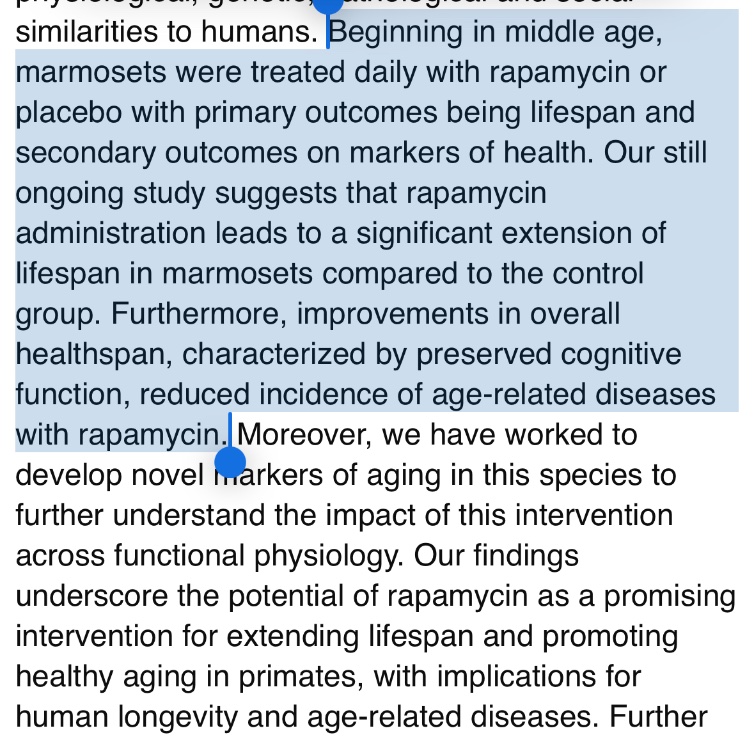
The AmericanAging conference abstract for this talk (Posted on X by David Barzilai):

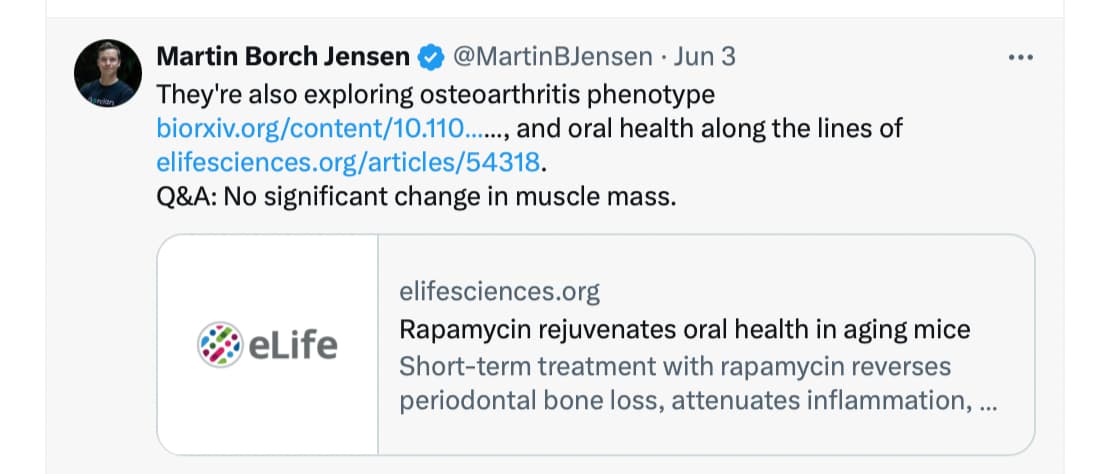
Related reading from Adam Salmon et al: Rapamycin Delays Age-related Osteoarthritis

Related Research: https://www.biorxiv.org/content/10.1101/2024.05.14.594256v1

Related Research: https://elifesciences.org/articles/54318

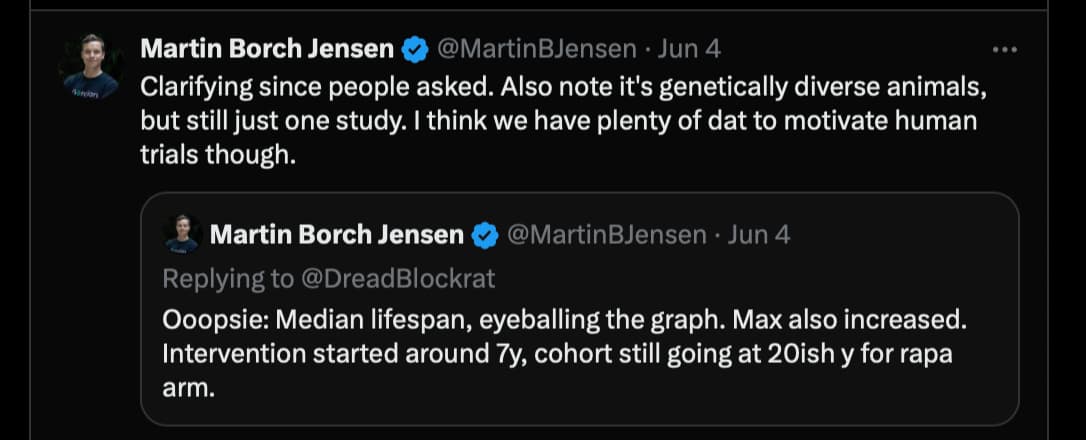
Source: Martin Borch Jensen on X: "#AGE2024 Adam Salmon showing positive lifespan data from over a decade of treating marmosets with #rapamycin. ~60 animals, ~15% effect size. Did not seem to improve glucose metabolism (arguably a good thing inre pairing with eg SGLT2i), but improved kidney function & liv… / X

Read the full Story and Discussion by clicking on the following link: 15% Healthy Lifespan improvement via Rapamycin seen in Marmosets

RapAdmin

Listen to the full podcast at this link:

In the current episode of The VitaDAO Aging Science Podcast, we dive into the intricate world of rapamycin, caloric restriction, and inflammaging with the distinguished Dr. Arlan Richardson. Dr. Richardson, a pioneer in aging research with a career spanning over five decades, shares his extensive knowledge and groundbreaking insights. We discuss his pioneering work on rapamycin, the complexities of caloric restriction, and the role of chronic inflammation in aging. This episode also touches on the significance of necroptosis, the intriguing connections between senescence and inflammation, and the future of aging interventions. Join us as we explore these vital topics and their implications for human longevity, shedding light on the critical role of preclinical studies in advancing our understanding of aging.

Brief Bio – Dr. Arlan Richardson

Arlan Richardson, earned his Ph.D. in biochemistry from Oklahoma State University in 1968, and for the past 50 years has devoted his career to aging research at Illinois State University, the University of Texas Health Science Center at San Antonio (where he directed the Barshop Institute on Longevity and Aging Studies), and the University of Oklahoma Health Sciences Center.

Dr. Richardson’s research has focused on various aspects of aging: (i) the effects of aging and dietary restriction on gene expression in rats and mice, (ii) testing the oxidative stress theory of aging by measuring the effect of alterations in the antioxidant defense system on the lifespan and pathology of transgenic and knockout mice, and (iii) studying the effect of rapamycin on aging and age-related diseases. He is currently studying the mechanism responsible for genotype differences in response to dietary restriction and the role of chronic inflammation in aging.

Aging, rapamycin and the clinic

Arlan expressed disappointment in the hesitancy to test rapamycin in healthy individuals. In the 70s when he started it seemed it would difficult to change the lifespan of any organism at all, but then in 2008 with rapamycin came a big breakthrough; and a time of confusion and disappointment for us basic scientists:

“I am sitting here thinking, oh now, those of us in the basic sciences got you something that will potentially slow aging in humans and now I thought everybody, all the clinical people, will be running to us and saying we want to test it and we are sitting back about fifteen years and there is hardly [any progress]…” (Arlan Richardson)

We both agreed that hope for faster clinical translation of rapamycin.

Related earlier interview with Arlan Richardson:

RapAdmin

by Omri Drory, Ph.D.

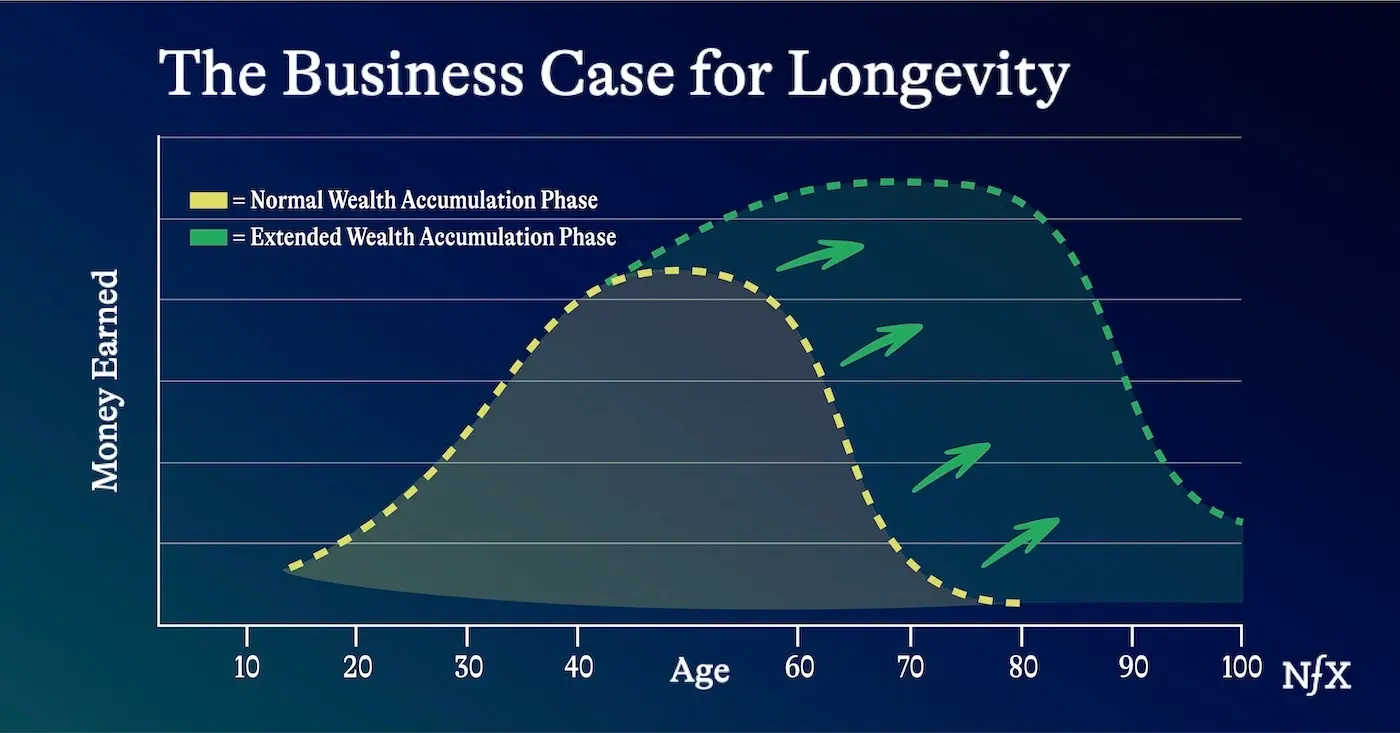
Longevity is the biggest market in the world.

The ROI is huge, almost too big to see. Many people also don’t realize that longevity businesses are critical for the future of humanity.

Imagine not being resigned to growing old, frail and sick. Imagine being able to extend your peak earning years. Imagine being able to delay having kids safely (if you choose!) to allow yourself more time to pursue a career. People could have second or third careers. People could invest their money over longer periods of time, accumulating more wealth. People could have the opportunity to actually enjoy that wealth before they die.

If we can extend the human healthspan, it will not just save tons of money (think of all the money dedicated to playing whack-a-mole with age-related diseases). It will also make almost every other industry bigger.

Full article:

Of course, one counter-argument to this business case is that increased longevity will primarily benefit the wealthy and will lead to even greater inequality than the already extreme levels: The Cure for Death Means Billionaires Will Live Forever—and Be Rich Forever

RapAdmin

Rapamycin, an approved drug for transplant and cardiac patients, is extending the lifespan of mice by up to 20% [actually about 30%]. Scientists are exploring if it could have a similar effect on humans

Michel Samson turns 80 this month, and his goal is to change the trajectory of his life.

At 90 or even 100 years old, he’d like to be able to do household chores, have good grip strength, get up off the floor without help, and put his luggage in the overhead compartment of a plane.

“I’m interested in changing the curve of my life. For most people, as they get older, their health starts to fail. Their quality of life isn’t ideal. I believe it’s possible to change the trajectory of the last decades of one’s life.”

Based in Kentucky, Samson, a violinist who taught at the University of Louisville, tells the Irish Examiner that he’s interested in increasing his health span: the number of years he stays healthy.

He has been taking Rapamycin for the past five years, a drug popular in the US for promoting longevity and anti-ageing.

Kaeberlein estimates that the number of off-label users of Rapamycin for health-span reasons in the US is more than 10,000. “I doubt it’s over 50,000 yet, but now there are a couple of telehealth Rapamycin providers, it’s possible,” he says.

Elizabeth_Kirby

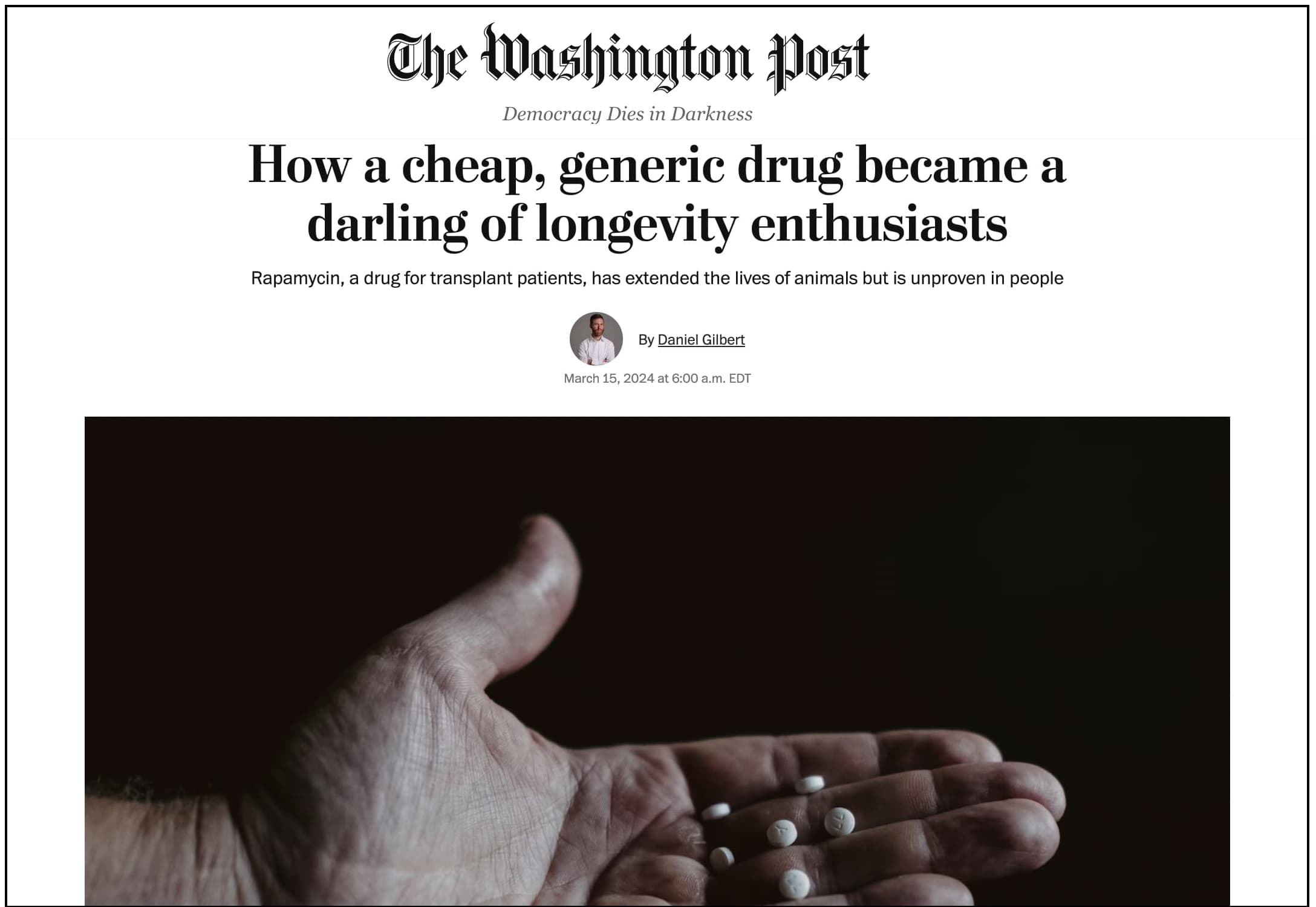
Today’s Washington Post has a new article on rapamycin. Many of us think rapamycin is compelling because it is FDA approved, has been in use for over 20 years, and lengthens healthy lifespan in every organism its been tested, including mice (typically 15% to 30% lifespan improvement, but up to 34% when combined with acarbose). Daniel Gilbert, of the Washington Post, reports:

Despite the buzz surrounding the drug, it is unlikely that the Food and Drug Administration will ever approve it for longevity. The agency doesn’t consider aging to be a disease, and rapamycin’s generic status means there’s little financial incentive to run expensive clinical trials to test it on age-related afflictions.

The enthusiasm for the drug’s anti-aging properties comes from studies that repeatedly have shown benefits in animals across multiple species, including yeast, worms and mice. Some physicians and researchers believe that if taken intermittently and in low doses, rapamycin can increase human life span the way it has in animal trials. But doctors also caution that no one knows what the optimal dose might be for humans, and taking certain quantities [i.e. extremely high doses] of rapamycin can lead to reproductive harm and insulin resistance as well as making the body more susceptible to infection.

Brad Rosen, a doctor in Los Angeles, says he believes rapamycin’s potential is compelling enough for him to try.

“At 60, I don’t have the luxury of expecting studies to be completed that can validate the benefits of a longevity drug prior to my own steeper decline,” said Rosen, who also has prescribed the drug to about 250 patients. The promising animal studies, combined with rapamycin’s long history as an immune-suppressing drug, he said, makes it “one of few agents where taking a calculated risk can absolutely make sense.”

Read the full Article: How a cheap, generic drug became a darling of longevity enthusiasts (Washington Post)

Related: Eric Verdin (CEO of the Buck Institute) Takes Rapamycin
Related: 80% of Longevity Experts Predict Significant Benefits for Rapamycin in Humans
Related: Yes, the Dose Really Does Make the Poison (Skeptoid Blog)

RapAdmin

Esta notícia é especialmente interessante para os membros típicos do fórum porque se trata de uma combinação de dois medicamentos genéricos que estão facilmente disponíveis hoje em dia e a baixo custo. Assim, as pessoas podem tentar fazer isso sozinhas e relatar os resultados. Veja detalhes no tópico de discussão deste post.

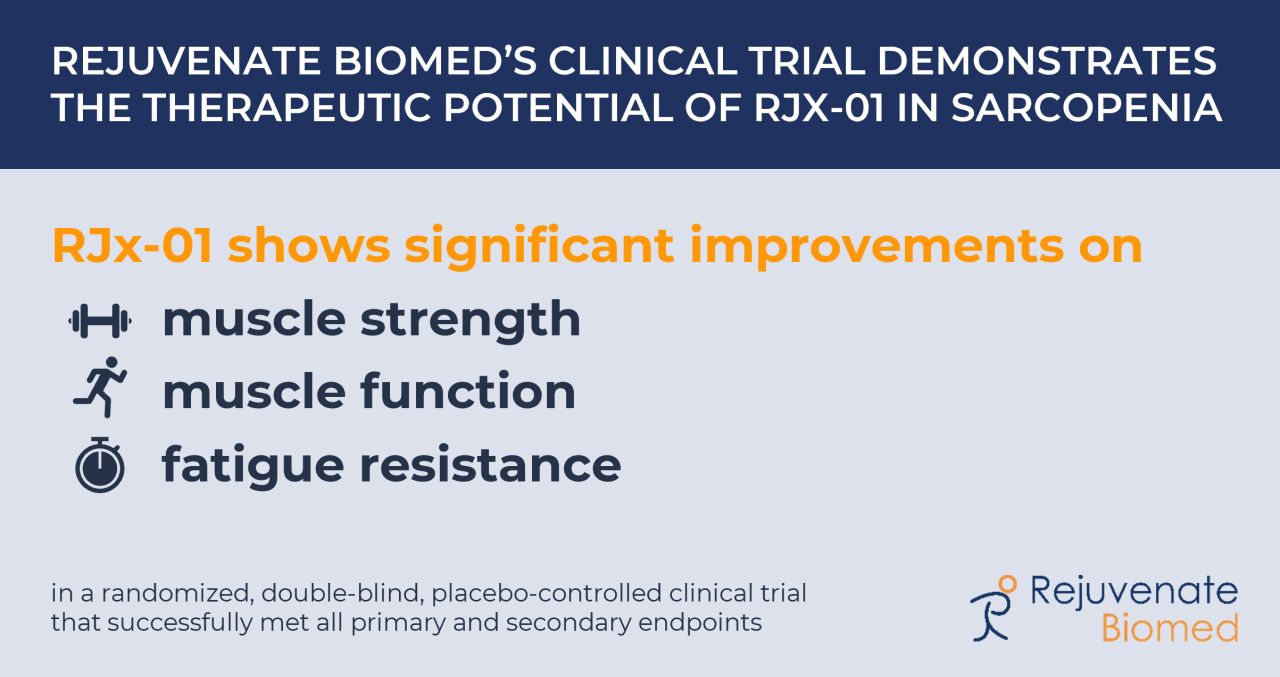
O ensaio clínico da Rejuvenate Biomed demonstra o potencial terapêutico do RJx-01 na sarcopenia

A terapia de ponta mostra melhorias significativas na força muscular, função e resistência à fadiga, oferecendo esperança a milhões de pessoas que sofrem de sarcopenia

Diepenbeek, Bélgica, 21 de fevereiro de 2024 – Rejuvenate Biomed NV (“Rejuvenate Biomed”), uma plataforma pioneira de estágio clínico e empresa de pipeline comprometida em melhorar a saúde ao longo da vida por meio de terapêuticas inovadoras, anuncia hoje resultados funcionais inovadores de seu ensaio de fase 1b com chumbo candidato RJx-01 para o tratamento da sarcopenia.

A sarcopenia, condição que afeta até 22% das pessoas com 65 anos e 50% das pessoas com 80 anos, é caracterizada pela perda progressiva da força muscular e do desempenho físico. Este declínio não só tem impacto na qualidade de vida, mas também eleva o risco de quedas, incapacidade e mortalidade, especialmente entre a população mais idosa.

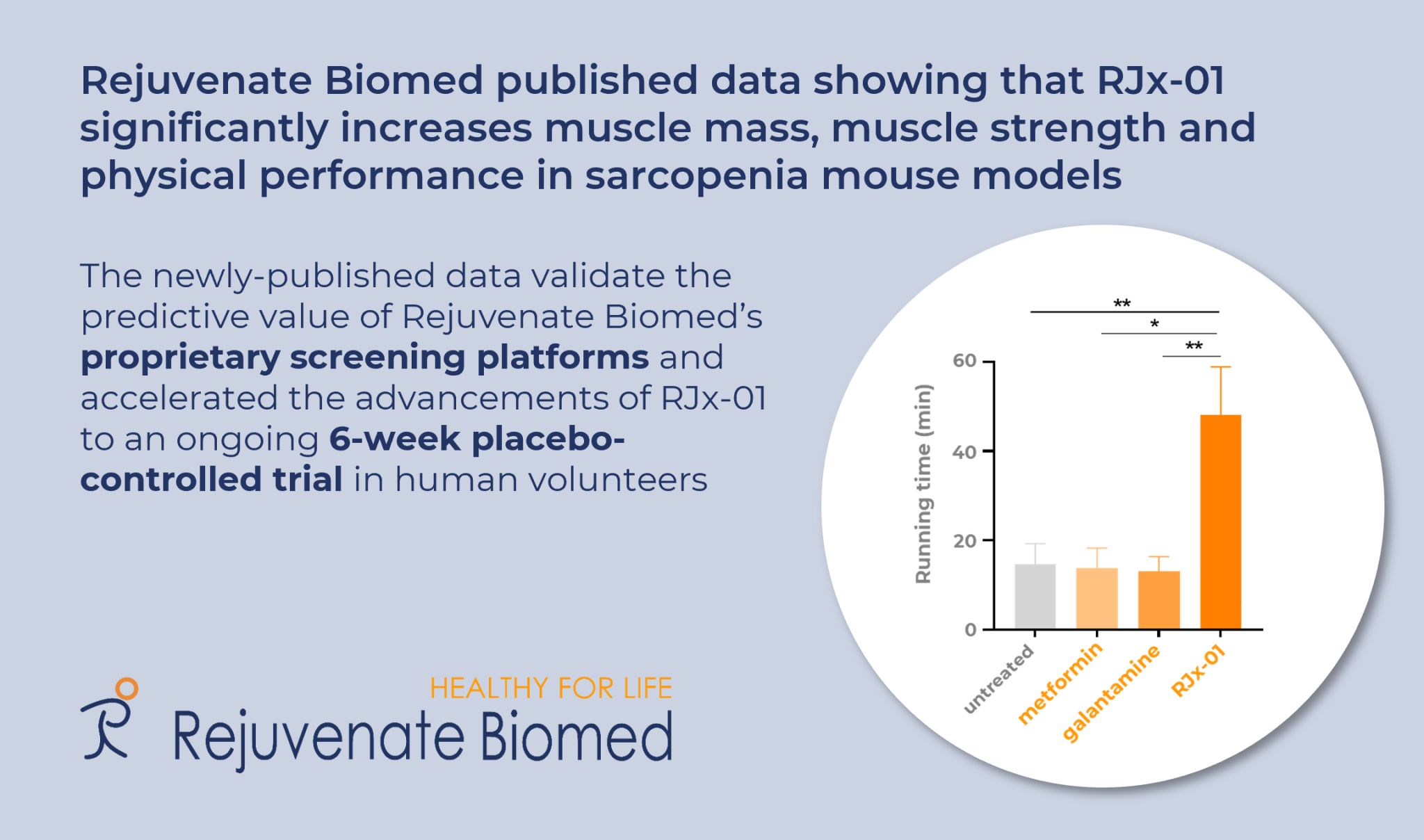
RJx-01 é um medicamento combinado patenteado [consistindo em metformina e galantamina ] que foi identificado pela plataforma interna de descoberta de medicamentos da empresa e demonstrou ter efeitos benéficos em vários modelos pré-clínicos de sarcopenia [1]. Os recentes resultados de ensaios clínicos exploratórios, que seguem a confirmação anterior de segurança, tolerabilidade e farmacocinética [2], destacam o potencial do RJx-01 em atender à necessidade não atendida de tratamentos eficazes para sarcopenia.

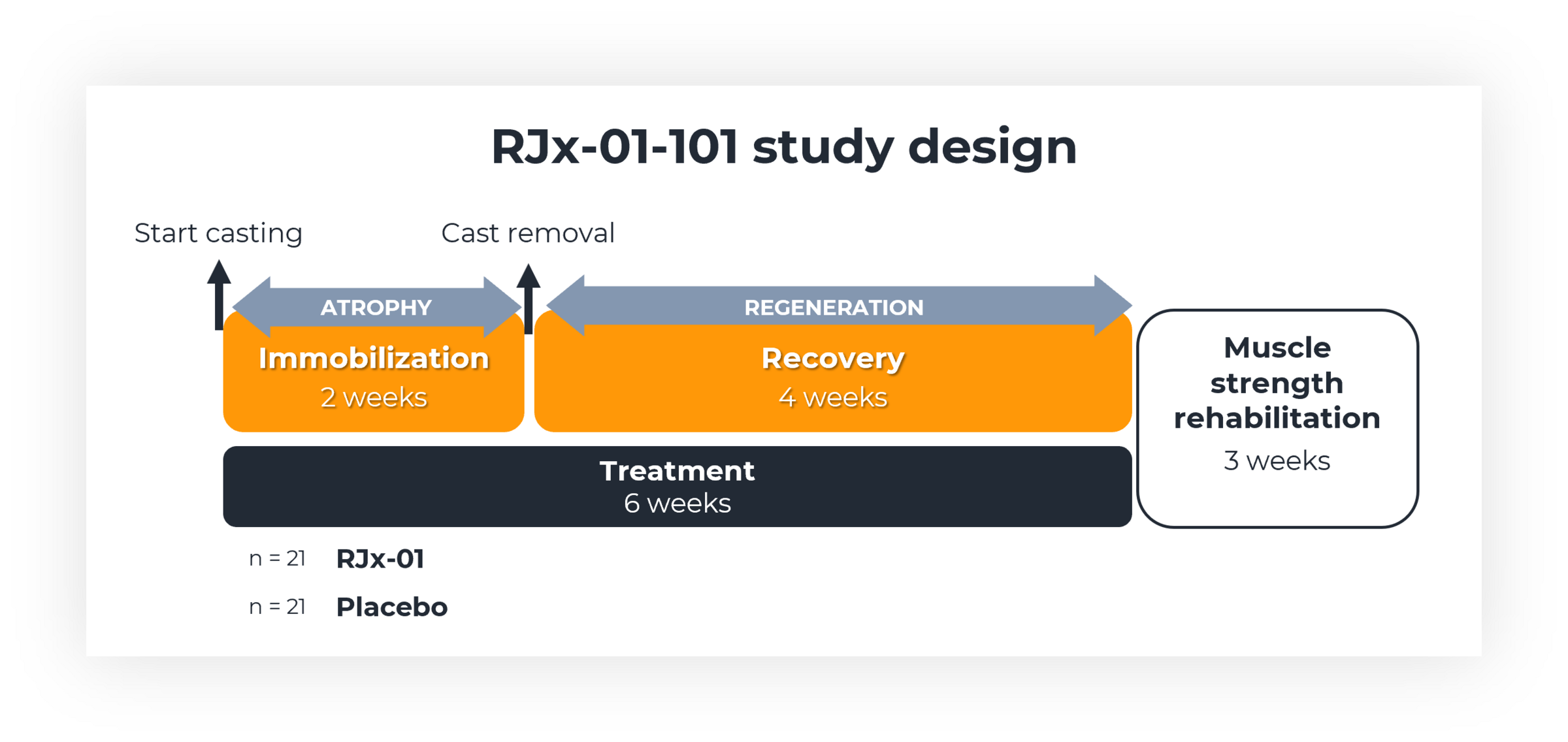
Um primeiro teste com 42 voluntários saudáveis – entre 65 e 75 anos – produziu resultados ‘fantásticos’. Os participantes receberam gesso em uma perna por duas semanas. Devido à imobilização perderam força muscular. Todos então receberam um programa de treinamento. Nos participantes que receberam a droga – na forma de esferas – os quadríceps e isquiotibiais se recuperaram significativamente mais rápido. Os outros participantes receberam um placebo. Houve também uma pontuação estatisticamente significativamente melhor em termos de fadiga muscular (após esforços mais longos) e responsividade muscular (como indicador de estabilidade).

Os resultados são a primeira vitória da Rejuvenate Biomed. ' O estudo com os pacientes continua. Isso é óbvio. Se o nosso tratamento estabilizar a doença, isso é bastante. Isso permite uma intervenção precoce. Mas é claro que esperamos uma melhoria', afirma Ann Beliën, CEO e fundadora da Rejuvenate .

A sarcopenia tem um impacto negativo na qualidade de vida dos idosos. 'Eu vi isso com meu pai. Começa andando com uma bengala, depois com um andador e depois com uma cadeira de rodas. Ter menos músculos significa não conseguir mais abrir a tampa de uma garrafa, caminhar menos distâncias, ter dificuldade para fazer compras, visitar os netos. É sobre essas coisas. Não queremos correr uma maratona para os idosos, mas sim deixá-los regressar à vida social normal, deixá-los envelhecer com mobilidade. '

As principais conclusões do ensaio de Fase 1b com RJx-01 revelam resultados funcionais promissores:

  1. Força melhorada : Os participantes com sarcopenia induzida por desuso tratados com RJx-01 exibiram uma melhoria promissora na recuperação da força muscular em comparação com o grupo placebo. Esse efeito benéfico, avaliado por meio de dinamometria isométrica, ressalta a capacidade do RJx-01 de promover melhora da força muscular, resultado que apoiaria as atividades diárias de pacientes com sarcopenia.
  2. Função muscular melhorada: O tratamento com RJx-01 levou a uma melhoria importante da aceleração das pernas, avaliada através de dinamometria isocinética. A capacidade de acelerar rapidamente o membro é importante para o movimento funcional nas atividades diárias e é fundamental para mitigar os riscos de queda – uma consideração crítica para pacientes com sarcopenia.
  3. Melhor resistência à fadiga : A fadiga neuromuscular foi avaliada monitorando os parâmetros musculares durante uma série de exercícios para as pernas. Os participantes que receberam RJx-01 mostraram uma propensão reduzida à fadiga, indicando que o RJx-01 pode promover atividades físicas como caminhada, uma melhoria de desempenho que é importante para pacientes com sarcopenia.

Ann Beliën, fundadora e diretora executiva da Rejuvenate Biomed, expressou seu entusiasmo, afirmando: “Hoje marca um momento crucial em nossa jornada para lidar com doenças relacionadas à idade, principalmente a sarcopenia – uma condição que afeta até 1 em cada 5 indivíduos ao longo do tempo. 65 anos. O impacto demonstrado pelo RJx-01 oferece grande potencial para fazer uma diferença substancial para indivíduos com sarcopenia ou perda de força muscular devido a outros fatores subjacentes. Antecipamos ansiosamente o avanço do nosso programa de Fase 2 ainda este ano, com o objetivo de substanciar o potencial terapêutico do RJx-01 no tratamento da sarcopenia e da osteoporose.”

Jean-Yves Reginster, presidente do Conselho Consultivo Clínico da Rejuvenate Biomed, acrescentou: “Esses dados convincentes confirmam a promessa do RJx-01 de melhorar o desempenho físico e a força muscular. Com o envelhecimento da população, é inevitável que o número de pessoas que vivem com problemas de saúde de longa duração aumente, desafiando as capacidades funcionais e o desempenho físico geral. Assim, é crucial que empresas como a Rejuvenate Biomed trabalhem com o objetivo de tratar e até prevenir o desenvolvimento de doenças relacionadas com a idade, como a sarcopenia.”

Roger Fielding, membro do Conselho Consultivo Clínico da Rejuvenate Biomed, repetiu seu endosso retumbante: “ O número de pessoas que vivem com doenças relacionadas aos músculos está aumentando, enfatizando a necessidade urgente de soluções viáveis para melhorar o declínio muscular relacionado à idade. desempenho. Os novos dados anunciados hoje pela Rejuvenate Biomed sobre o RJx-01 são muito promissores para pacientes com sarcopenia, bem como para aqueles que apresentam perda da função muscular devido a outras causas.”

A Rejuvenate Biomed iniciará um estudo de Fase 2 avaliando o efeito do RJx-01 na sarcopenia e na osteoporose, uma vez que estas duas doenças frequentemente coexistem, tão frequentemente que a “osteosarcopenia” foi recentemente descrita na literatura médica como uma síndrome distinta. Além disso, a Empresa está explorando ativamente oportunidades de parceria para investigar o RJx-01 em combinação com medicamentos GLP-1, que são comercializados para obesidade e diabetes tipo 2.

Os resultados positivos do estudo de Fase 1b validam o poder preditivo das plataformas de descoberta de medicamentos proprietárias da Rejuvenate Biomed, CombinAgeTM e CelegAgeTM, que rastreiam eficientemente pequenas moléculas para identificar terapêuticas promissoras direcionadas a caminhos relacionados à idade. A Rejuvenate Biomed pretende disponibilizar estas plataformas a terceiros através de parcerias estratégicas ou acordos de licenciamento.

  1. Tezze C, et al. JCI Insight 2023; 8(15):e168787. JCI Insight - A combination of metformin and galantamine exhibits synergistic benefits in the treatment of sarcopenia
  2. Rejuvenate Biomed - Ensaio de Fase 1b com resultados positivos na sarcopenia

Relacionado

Visão geral de (Galantamina + metformina)

A combinação de medicamentos metformina e galantamina (RJx-01) está em desenvolvimento para o tratamento de sarcopenia, atrofia muscular induzida por desuso e indicação não especificada. O medicamento candidato é um produto de combinação de pequenas moléculas. É administrado por via oral. Ele está sendo desenvolvido com base em uma plataforma de tecnologia baseada em inteligência artificial.

Fonte: https://www.pharmaceutical-technology.com/data-insights/galantamina-metformin-rejuvenate-biomed-sarcopenia-likelihood-of-approval/

Uma combinação de metformina e galantamina apresenta benefícios sinérgicos no tratamento da sarcopenia

https://pubmed.ncbi.nlm.nih.gov/37551712/

Continue no Tópico de Discussão deste Post