Notícias

RapAdmin

Here is a sample of the people who we know, or suspect (see notes in part 2), are taking rapamycin. Yes, these are the “poster children” for rapamycin use in anti-aging.

You might ask why we should care if these people are taking rapamycin. The simple answer is that most of them have studied biology their entire lives, many with a focus on the biology of aging. And they’ve studied all the rapamycin / MTOR research done over the past decade. Some have been involved in, or are leading, the actual lifespan studies being done in mice and companion dogs (people’s personal pets). If these people believe rapamycin will work to slow aging, there is a reasonably good chance it will.

At the same time, I’ve included a number of researchers below who are intimately involved in the research around rapamycin and MTOR and who have decided rapamycin research isn’t yet at the level where they feel comfortable taking it themselves. Everyone has a different risk/reward profile.

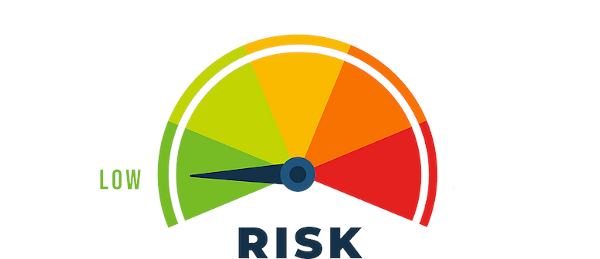
Rapamycin is not a completely risk-free drug. I don’t think any exist. The research does, however, suggest that the low-doses used in anti-aging applications of rapamycin are relatively low risk.

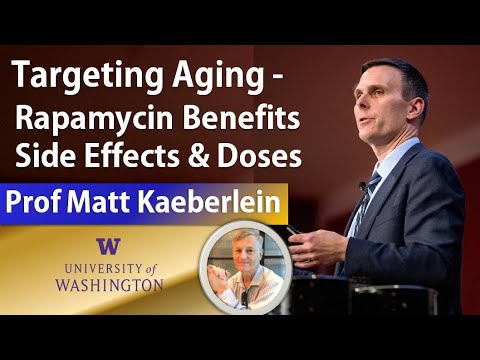
Matt Kaeberlein, one of the researchers with the most experience with rapamycin in trials with mammals, has said with regard to human use: “Rapamycin… safer than Aspirin, Possibly. Safer than alcohol, Definitely”

Read the full story: Who in the health and longevity field is taking rapamycin (part 2)


RapAdmin

side-effects-660-1

Many people hear about rapamycin and make the mistake of thinking that the side effects of the drug that are seen in high dose, every day, treatment regimens in cancer and organ transplant patients will also be seen in people using low, weekly doses in anti-aging applications. This is an inaccurate expectation, unsupported by evidence.

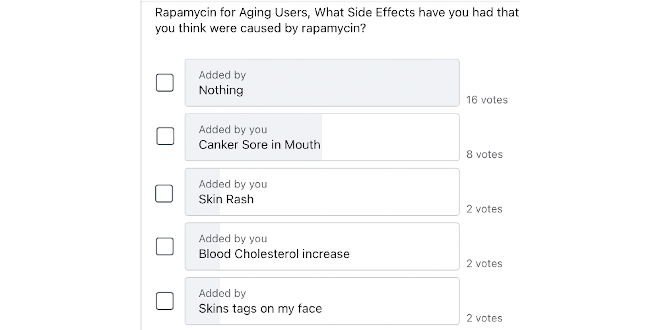
As you can see above, in a small survey of rapamycin users, most people experience no noticeable side effects when dosing in the typical range currently being dosed for anti-aging applications (3mg to 10mg, single dose per week).

SideEffectsW660

The side effects that people do experience are mostly mild and temporary. My estimate is that 98% of people continue to take the medication and the problems (e.g. canker sore, small rash, etc.) go away quickly by without treatment or with only minor treatment (e.g. cortisol cream for rash).

Read the full story: Side Effects of Rapamycin (part 2)

RapAdmin

RiskLow1

Most of the people who have participated in rapamycin clinical trials have been very sick, organ transplant patients who are typically taking many different drugs. As a result, we don’t have much data on the risks in healthy people taking rapamycin.

Additionally, what data we do have in terms of potential health risks of rapamycin comes from continuous dose rapamycin in mice, and very high continuous doses used in transplant patients. Neither of these situations translate well to lower dose, pulse-dosing of rapamycin that is typical in anti-aging applications.

Two adverse outcome risks that have been seen sometimes in mice (cataracts) and transplant patients (lower testosterone and spermatogenesis) have been identified by Prof. Matt Kaeberlein as being potentially concerning.

The increased risk of cataracts is seen in some mice studies that are daily dosed at higher levels of rapamycin. Trends of decreases in testosterone and spermatogenesis has been seen in mice and transplant patients who have used rapamycin daily, but the effects seem to be similar to that seen in caloric restriction (perhaps an evolutionarily conserved response to low food availability; when food supplies are low, mammals need to focus on survival and not procreation). As with caloric restriction, when daily high doses of rapamycin are stopped, testosterone and spermatogenesis seems to return to normal.

These types of potential risks are why most people taking rapamycin for anti-aging take it in pulsed dosing (once weekly doses) and also take longer periodic breaks from even the weekly schedule (e.g. taking one month off every 3 or 4 months).

Read the Full Story: Possible Rapamycin Risks (part 2)

RapAdmin

FluEld3

One of the big issues with understanding how rapamycin works in healthy people trying to prevent aging related disease and disfunction is that virtually all the 20+ year history of clinical studies for rapamycin have almost all been done in very sick people. Specifically, people who have had organ transplants and are on a large number of drugs, or people who have cancer or heart disease and who again may be being treated with many other drugs simultaneously. In these applications the patients take rapamycin at high daily doses. So the side effects (and benefits) are going to be very different from what people will experience if they are healthy taking low weekly doses used in anti-aging.

Rapalog Enhances Flue Shot Effectiveness by 20%, Minor Side Effects on Weekly Dose

The most important paper that really kickstarted the use of rapamycin for anti-aging in humans and highlighted both the potential benefits, and minimal side effects when taken weekly, was the 2014 Mannick paper (shown below).

Read the full story here: Rapamycin Clinical Studies in Healthy People (part 2)

RapAdmin

What are people who have been using rapamycin for a while saying about its impact on their health? Here are some high level and detailed quotes from different people:

https://twitter.com/JimRice1111/status/1450292662410567682?s=20

My experience using rapamycin for 2 years+
Greater energy through the entire day, stronger, leaner (lost about 20lbs using metformin and canagliflozin, weight easier to lose and stays off with rapamycin), at 59 years old I’m rock climbing again after a 15 year hiatus and as strong as when I was in my 30s - climbing at 5.10b and c levels at indoor rock climbing gyms, whitewater kayaking class 3 and 4, Biological age according to Levine Phenotypic calculations is 43 to 45 years. All aches and pains gone away, greater resilience to sleep deprivation (when it happens).

Read the full page: Anti-aging Benefits of Rapamycin Personal Experiences (part 2)

RapAdmin

AnimalResearch2

The drug rapamycin is currently the most effective and reproducible pharmacological approach for directly targeting the aging process to increase life span and health span in laboratory animals (5). Rapamycin positively impacts most hallmarks of aging, and it has been shown to increase life span in each of the major invertebrate model organisms and in rodents (4). Rapamycin increases life span by 10 to 30% in multiple strains of mice when started either early or late in life, and when administered continuously (6, 7), intermittently (8), or transiently (9).

Notably, a single 3-month treatment regimen was recently shown to increase remaining life expectancy of mice by up to 60% (9).

Not only does rapamycin treatment increase life span but it also delays, or even reverses, nearly every age-related disease or decline in function in which it has been tested in mice, rats, companion dogs, and monkeys including cancers, cardiac dysfunction, kidney disease, obesity, cognitive decline, periodontal disease, macular degeneration, muscle loss, stem cell function, and immune senescence.

Rapamycin is frequently referred to as the “Gold Standard” of anti-aging drugs because it has the highest lifespan extension effect, has worked in every animal tested, and the effectiveness has been replicated the most number of times by the greatest number of research groups.

Read the full story here: Anti-Aging Benefits of Rapamycin (part 2)

RapAdmin

The Best and most common way to buy rapamycin (this is what most of us do, and what we really recommend to anyone interested in rapamycin):

  1. Get a doctor’s prescription for rapamycin and purchase with a prescription. This is done by contacting one of the doctors who is prescribing rapamycin for aging. See our list of doctors prescribing rapamycin for aging.
  2. Note that Rapamycin for aging won’t be covered by insurance / healthcare programs (yet) so you’ll need to plan to pay for it yourself.
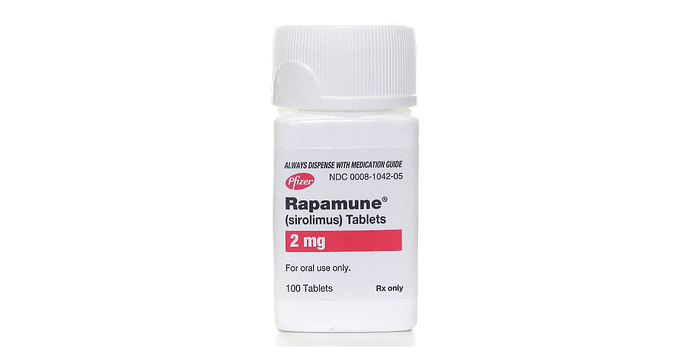
  3. Once you have a prescription, you can purchase either the brand name drug (Pfizer Rapamune) or the generic sirolimus. Brand name pricing seems to be about 300% to 500% higher than the generic medication. But, there seem to be increasing evidence that generic medications available in the US and in other countries (but manufactured in India and China), are riskier than the brand name products manufactured in the US. But, few people will probably want to pay for the brand drug version of rapamycin (Pfizer Rapamune) because its so expensive, and not covered by insurance. So, read on for less expensive options…

Read the full story: How to Buy Rapamycin (part 2)