Notícias

RapAdmin

Many people have read the book by Katherine Eban “Bottle of Lies” about the generic drug industry and their less than stellar record on product quality and in obeying FDA rules and regulations. If you haven’t read it, we recommend you do. You can read articles about, and interviews with, the author here:

While you can arguably say that this might be slightly less of a concern for medicines that you take only for a brief period when you are sick, the issue becomes much more significant when you take a medication for a chronic medical condition or - as in the case of rapamycin / sirolimus - you want to take the medicine the rest of your life so that you say healthy and active for a much longer than normal life. In this situation the product quality are important because pharmaceutical product contaminants can build up in your body over time to toxic levels.

Some contaminants, like nitrosamines, have been found numerous times in generic medications and are linked to increased risk of cancer. A recent analysis by Valisure - a leading pharmaceutical analysis lab / company - identified a type of nitrosamine called NMDA in a significant number of vendor’s batches of metformin, a common drug that people typically take for treatment of diabetes, but which is increasingly taken by people for anti-aging purposes.

Note: at the very bottom of the page of Part 2 of this posting is attached the full 4-page Valisure lab analysis of three samples of rapamycin from Biocon and Zydus (imported from India) that a person had tested last year. You may be surprised by the results…

Read the full story here: Why and How to Test Rapamycin, Part 2

RapAdmin

While I am optimistic about rapamycin in anti-aging applications right now, based on all the animal data, I am still cautious as I know this is an untested area with respect to this medicine.

I started taking rapamycin at a dose of 1mg per week (single dose, all at the same time) about 2.5 years ago. In each subsequent week I increased my dose by 1mg. Somewhere around the 2mg or 3mg dose level I started to get a canker sore in my mouth which lasted 3 or 4 days and then went away. I continued up to 6mg per week and then stayed there for a number of months. After 3 months at that level I took a rapamycin break for about 4 weeks. Then I resumed, again starting a bit lower - 2mg (all in one dose, once per week), increased more quickly this time (by 2mg per week) because my body seemed to be responding well. And worked my way up to 8m, and then 10mg per week, where I have mostly stayed since then.

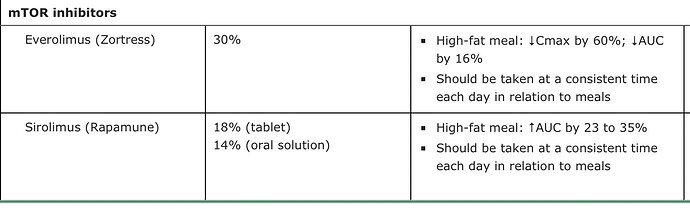
At some point I read about the importance of taking rapamycin after a higher fat meal, as it increases the absorption / bioavailability of the rapamycin. I typically eat a 4 oz tin of sardines before I take my rapamycin.

Information about this fat/ bioavailability link is noted in the Rapamycin / Sirolimus package insert and in a number of research studies - and can be seen here:

The oral availability of sirolimus was increased to a modest extent (35%) and in a uniform manner when administered with a high-fat meal

Source: The effect of a high-fat meal on the oral bioavailability of the immunosuppressant sirolimus (rapamycin)

Source: Pharmacokinetics of orally administered immunosuppressive drugs in adults

As I got to higher doses I started to get a small wrist rash under the band of where my Fitbit is. It largely (but not completely) goes away with cortisol cream use. This rash has continued to persist for most of the past year - cycling as I take my rapamycin doses, and depending upon how consistent I am with applying cortisol cream on it.

This summer I also suspect I had a bit of a bacterial infection. This was not specifically related to rapamycin necessarily (I’ve had ear infections before I started rapamycin) but it happened this time while I was taking rapamycin. I was swimming and kayaking a lot this summer and seem to have a buildup of wax in my ear, as the water was not clearing well from my ears after swimming. At one point after I had water stuck in one ear for many days I started to feel like I was getting sick - so I took a round of azithromycin. The problem immediately cleared up and I’ve not experienced anything like this any other time since starting rapamycin. I have a pack of azithromycin on hand should anything like this happen again.

RapAdmin

Rapamycin: The Gold Standard of Life Extension Drugs

Rapamycin is, by far, the world’s leading candidate for an effective and accessible longevity (anti-aging) drug. Nothing else comes close. If you’re interested in a longer, healthier life you may want to read on and join the thousands of people already using it to improve their lives. We estimate about 20,000 people are taking rapamycin for longevity purposes today, as of Sept. 2024, and increasing quickly, at about 300% per year. At a minimum, you probably want to learn as much as you can about it and keep a close eye on the research going forward.

Rapamycin is considered by many geroscience researchers to be the “gold standard” of longevity drugs; the healthy lifespan improvement seen in animal trials are consistently the best of any drug (typically 15% to 30% lifespan improvement). It increases healthspan and lifespan in every organism it’s been tested in; from yeast, to flies, to worms, to fish, to mice, to rats, and now monkeys (over a billion years of evolution). It has the most reproducible life extension effect, having been tested and retested by many different labs around the world in a wide variety of different species of organisms / animals. Over 29 rapamycin lifespan mice studies have been completed with positive results. Rapamycin also seems to slow, or reverse, aging in many different organs. And, rapamycin is an FDA -approved drug that has been in use for over 20 years, by hundreds of thousands of people (in cancer and organ transplant treatment regimens) and its now classified as a generic drug, so it is inexpensive to buy.

BUT, rapamycin is also a serious drug that can have serious side effects, depending on how its dosed and other factors. This is not a risk-free drug (no drugs are). If you are considering using rapamycin be SURE to spend a few months to read the literature here, and watch the videos, so you can make an informed decision, ideally working in concert with a doctor. There can be negative side effects (typically dose-dependent) like increases in lipid levels or blood glucose levels, so many people do periodic (every 3 months or so) blood testing to check for these potential issues, and make adjustments based on test results Don’t just rush into taking rapamycin because you heard a podcast mention it. Take your time, read as much as you can of the information below, and follow the discussions in our forum.

Rapamycin Basics

Learn More about Rapamycin

Benefits of Rapamycin

Side Effects of Rapamycin

Tracking Your Biomarkers and Results

People Write About Their Experiences with Rapamycin

Rapamycin, etc. for Aging Skin and Hair, Oral Health

Rapamycin and Exercise / Muscle Growth

Surveys & Polls of Rapamycin Users

How to Use / Dose Rapamycin in Anti-aging Applications

How to get Rapamycin Prescription, How to Buy Rapamycin

Why Consider Everolimus instead of Rapamycin (Sirolimus)

Rapamycin for Dogs, Cats, Horses

Other Top Longevity Drugs:

IGF-1 Lowering Drugs for Longevity

Anti-Aging Supplements:

  • Astaxanthin (Preliminary NIA ITP results suggest a 12% median lifespan improvement in mice)
  • Glycine and Gly/NAC
  • Protandim, a mixture of botanical extracts that activate Nrf2, extended median lifespan in males only. (7% median lifespan increase)

Other Longevity Strategies (treatments):

Longevity Clinics

Longevity clinics are health optimization and preventative medicine focused healthcare centers that provide health evaluations and early risk identification of potential disease processes. We believe that this preventative focus is the future of healthcare (compared to the “sick care” of today where they wait until you get sick before they do much of anything), but right now the full services are only available to people who want to spend $5,000 to $100,000 per year. Following are some details on perhaps the leading longevity centers in the world today, and the services they offer.

The History of Rapamycin

RapAdmin

Here are my favorite podcasts focused on healthy longevity and geroscience. Add your own favorites in the comments below:

Read the full story: Best Podcasts Focused on Healthy Longevity and Geroscience (part 2)

RapAdmin

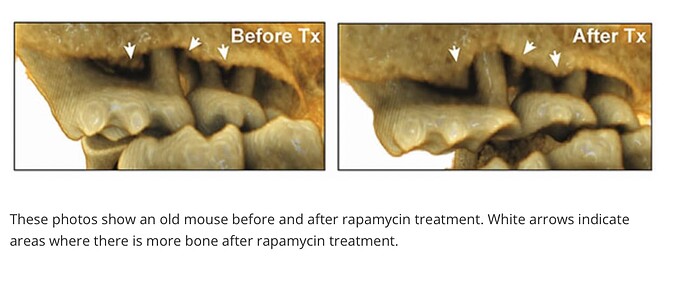
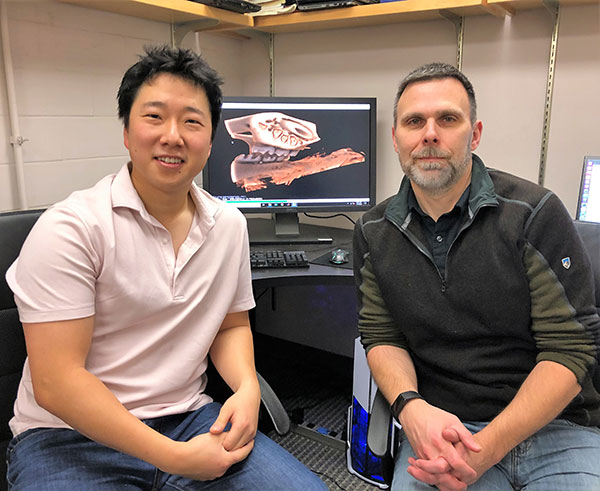
Dr. Jonathan An and Dr. Matt Kaeberlein of the School of Dentistry, along with their colleagues across the country, have found that rapamycin can regenerate bone and decrease gum inflammation, pointing the way toward new treatments for common dental problems in aging patients.

Using a 3-D imaging technique called microcomputed tomography, the researchers measured the periodontal bone of the rapamycin-treated and untreated mice. The treated mice had more bone than the untreated mice and had actually grown new bone during the period they were receiving rapamycin.

In their studies of rapamycin in old mice, the researchers found another intriguing effect: The drug significantly changed the oral microbiome, which is the mouth’s bacterial population. They discovered that old animals not only had a different oral microbiome than the young animals, but that rapamycin treatment reversed changes in the old oral microbiome, making it more similar to what was found in younger animals.

A good interview with Matt Kaeberlein that goes into more depth on this Oral Rejuvenation Study:

Read the Full Research Paper Here:

elife-54318.pdf (2.1 MB)

RapAdmin

EarCheck3wb

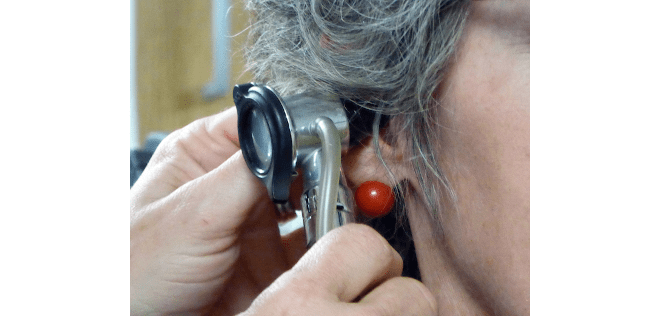
In this new study performed in mice, rapamycin supplementation lessened, but does not reverse, age-related hearing loss in mice even if the treatment starts later in middle age. The researchers of this study had previously found that age-related hearing loss was minimized in mice who had been receiving rapamycin since they were young. In this new study, the researchers wanted to see if these results could be replicated with treatments started later in middle age. The researchers were successful and found that rapamycin treatments given to mice that were 14 months old — which is equivalent to approximately 50 years in humans — prevented them from developing further hearing loss.

Read the full story: Rapamycin Delays Age-Related Hearing Loss (part 2)

RapAdmin

Increasingly people are looking at the research on rapamycin use in mice and dogs and are getting interested in applying it for their own dog or other pet. I give my dog rapamycin and she’s doing extremely well. No side effects, and she’s full of energy and is very healthy. I schedule her weekly dosing identical to that of my own - so when I take my rapamycin, she also gets her rapamycin. I put the 1mg tablet hidden in a small piece of cheese and she takes it with enthusiasm. We work closely with my dog’s vet to make sure she is fully informed about the test we are doing, but my dog’s vet does not yet prescribe rapamycin for dogs in an anti-aging application.

Rapamycin Dosing for Dogs:

In the initial clinical study that the University of Washington did on rapamycin use in dogs, they used a dosing as follows:

The low rapamycin group received 0.05 mg/kg rapamycin (sirolimus) at each dosing. The high rapamycin group received 0.1 mg/kg rapamycin at each dosing. The dogs in the rapamycin treatment groups were dosed to the nearest 0.5 mg based on their body weight at the initial exam.

Read the full story here: Rapamycin for Dogs (part 2)

RapAdmin

Rapamycin (sirolimus) has been used by people by organ transplant and cancer patients for over 20 years. But only in the past 5 or 6 years has it been used by people in anti-aging applications. People first started using rapamycin in a pulsed (weekly) dose protocol for anti-aging about 6 years ago (around 2015 or 2016). To date, we are aware of no serious permanent side-effects identified or reported by users.

While evidence had been piling up in the years after the initial yeast, fly and c.elegans worm studies with rapamycin and lifespan extension in the early 2000s, it wasn’t until 2009 that a mouse study showed that rapamycin could extend lifespan significantly even when given in middle age. Then in 2014 the well-known Mannick paper was published which tested the rapalog Everolimus in healthy people (with success in improving immune response) and at that point people started thinking seriously about applying rapamycin in healthy people to extend healthy lifespans.

What was unique in the Mannick paper was that the clinical trial was done in healthy elderly people, and the dosing was on a weekly basis. The positive results of the test, and the low levels of side effects, quickly resulted in many more people getting interested in testing and using rapamycin.

Dr. Alan Green is the first well-document person to start taking rapamycin for anti-aging, and then to start prescribing it for anti-aging applications. Here are some quotes from some early interviews (here and here) of his:

January 2016, I began the rapamycin-based Koschei formula with intent to take it for one year; in what could euphemistically be called a “proof-of-concept” experiment. I didn’t have to wait one year; by 4 months the results were miraculous. I lost 20 pounds, my waist-line went from 38 inches to 33. I bought a pair of size 32 jeans and didn’t have to wear joggers no more. I could walk 5 miles a day and ride a bike up hills without any hint of angina . Creatinine went from elevated to normal and fasting blood sugar went down. I thought I was Lazarus back from the dead. I feel great. I’ve also had no mouth sores, the most common clinical side-effect. For me, rapamycin is the world’s greatest medicine.

Dr. Alan S. Green:

My first anti-aging patient drove from Ontario, Canada to my NYC office on 4/22/17. … The second patient was seen on 6/16/17. At that point in time, the only person in the public domain who had taken weekly rapamycin for a year or more was me.

Now approximately 2 years later, this office has seen over 360 patients. (in 2019, at time of this interview). Dr. Green now has over 760 patients.

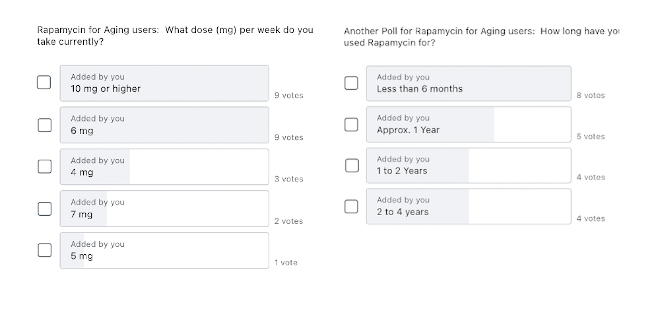
Since the first prescriptions by Dr. Green, perhaps a dozen doctors or more in the USA have started prescribing rapamycin off-label for anti-aging. Simultaneously to the increase in prescribing doctors has been the growth in the number of people actively using rapamycin for anti-aging. The total number of people using rapamycin for anti-aging is now likely to be measured in the low thousands of people, but climbing quickly. The trend line can be seen clearly by looking at the graph at the top of the page, showing how long people have been using rapamycin.

Early results from rapamycin users are very positive with no serious side effects, but we still need large, long-term, well-funded clinical trials for healthy people to learn the optimal doses and dosing schedule, contra-indications, longer term side effects. We also need to identify the specific, measurable anti-aging effects and biomarkers in humans to validate efficacy for rapamycin and other anti-aging drugs.


RapAdmin

Rapamycin in anti-aging applications is typically dosed very differently than what is seen in organ transplant and other disease situations. The most common range for rapamycin dosing that we see doctors prescribing it in anti-aging applications, off-label, is typically 3mg to 10mg, all at once on a once per week schedule.

When rapamycin is used in organ transplant and cancer patients its typically given in higher doses (as much as 40mg/day or even 90mg/day), and, importantly, on a daily basis and with many other medications at the same time. So, in anti-aging applications rapamycin may be used in doses that are as little as 1% or 2% of that used in organ transplant cases - so its a very different type of application with a very different dosing regimen. Many people seem to make the mistake of looking at the side effects of rapamycin in organ transplant or cancer applications and try to suggest that we’ll see the same types of side effects in the low doses used in anti-aging. This is not accurate and not what healthy people are seeing in their very different dosing regimens.

As many scientists say “its the dosage that makes the poison” , which is short for saying there is a harmful dose of pretty much everything we consume. Drink too much water and you will die, but that doesn’t mean that drinking some water is bad (or not, in fact, good for you).

Read the full story: How Safe is Rapamycin (part 2)

RapAdmin

grapefruitw2

Depending upon what foods you take with rapamycin, the bioavailability can significantly increase or decrease. This in turn can impact how much rapamycin you need, and in turn the average monthly cost of using rapamycin. To minimize variability, rapamycin should be taken consistently with or without food.

What are key options to consider for how I take rapamycin?

  • With Fatty Meal
  • With Grapefruit Juice (GFJ)
  • With the anti-fungal drug called “ketoconazole”

The important points to note here are:

  1. If your take your rapamycin with a fatty meal (I take it with a can of sardines for example) you typically increase the bioavailability by about 35%. This saves you money because if you want to be taking an equivalent of 4mg of rapamycin, you may only need to take 3 x 1mg tablets with a fatty meal to get the same effect as you would taking 4 tablets of 1mg.
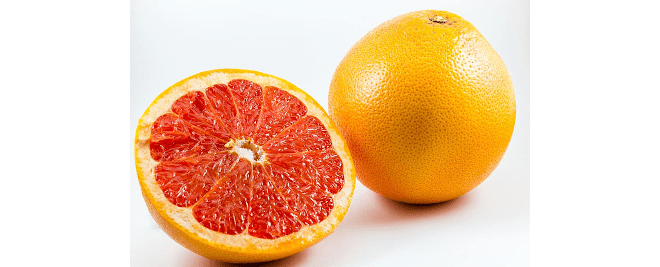
  2. Studies have shown that taking rapamycin with grapefruit juice (from frozen concentrate, in the study), you can get on average a 350% increase in bioavailability. This suggests that instead of 3.5 mg of rapamycin, you could instead take just a single 1mg tablet with grapefruit juice (GFJ) to get the same “effective dose” of rapamycin. There are some important considerations, risks and limitations - so read more down below before you jump into doing this.

Read the full story here: Improve Bioavailability of Rapamycin (part 2)