Metformin reduces arthritis symptoms.
2 Likes
Dr. Brad’s BP journey. He has familial high BP of 140-150.
He used an ARB (Candesartan) and Empagliflozin to reach his target of 120 SBP. He also discusses his lipid lowering meds and how he got his LDL below 50 with Ezetemibe and Pravastatin.
Pro tip: Statins are best taken at night before bed.
6 Likes
Interesting … Telmisartan is approved in New Zealand, but it isn’t funded by Pharmac (NZ’s pharmaceutical buying agency) turned down the application. I suspect it might be hard to get any and maybe that is why he has opted for Candesartan?
3 Likes
Re taking at night it depends on the statin. For something with a longer half life like rosuvastatin it doesn’t seem to matter when you take it
3 Likes
Dr. Brad’s take on Glycine. He takes it.
Short video on benefits below.
2 Likes
Beth
#15
I just learned I should take it in the evening… thank you.
Weight loss drugs help against dementia.
1 Like
Dr. Brad weighs in on protein intake.
1 Like
Beth
#18
@A_User you might have already found what you were looking for, but I remembered you asked where I saw Attia mention his protein advice of 2.2kg per kg. There is a quick snippet of him saying this in the short YouTube Destrider just posted.
1 Like
Related to Stanfield, weren’t the results of that Rapamycin with old people exercising study supposed to be out by now? He had the results back in June or July.
1 Like
It takes a while. However the results were positive as Dr. Brad is going to get his PhD in Rapamycin.
1 Like
Positive how? He sort of alluded to there being a significant difference between groups, but the groups weren’t unblinded yet. However, if the study was about exercise and Rapamycin, a difference means Rapamycin was detrimental vs control, or was beneficial vs control. If Rapamycin doesn’t affect exercise, there’s no significant difference to report.
I can’t see how a literal growth pathway inhibitor could be beneficial during exercise, so I’d have to assume it was detrimental. (Though I will of course love to be wrong)
1 Like
He says the results from the Rapamycin trial are available and anyone who is at the conference could talk to him and he’d tell them the results. Not sure why he didn’t talk about it in the video.
His top interventions:
- SGLT2IS
- Rapamycin
- GLP-1s
- PCSK9 drugs
Then he goes into skin aging at 13:30.
Also Matt Kaeberlein also probably knows the results. Can anyone reach out to either of these guys to get the results? @mkaeberlein care to share here or by DM?
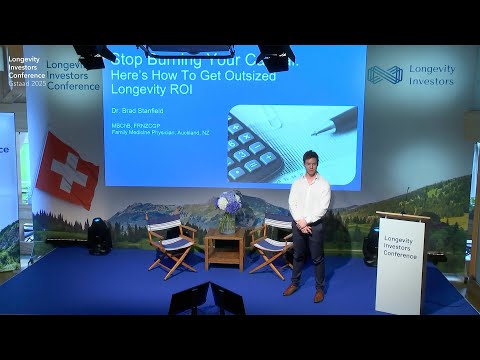
Dr. Brad’s state of the union address on longevity. The first part is about criticizing resveratrol, so just skip that. He also criticizes Fisetin.
5 Likes
The paper is under review right now and I don’t think Brad wants to talk publicly about the results until it’s in press. It’s his call, and I’m going ot respect his wishes. I will of course give my interpretation of the results once the paper is out. Brad and I sat down for a longer interview at the same conference, which should be out on the Optispan Podcast page soon. Podcast — Optispan
14 Likes
Thanks, Matt! Truly appreciate your opinion and stance. We’ll all just have to wait patiently and of course watch your videos! 
3 Likes
Odd presentation. How do glp-1RA and pcsk9i fit into being longevity drugs? As far as I know neither have been tested as such. And the literature on pleiotropic effects of pcsk9i is pretty sparse. Apart from the generally salutary effects of lowering LDL, what’s the longevity benefit for non-CVD people?
A lot of work went into the drawn out rocket analogy for a modest payoff and Dr. Brad seemed very nervous. I confess I couldn’t get up any curiosity to watch the skin care fragment, so maybe that was stellar.
1 Like
I would think generally keeping glucose levels down has benefits. Not such an obvious case of pcsk9i. I am personally, however, not persuaded by glp 1 agonists for myself. However, my HbA1c tends to be under 5.
1 Like
Preventing CVD is one of the most important ways of improving longevity as most people die of a circulatory disease caused by arteriosclerosis. You can take all the Rapamycin you want but it won’t help if you die of a heart attack. Preventing this is what PCSK9Is do best. That’s why he mentioned it. Also probably goes over better than talking about stations and Ezetemibe.
2 Likes
Well, sure, but those are preventative or curative drugs, not longevity. If I cure or prevent a disease, it’s not a life extending drug, it’s just an anti-life shortening, an antibiotic can prevent an infection, but that’s not life extension, it can prevent you dying from an infection, but that again is not life extension. That’s why a statin, simvastatin failed in the ITP. For a pcsk9i to be a longevity drug, it would have to have a good ITP result. So let’s see it - I doubt it would. And until it does, you cannot make a longevity claim for it as is understood as a “longevity intervention” at a longevity conference - drugs that address CVD belong at a medical conference, a completely different animal.