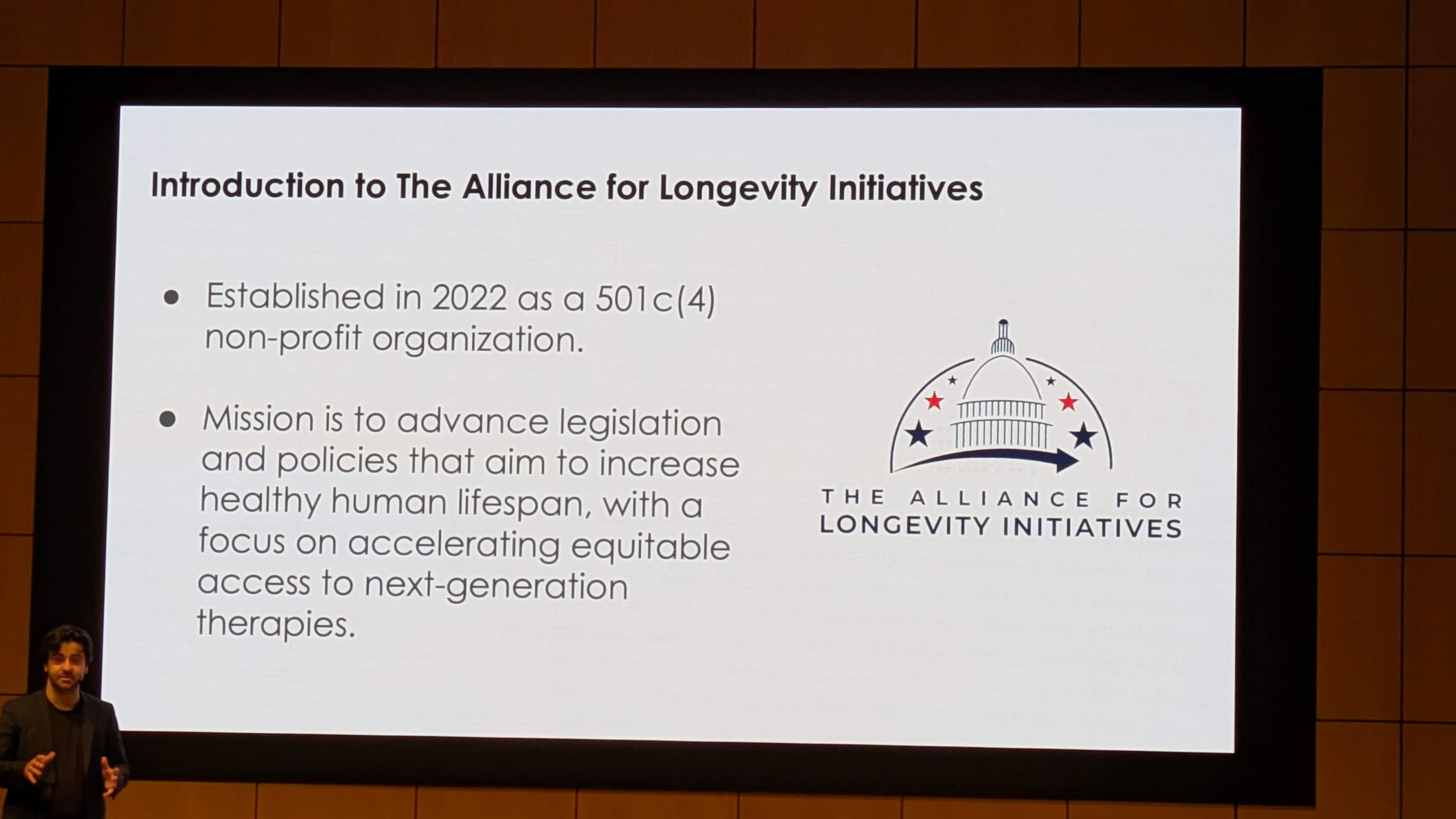
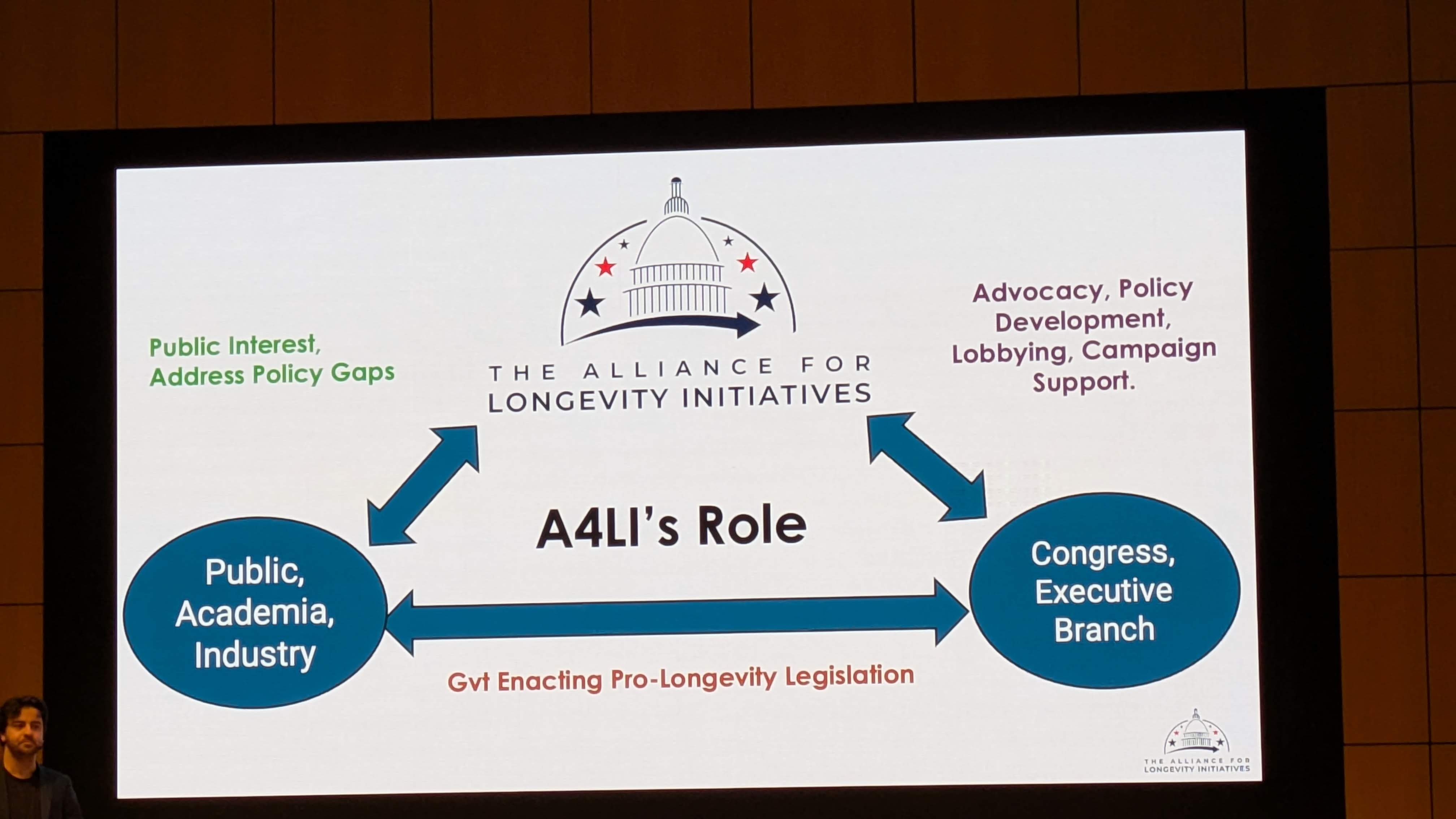
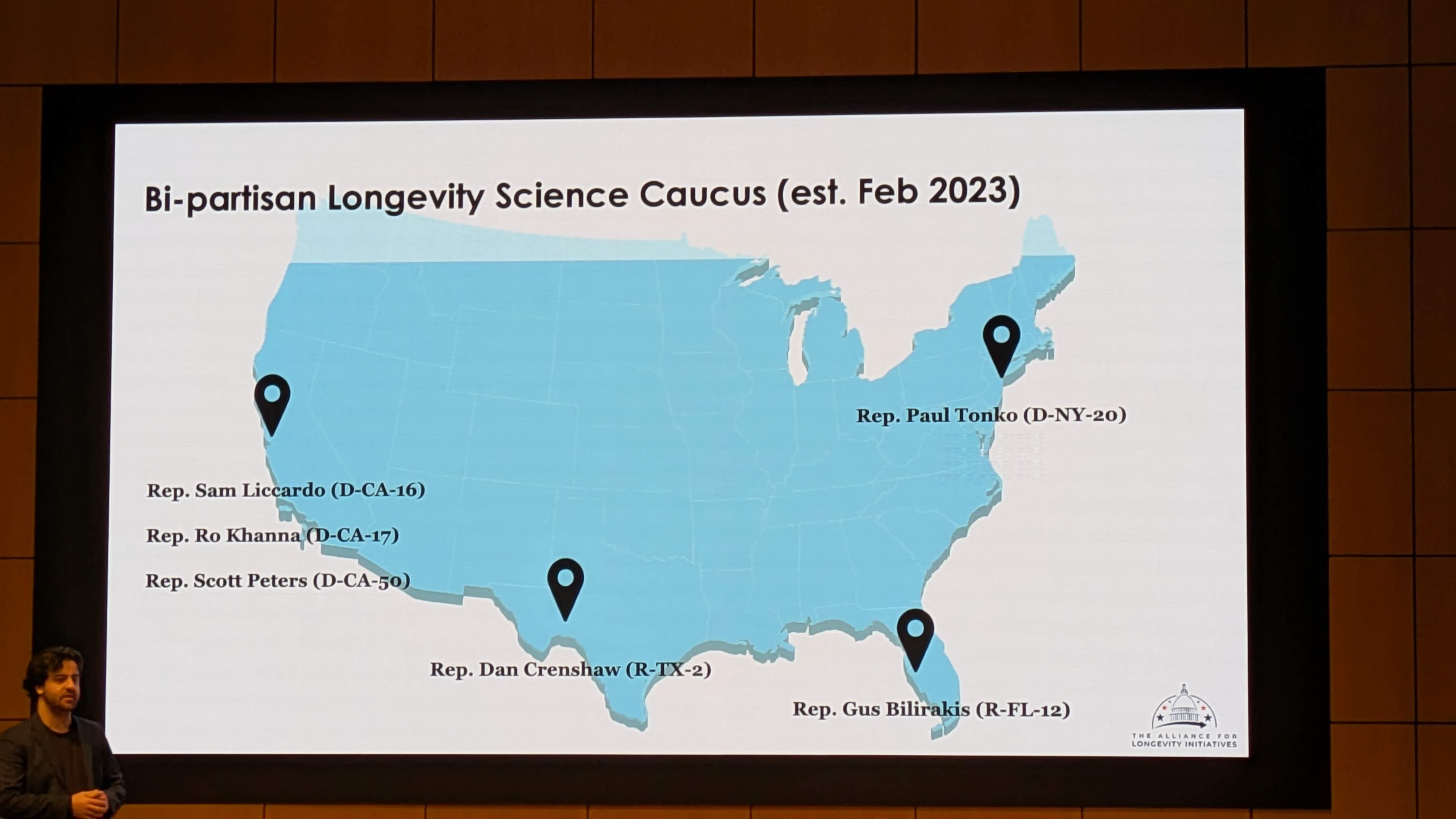
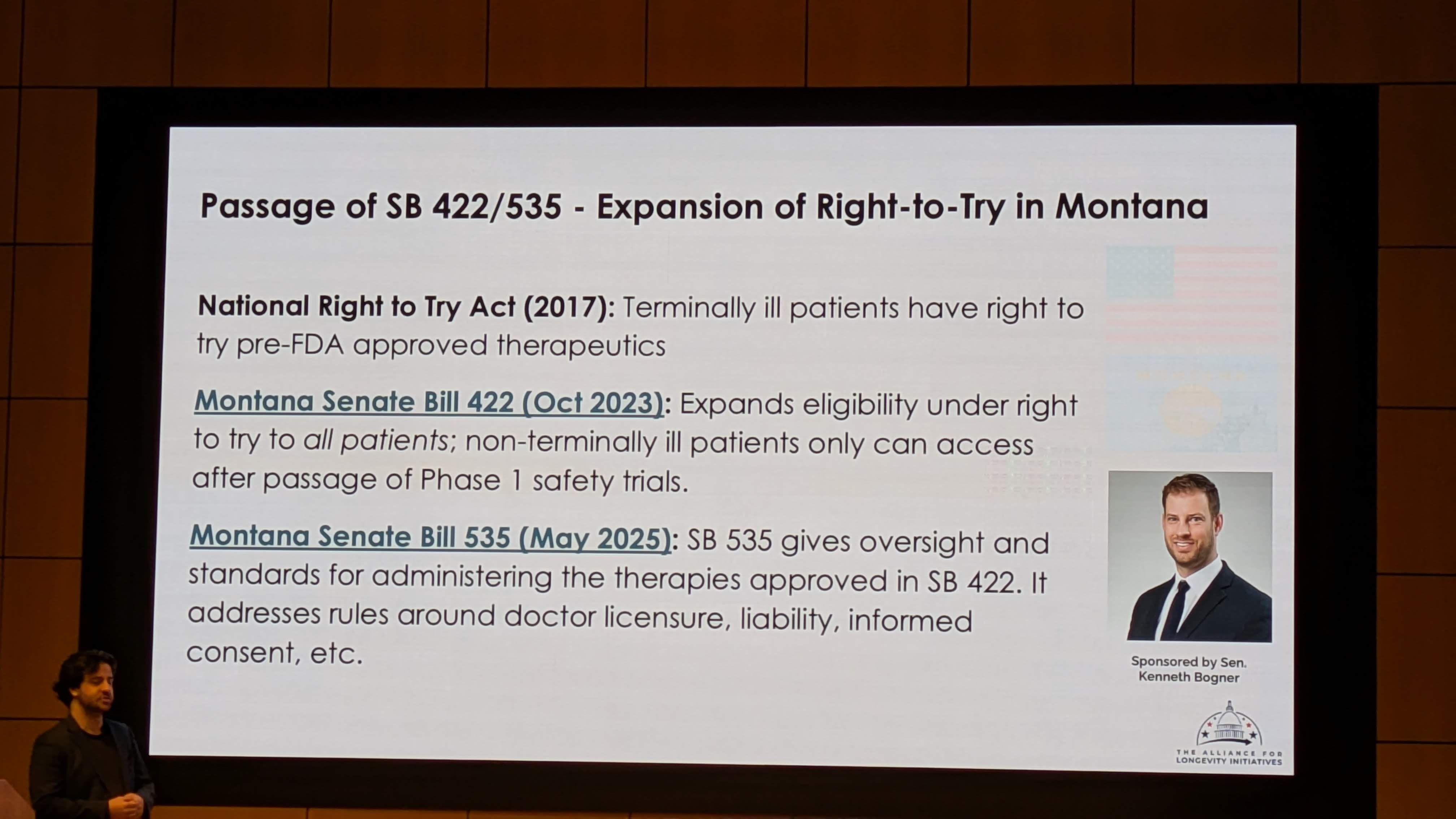
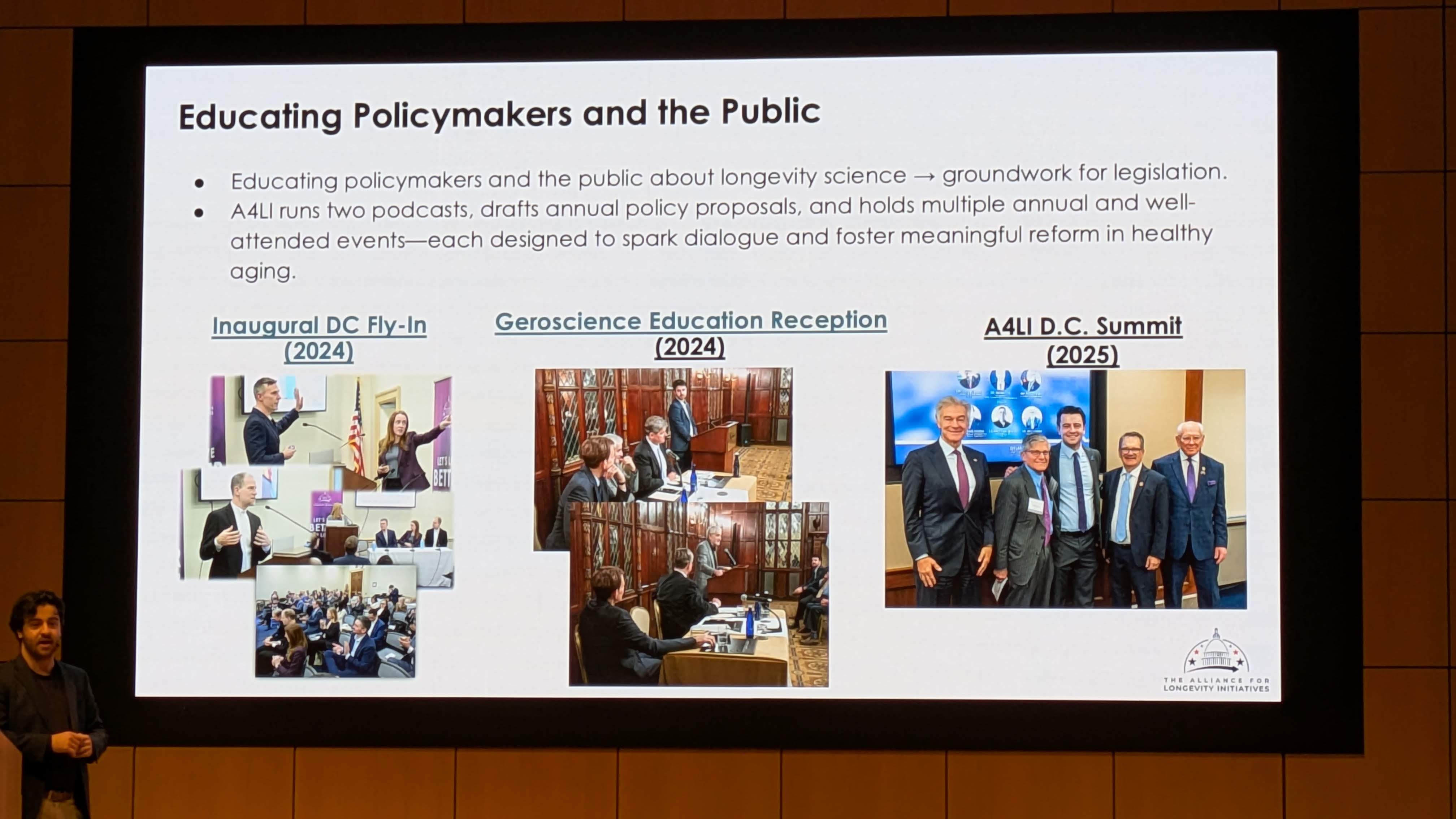
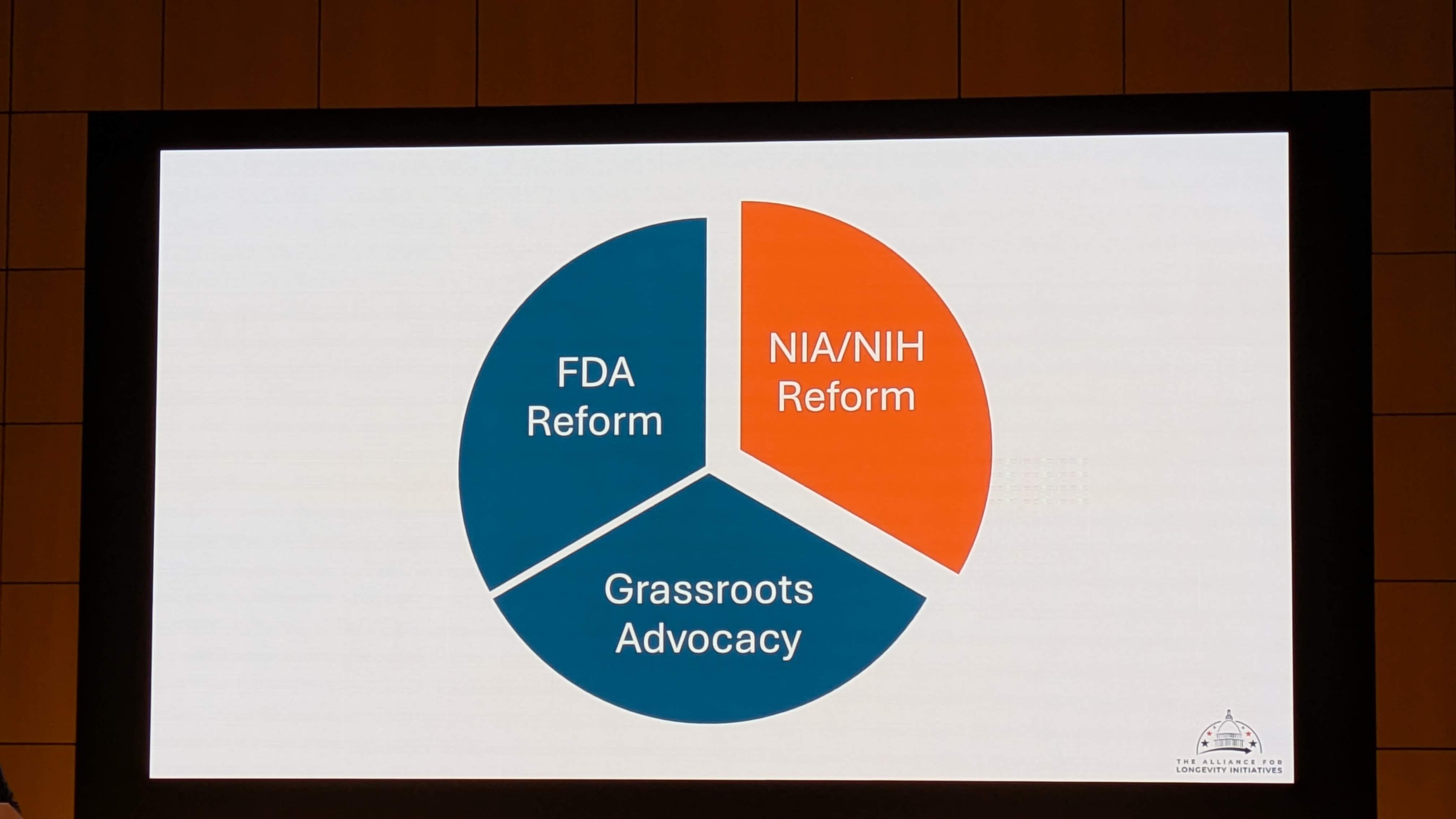
Dylan seems like he’s doing important work in educating US congress members about the value of longevity research, and helping move positive legislation forward.

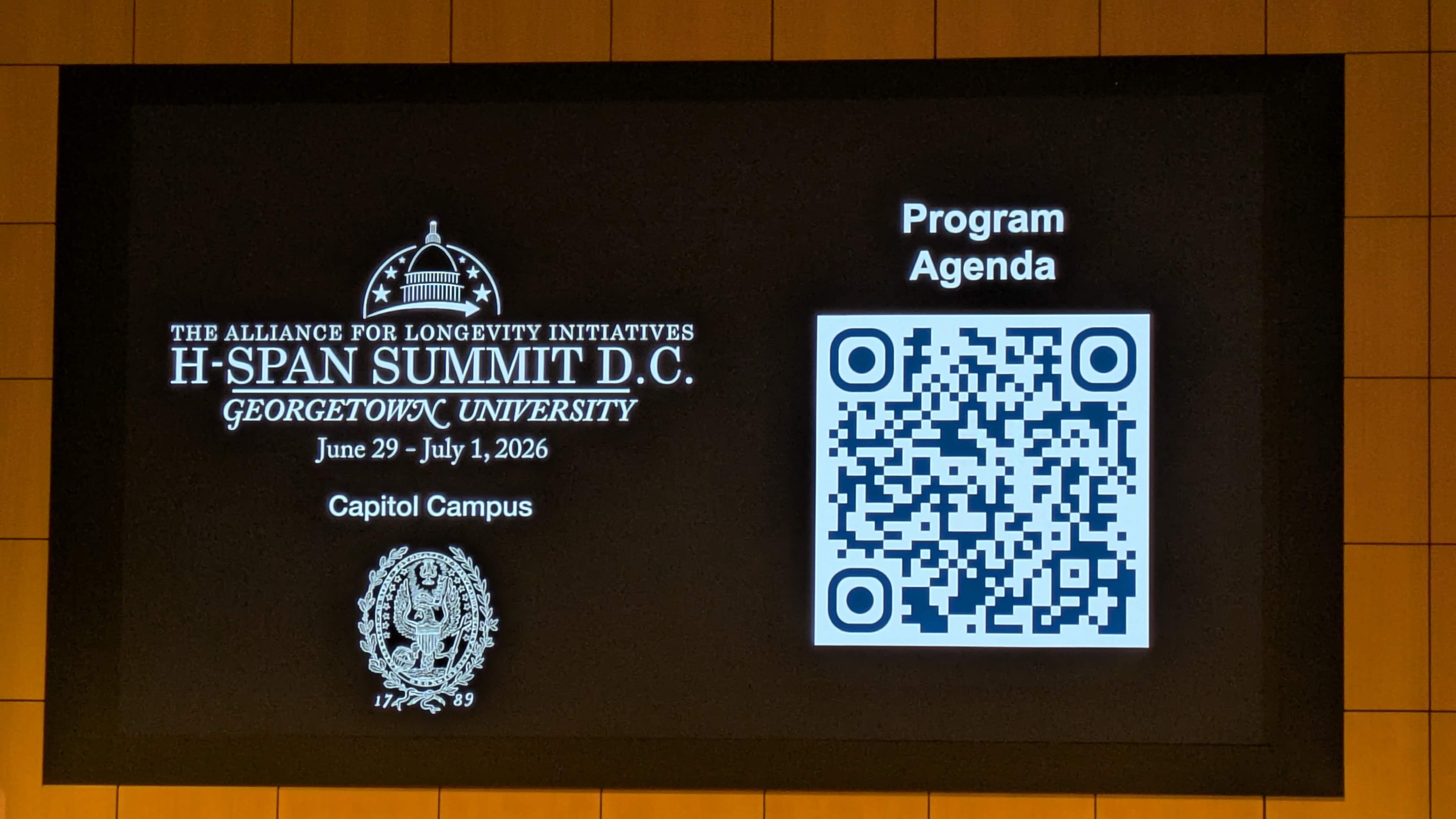
They have a conference planned in June of 2026, see last slide for details.

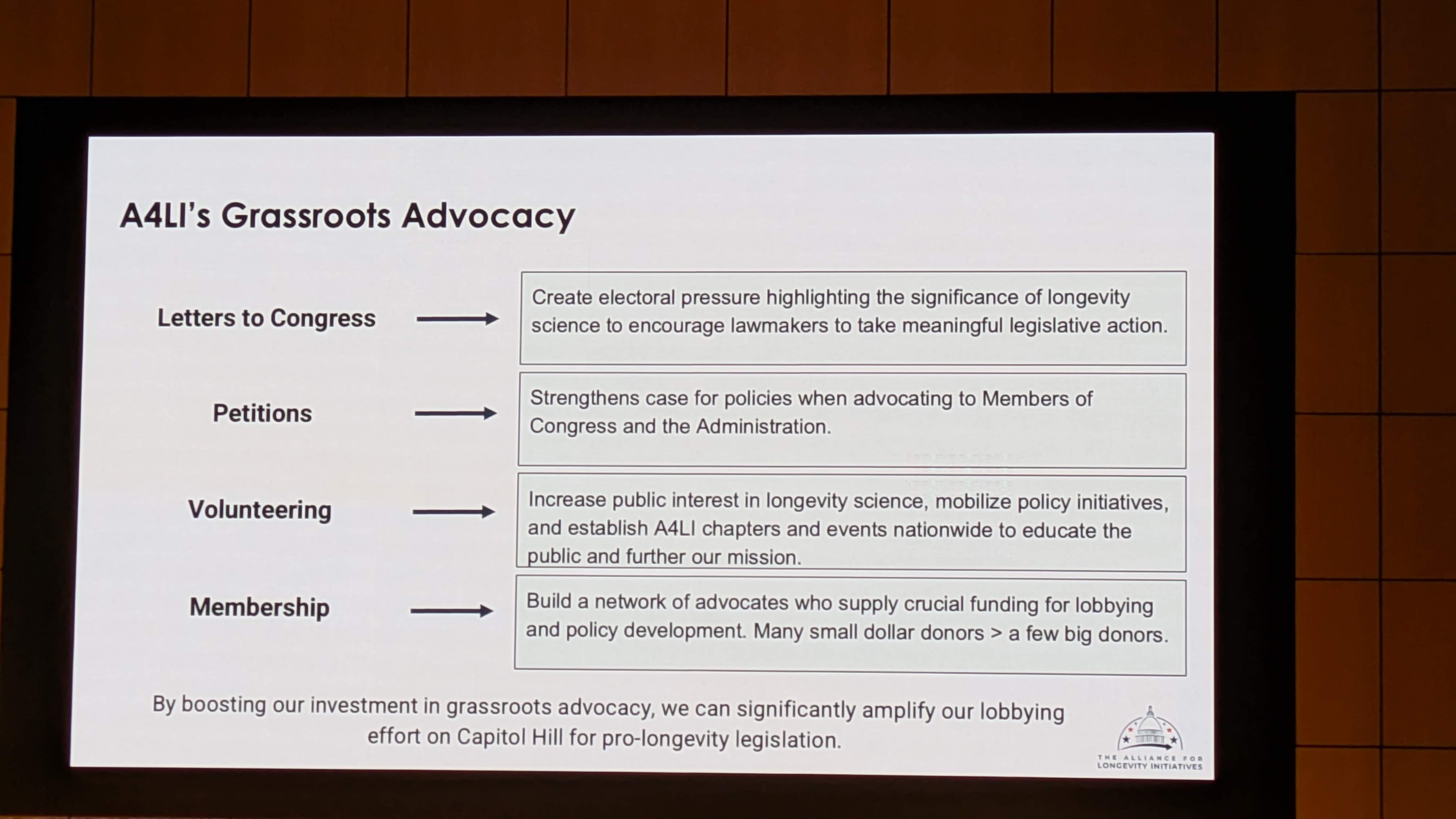
Here was his presentation:


Well I hope he can include microplastics in the lobbying (Florida Senator Rick Scott at least started out on a microplastics study bill]

image
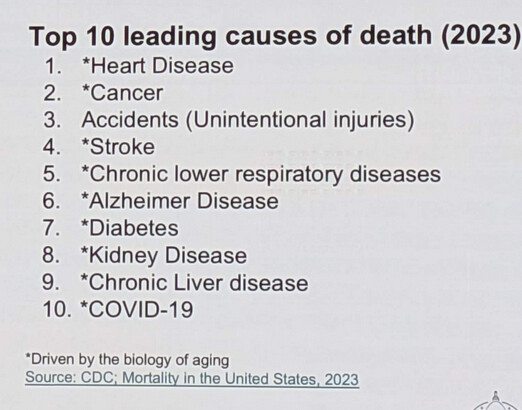
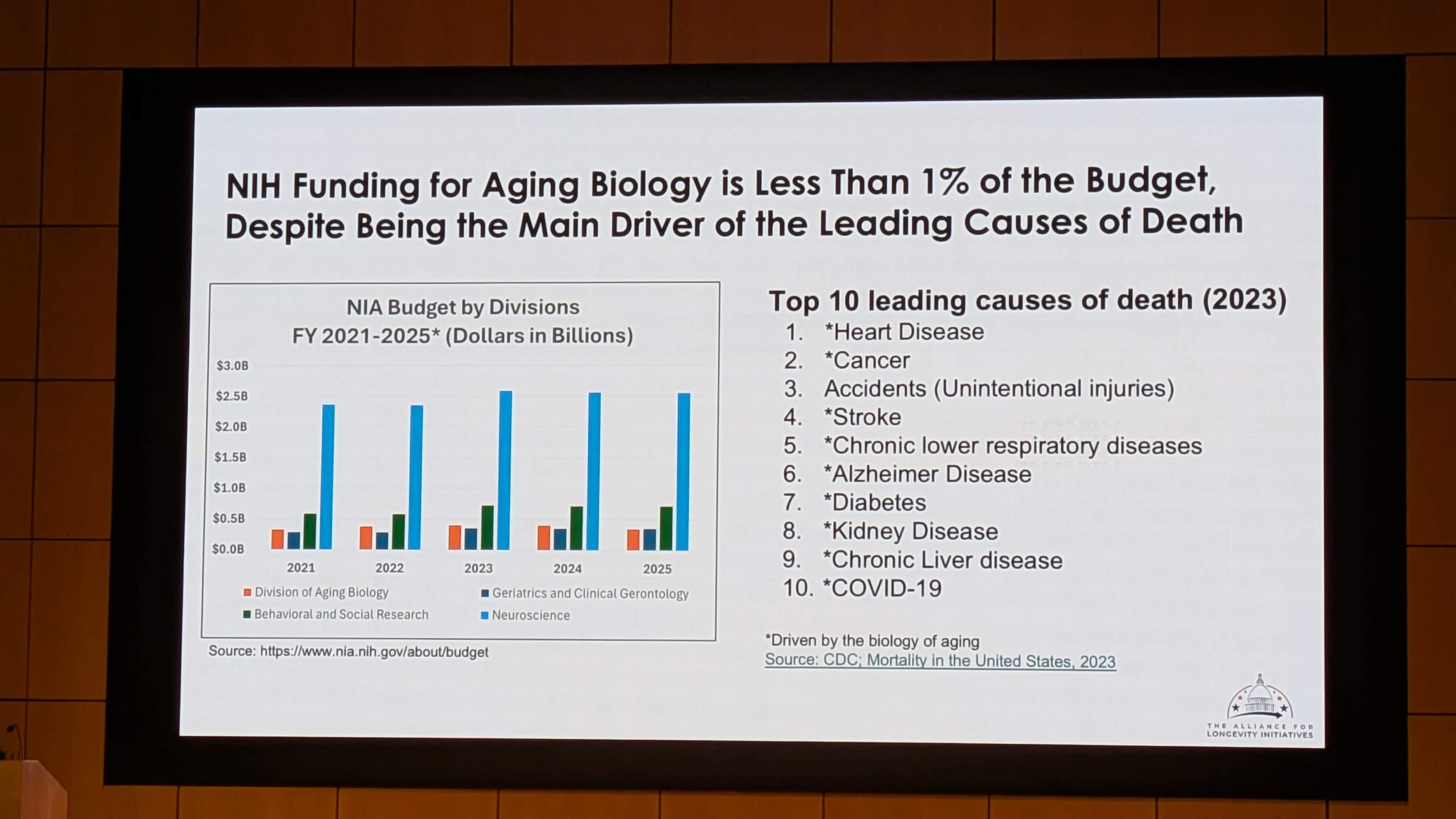
What do they mean with “driven by the biology of aging” specifically for heart disease? We know most cases of salient heart disease e.g the disease most people get at the current ages can be prevented with early therapeutics targeting e.g LDL-C. So it might look confusing to people that have learned from Peter Attia that they can prevent most cases of CVD, and here it’s aging?

Will a politician on 40 mg atorvastatin and ezetimibe who’ve never had a heart event – and no one they know either who use it – be persuaded that it’s caused by aging?

I’d argue a large percentage of deaths by accident are caused by aging. Reflexes get slower, muscles get weaker, balance is worse, and caution lags. Grandma put her car in the ditch 3 times before we had to finally take away her keys.

1 Like

Key US Politicians Demonstrating Leadership on Microplastics

Microplastics—tiny plastic particles under 5mm—pose emerging threats to human health (e.g., potential links to endocrine disruption, cancer, and reproductive issues) and ecosystems, infiltrating food, water, air, and even human tissues. While federal action remains fragmented, several US politicians have shown proactive leadership through bipartisan legislation, international advocacy, and research initiatives. Below, I highlight the most prominent figures based on their introduction or sponsorship of targeted bills, letters to agencies, and public efforts to address microplastic pollution. These efforts focus on health studies, source reduction, and environmental monitoring.

This assessment draws from congressional records, press releases, and policy analyses, emphasizing actions since 2019 when microplastics gained broader attention. Bipartisanship is a common thread, reflecting the issue’s cross-aisle appeal.

Top Leaders and Their Contributions

Politician Party/State Key Actions on Microplastics Impact/Notes
Jeff Merkley D-OR (Senate) - Lead sponsor of the Break Free From Plastic Pollution Act (S. 984, 2021; reintroduced 2023 as S. 3127), which includes Sec. 205 mandating EPA microplastics research, directives for removal technologies, and reductions in single-use plastics in agriculture.
- Co-introduced the Microplastics Safety Act (S. 2353, 2025) with Sen. Rick Scott, requiring FDA to report on health impacts (e.g., children’s health, endocrine risks) within one year.
- Led a 2024 letter with 45+ colleagues to EPA urging a microplastics pilot program and TSCA rulemaking on petrochemicals.
- Introduced resolution designating July as “Plastic Pollution Action Month” (2024) to spotlight microplastics in food chains and remote ecosystems.
- Advocated US “high ambition” in UN plastics treaty negotiations (2024), emphasizing production caps to curb microplastic sources.
Most prolific federal leader; his bills address the full lifecycle of plastics, from production to pollution. Oregon’s coastal focus drives his efforts, but they’ve garnered broad bipartisan support.
Jared Huffman D-CA (House) - Co-lead on the Break Free From Plastic Pollution Act (H.R. 1438, 2021; reintroduced), including microplastics research and single-use plastic bans.
- Led 2024 letter to EPA (with Merkley and Booker) calling for nationwide single-use plastic reduction targets and microplastics removal pilots.
- Co-signed 2024 international letter (with Whitehouse) to limit industry influence in UN plastics talks, targeting microplastic precursors like non-recyclable packaging.
- Pushed Biden admin for ambitious INC negotiations (2024), highlighting microplastics in human blood and breastmilk.
Strong on international and regulatory angles; California’s ocean protection priorities inform his work, including state-level microplastics strategies influencing federal pushes.
Sheldon Whitehouse D-RI - Co-sponsor of Research for Healthy Soils Act (S. 3845, 2024) to study microplastics in biosolids applied to farmland, estimating up to 1,080 trillion particles released annually.
- Co-led 2024 letter to UN on curbing plastic industry obstruction in global treaty talks.
- Reintroduced REDUCE Act (S. 3998, 2024) imposing fees on virgin plastic resin to incentivize recycling and reduce microplastic waste.
- Early bipartisan SAVING OUR SEAS Act (2018, signed 2018) as a “beachhead” for ocean plastics, including microplastics research.
Rhode Island’s “Ocean State” roots fuel his focus on marine pollution; emphasizes economic incentives and corporate accountability.
Cory Booker D-NJ - Co-led 2024 EPA letter (with Huffman and Merkley) for microplastics pilots and petrochemical reviews under TSCA.
- Co-sponsor of Research for Healthy Soils Act (2024) on farmland microplastics.
- Supports broader plastics crisis actions, including 2023 calls for binding global instruments on plastic production.
New Jersey’s industrial legacy drives his emphasis on health and environmental justice; collaborative role amplifies multi-state efforts.
Janelle Bynum D-OR (House) - Lead House sponsor of Microplastics Safety Act (H.R. 4486, 2025) with Rep. Steube, mandating FDA health impact studies on exposure via food/water.
- Public advocacy highlighting microplastics in brains (equivalent to a spoon’s weight per person).
Freshman rep with rapid impact; bipartisan bill fills a key research gap, as no prior federal study exists on microplastic health effects.
Rick Scott R-FL - Co-introducer of Microplastics Safety Act (S. 2353, 2025) with Merkley, focusing on Florida’s coastal vulnerabilities (e.g., higher heart disease in high-microplastic counties). Rare Republican lead on environmental health; bridges partisan divides, citing personal concerns for older Americans.
Haley Stevens D-MI - Lead sponsor of Plastic Health Research Act (H.R. 8992, 2025) with Rep. Lucas, directing interagency research on micro/nano-plastics in Great Lakes water, food, and bodies.
- Builds on Michigan’s PFAS fights, emphasizing ecological and health risks.
Michigan’s freshwater focus; bill prioritizes standardized methods for comparable studies, addressing knowledge gaps.
Young Kim R-CA - Co-introducer of Healthy Soils Act (H.R. 3991, 2025) with Rep. Perez, funding USDA grants to study microplastics/PFAS in biosolids on farmland. Bipartisan agriculture angle; highlights risks to soil health and child development.

Broader Context and Trends

  • Bipartisan Momentum: 2025 saw a surge in bills like the Microplastics Safety Act and Plastic Health Research Act, reflecting growing evidence (e.g., 50% rise in brain microplastics over a decade). Republicans like Scott, Steube (R-FL), Lucas (R-OK), and Kim add cross-aisle credibility.
  • State-Level Echoes: While federal focus is on research, states like California (AB 823 banning microbeads, 2025) and Oregon (SB 551 expanding plastic bans) influence national efforts. Seven Democratic governors (e.g., NJ’s Phil Murphy, MI’s Gretchen Whitmer) petitioned EPA in Dec. 2025 for nationwide microplastics monitoring in drinking water.
  • Challenges and Gaps: Critics note bills emphasize studies over immediate bans, partly due to industry pushback (e.g., American Chemistry Council calls for multi-agency coordination). No comprehensive federal ban exists yet, unlike the 2015 Microbead-Free Waters Act (bipartisan, led by Rep. Frank Pallone, D-NJ).
  • Emerging Voices: RFK Jr. (as HHS nominee in 2025 posts) pledged Trump admin action on microplastics in food supply, potentially accelerating implementation.

These politicians stand out for translating alarm into action. For updates, track bills via Congress.gov. If you’d like details on a specific bill or state efforts, let me know!

1 Like