I’ll put Mike’s videos in this thread when I see them and think they are interesting…
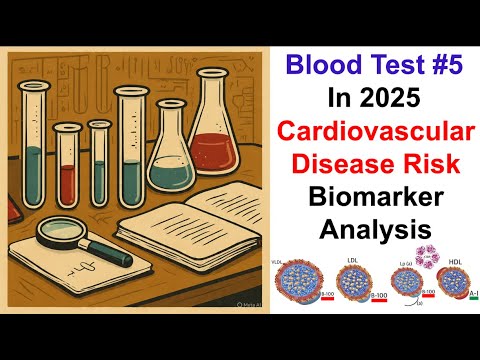
Introduction to Biological Age and Blood Testing
- The video discusses the results of a blood test conducted in 2025, indicating a biological age that is significantly younger than the chronological age.
- The speaker questions whether the biological age clock, specifically the pheno age, has any blind spots and introduces the nine biomarkers that contribute to this assessment.
- These biomarkers include measures related to liver health, kidney function, metabolic health, immune response, and red blood cells, but notably exclude cardiovascular disease biomarkers.
- The absence of cardiovascular disease-related biomarkers is emphasized as significant since cardiovascular disease ranks among the top five causes of death.
- A younger biological age is correlated with a lower risk of death from cardiovascular disease, suggesting the importance of tracking additional biomarkers related to cardiovascular health.
Cardiovascular Disease Risk Biomarkers
- The speaker plans to delve into cardiovascular disease risk biomarkers, beginning with details from the blood test report.
- Tests are ordered through ultalabtest.com, allowing for personalized selection of tests, followed by a blood draw at Quest Diagnostics.
- Results from a test conducted on July 22nd were received just four days later, highlighting the efficiency of the process.
Lipid Panel Results - HDL
- The speaker reviews HDL (high-density lipoprotein) levels from the lipid panel, noting a result of 76 milligrams per deciliter, which is above the reference range of 40 milligrams per deciliter.
- While the result is good, the speaker refers to a more stringent optimal range of 50 to 69 milligrams per deciliter based on extensive studies involving millions of participants.
- HDL levels tend to decline with age, and the speaker has created a Patreon tier to share data on optimal biomarker ranges as they relate to aging.
- The speaker examines HDL data spanning 20 years, revealing fluctuations and a general decline prior to 2015, which coincided with the beginning of a more rigorous dietary tracking approach.
- Since adopting a detailed dietary tracking method, the speaker has managed to increase HDL levels significantly, with a recent average of 58 milligrams per deciliter.
APOA1 Levels and Their Significance
- APOA1, a component of HDL, is discussed as an important biomarker for cardiovascular disease risk, with the speaker presenting a current test result of 166 milligrams per deciliter.
- The reference range for APOA1 is anything over 115 milligrams per deciliter, indicating that the speaker’s result is satisfactory.
- The speaker notes that the reference range has not been updated since a 2004 study, despite newer data being available.
- The optimal range for APOA1, based on recent studies, is identified as 150 to 180 milligrams per deciliter, suggesting that the speaker’s levels are adequate but could be improved.
- The speaker’s average APOA1 levels over six tests are 146 milligrams per deciliter, which is slightly below the optimal range but shows potential for improvement.
Triglyceride Levels and Assessment
- The triglyceride level from the latest test is reported at 62 milligrams per deciliter, which is well below the reference threshold of 150 milligrams per deciliter.
- However, the speaker aims for an optimal triglyceride level of less than 90 milligrams per deciliter, as studies indicate this range is associated with lower all-cause mortality risk.
- In a study involving 4.5 million participants, the lowest coronary heart disease risk was associated with triglyceride levels below 45 milligrams per deciliter, which is the speaker’s long-term goal.
- Over 20 years and 71 tests, the speaker has noted a trend of decreasing triglycerides, although recent data shows an upward trend that the speaker hopes to reverse through increased cardio activity.
- The speaker reflects on dietary changes, including a brief period of veganism, and the impact of a low-fat diet on triglyceride levels.
LDL Levels and Long-Term Trends
- The LDL (low-density lipoprotein) level for the recent test is noted at 86 milligrams per deciliter, which is below the reference range of 100 milligrams per deciliter.
- The speaker discusses optimal LDL levels, citing studies that associate the lowest coronary heart disease risk with levels ranging from 65 to 120 milligrams per deciliter.
- The speaker acknowledges the complexity of LDL trends, which typically follow an inverse U-shape across the lifespan, peaking in midlife before declining in older age.
- Analysis of LDL data from 72 tests over 20 years reveals fluctuations that may relate to dietary changes made since 2015.
- The speaker aims to stabilize LDL levels while avoiding age-related increases or decreases, with a long-term average of 82.5 milligrams per deciliter.
Lipoprotein A and Cardiovascular Risk
- The speaker’s lipoprotein A level is reported at 91 nanomolar, which exceeds the reference range of 75 nanomolar, raising concerns about cardiovascular risk.
- Optimal levels for lipoprotein A, associated with the lowest coronary artery disease risk, are considered to be below 48 nanomolar.
- Historical data from 45 tests over 20 years shows a concerning average of 106 nanomolar for the first decade, indicating poor lipoprotein A levels.
- The speaker cites a significant improvement in lipoprotein A levels over the past 10 years, achieving an average of 90 nanomolar through dietary changes.
- The speaker notes the importance of high-sensitivity C-reactive protein (hsCRP) levels in modifying cardiovascular risk associated with lipoprotein A.
High-Sensitivity C-Reactive Protein and Its Impact
- The speaker’s hsCRP level is reported as less than 0.2 milligrams per liter, indicating a low level of inflammation, which is favorable for cardiovascular health.
- The speaker has consistently maintained hsCRP levels below the detection limit for 26 tests, suggesting effective management of inflammation over the years.
- Despite a higher lipoprotein A level, low hsCRP may mitigate cardiovascular disease risk, particularly given the speaker’s family history of cardiovascular issues.
- The relationship between lipoprotein A and cardiovascular disease risk remains complex, especially when factoring in hsCRP levels.
APO B Levels and Future Monitoring
- APO B, a protein associated with various lipoproteins, is discussed, with a current level of 71 milligrams per deciliter, which is below the reference range of 90 milligrams per deciliter.
- The speaker aims for an optimal APO B level of less than 70 milligrams per deciliter, which is associated with lower cardiovascular disease and all-cause mortality risk.
- Over six tests, the speaker has achieved an average APO B level of 67 milligrams per deciliter, indicating that he is within the optimal range.
- The speaker plans to continue monitoring APO B to gather more data and assess its relevance compared to other lipoprotein measures.
Conclusion and Future Directions
- The video concludes with the acknowledgment that only a portion of the blood test report has been covered, encouraging viewers to seek further information available on Patreon.
- The speaker plans to share details regarding the diet, supplements, and medications that correspond to the recent test results in future videos.
- Viewers are invited to follow the speaker’s journey in biohacking aging and to access various resources, including affiliate links for testing services.
- The speaker emphasizes the importance of understanding one’s health metrics in the context of aging and cardiovascular disease prevention.
AI Summary done using this website: Krisp | Free Youtube Video Summarizer with AI
6 Likes
LukeMV
#2
The AI summaries for his videos are super helpful to save time.
I find Lustgarden’s anecdotes FAR more valuable than Bryan Johnson’s.
3 Likes
I still think his lipid levels should drop further if he wants to evade CVD and atherosclerosis.
1 Like
Who’s Really Winning At Longevity? (Featuring Unaging Crissman Loomis)
AI Summary:
Here is the summary and analysis of the provided podcast transcript.
A. Executive Summary
This episode features a “Biomarker Throwdown” comparing the physiological data of three individuals: the guest Chrisman Loomis (55), longevity mogul Bryan Johnson (48), and biohacker Siim Land (31). Hosted by Michael, the discussion critiques the claim that extreme financial investment (Johnson’s $2M/year) is necessary for elite biomarkers. Loomis demonstrates that a low-cost, high-effort protocol (walking desk, minimal but heavy lifting) can rival or exceed the results of Johnson’s extensive supplement and medical regime.
Michael provides a rigorous technical analysis of the data, debunking the reliance on single-snapshot biological age clocks and emphasizing raw clinical chemistry (Albumin, RDW, Cystatin C). The analysis reveals potential red flags in Johnson’s data (kidney function, anemia risk) despite his “perfect” branding. The episode concludes with Loomis introducing the “2026 Unaging Challenge,” a free community initiative focused on increasing healthspan through measurable strength and step-count goals.
B. Bullet Summary
-
Context of Comparison: Comparing biomarkers across vast age gaps (31 vs 48 vs 55) is inherently flawed; the true metric is resistance to age-related decline, not absolute numbers against a younger control.
-
Strength & Function: Grip strength is a top-tier aging biomarker. While Siim Land (31) dominates absolute strength, maintaining functional range of motion (ROM) is critical to avoid “old person” mobility issues.
-
Bone Density (BMD): Loomis reversed osteopenia (pre-osteoporosis) through heavy lifting, proving age-related bone loss is reversible.
-
Kidney Function: Standard eGFR is useless for athletes due to Creatinine/muscle mass skew. Cystatin C is the superior metric. Data suggests Bryan Johnson has suboptimal kidney function (Cystatin C > 0.8) despite his protocol.
-
Immune Health: Total white blood cell count is insufficient; the lymphocyte breakdown (CD4/CD8 ratio) determines the “Immune Health Grade.”
-
Red Blood Cells: RDW (Red Cell Distribution Width) is the strongest predictor of mortality in the PhenoAge clock. MCV (size) tends to increase with age; optimal levels should remain lower/youthful.
-
Lipids & Steps: Loomis has an exceptionally high HDL (113 mg/dL) and ApoA1, attributed to 20,000+ daily steps, lifting, and moderate alcohol. Michael warns of a U-shaped mortality curve where extremely high HDL can indicate liver stress or dysfunction.
-
Cost vs. Outcome: Loomis achieves elite biomarkers with a $60 gym membership and bananas (potassium), challenging Johnson’s $170,000/month protocol involving 100+ pills.
-
Biological Clocks: Epigenetic clocks (DunedinPACE) are often weak predictors compared to clinical chemistry clocks (PhenoAge, GrimAge) which track actual organ function (Albumin, Creatinine, CRP).
-
Blood Pressure Hack: Increasing Potassium intake (approx. 4.7g+) is often three times more effective for lowering BP than sodium restriction alone.
-
The Unaging Challenge: A community initiative tracking V02 Max, HRV, and strength, aiming to extend average life expectancy by ~20 years through lifestyle modification.
D. Claims & Evidence Table
| Claim |
Evidence Provided |
Assessment |
| Bryan Johnson has the “best biomarkers in the world.” |
Comparison of kidney (Cystatin C), blood (Hemoglobin), and immune data against Loomis/Land. |
Weak. Data reveals suboptimal kidney function, potential anemia risk, and lower immune markers compared to peers. |
| Walking increases HDL cholesterol. |
Loomis correlates 20k steps/day with HDL of 113. Michael cites linear correlation data. |
Strong. Mechanism exists, though alcohol consumption is a confounding variable in Loomis’s case. |
| eGFR is inaccurate for high-muscle individuals. |
High muscle turnover increases Creatinine, artificially lowering eGFR. |
Strong. Standard medical consensus; Cystatin C is the required corrective test. |
| Potassium lowers blood pressure effectively. |
Michael/Chris discuss supplementing Potassium to balance sodium intake. |
Strong. Well-supported by physiology (sodium-potassium pump dynamics). |
| Epigenetic Clocks are the gold standard. |
Michael argues they are predictions of biomarkers, whereas PhenoAge uses the actual biomarkers. |
Disputed. Michael argues for clinical chemistry (GrimAge/PhenoAge) over pure methylation clocks like DunedinPACE. |
E. Actionable Insights
-
Switch Kidney Metrics: If you lift weights or have high muscle mass, ignore standard eGFR/Creatinine. Demand a Cystatin C test to accurately gauge kidney health (Target: <0.7 mg/L).
-
Standardize Testing Conditions: Do not train heavily 3–4 days before a blood draw. Exercise-induced inflammation acts as a confounding variable for liver enzymes (ALT/AST) and inflammatory markers (CRP).
-
Track RDW and MCV: These neglected markers on a CBC panel are powerful aging signals. Rising RDW and MCV indicate aging red blood cells and increased mortality risk.
-
Prioritize Potassium: To manage blood pressure, focus on increasing Potassium intake (bananas, supplements) to ~4,700mg/day rather than aggressively cutting sodium, provided kidneys are healthy.
-
Use Clinical “Clocks”: Don’t pay hundreds for epigenetic spit tests if you haven’t optimized the inputs of PhenoAge (Albumin, Glucose, CRP, RDW, etc.), which are available on cheap standard blood panels.
-
Walking Desk ROI: High-volume low-intensity walking (15k-20k steps) drives massive improvements in lipid profiles (HDL) and inflammation (CRP) without recovery cost.
H. Technical Deep-Dive
1. The “U-Shaped” Curve of HDL & Mortality
While high HDL is generally cardio-protective, the transcript highlights that values >90-100 mg/dL (like Loomis’s 113) can lose their protective status.
-
Mechanism: Extremely high HDL can be dysfunctional (large, buoyant particles that fail to efflux cholesterol). It is also strongly correlated with alcohol intake. In alcoholics, high HDL co-occurs with liver damage.
-
Analysis: Loomis must differentiate if his HDL is driven by aerobic volume (steps) or alcohol. Given his low liver enzymes (GGT) and high physical activity, it is likely functional, but the mortality risk plateau at >180 mg/dL ApoA1 suggests diminishing returns.
2. Kidney Function: The Creatinine vs. Cystatin C Delta
-
Creatinine: A waste product of creatine phosphate in muscle. High muscle mass = high creatinine = low calculated eGFR (false positive for kidney failure).
-
Cystatin C: A protein produced by all nucleated cells at a constant rate, filtered freely by the glomerulus. It is independent of muscle mass.
-
Observation: Bryan Johnson’s Cystatin C is 0.87 (suboptimal), and BUN (Blood Urea Nitrogen) is elevated. While high protein intake raises BUN, the combination with elevated Cystatin C suggests legitimate renal stress, potentially from his extensive supplement stack or aggressive protocols.
3. Red Blood Cell Aging (RDW & MCV)
-
RDW (Red Cell Distribution Width): Measures the variation in RBC volume. Higher variation implies a mix of healthy and unhealthy/dying cells. It is the single strongest weighting factor in the PhenoAge clock.
-
MCV (Mean Corpuscular Volume): RBCs tend to get larger (macrocytic) with age or B12/Folate deficiency.
-
Significance: Both Johnson and Loomis show elevations here. Keeping RDW <12% and MCV <90 fL helps minimize “biological age” scores.
I. Fact-Check Important Claims
-
Claim: High Protein intake causes high BUN.
-
Verdict: True. Urea is a byproduct of protein metabolism. However, elevated BUN alongside elevated Cystatin C (as seen in Johnson’s data) is more indicative of reduced filtration capacity than dietary intake alone.
-
Claim: Walking 20,000 steps creates linear HDL increase.
-
Verdict: Plausible/Supported. Aerobic activity increases Lipoprotein Lipase (LPL) activity, which catabolizes triglycerides and transfers constituents to HDL. However, genetics and alcohol play significant roles in reaching outliers like 113 mg/dL.
-
Claim: DunedinPACE implies lifestyle changes don’t work.
-
Verdict: Nuanced. The transcript claims the creators of DunedinPACE found no benefit from diet/exercise. Correction: Studies generally show DunedinPACE does respond to caloric restriction (CALERIE trial), though it may be less sensitive to short-term exercise changes than clinical markers. Michael prefers GrimAge/PhenoAge for mortality prediction.