Agreed on all your points, bigger and better trials for early prevention need to be conducted.
I’d guess that this info will be used to fine tune other GLP1 type peptides for a more focused therapy, if the mechanistic data holds up for that expenditure.
In the meantime, my weekly shot will continue 
1 Like
Looking at AD brains on autopsy, I am pessimistic about “reversal” of AD, unless it’s very early stage. The late AD brain is hollowed out by the disease, there’s massive loss of tissue and I don’t understand how you’re supposed to get it all back. You could reach for an analogy, like losing a limb - you can arrest early gangrene and save the leg, but once the leg has been removed any talk of “reversal” is pointless. Only it’s worse than that with AD. There is a future possibility of regrowing limbs salamander-like if we can crack the code, but the brain is not like a limb, it’s the repository of your identity, your memories and life experience - after a massive loss of tissue, all that is gone… even if you could reintroduce brain tissue, it’s no longer you, it’s a clean slate, tabula rasa. Early, limited damage that still has most brain tissue preserved at least has the potential of migration of function to any prospective new (or current) tissue. But once the massive AD damage has been done, the horse is out of the barn.
Bottom line, I think it’s a distraction to focus on AD reversal (unless very early MCI), prevention and amelioration is where it’s at. Although quite frankly I find it depressing that we seem to have so little in the way of pharma interventions after so much research effort over the decades. Still, no choice but to keep grinding forward.
9 Likes
Hope this goes mainstream ASAP, would be good to know before it’s too late.
1 Like
IMO: Doesn’t really matter until someone actually produces a cure. The Alzheimer’s and dementia drugs that are now on the market only provide minor relief.
This falls into the category of testing that I never use because knowing the results of the test wouldn’t change what I am already doing.
3 Likes
Knowing years before it became apparent, would be beneficial for those at risk. Agreed there is no cure but it can be slowed with lifestyle changes and some other drugs are showing promise in slowing it down. Plus there is some planning required to address the final stages. Something I’d like to participate in before it’s decided for me.
Just because dementias have no cure does not mean it’s useless to detect it as early as possible for some people. I’m one of those even though I don’t have the bad genes and it’s not in our family history, every familial generation has it’s weaknesses and strengths the previous generation didn’t have.
It’s not like prostate testing where it’s now becoming the standard to not do testing. AZ will put you in a care home for 10 to 15 years before it kills you. The cost of that is astronomical and can easily wipe out a lifetime of savings that could be better used by the living.
My solution is already in place, the MAID program will be used if/when appropriate.
I think this study is demonstrating changes in individuals who already have significant disease.
I think the use of p-Tau 217 / Beta Amyloid 42:40 ratio yields much more as a earlier warning (or if normal reassurance!) in regards to disease, probably 5-10 years or early before MCI occurs. I think that is a valuable piece of data that can be tracked yearly, and will have some individual really pursue everything known to delay disease progression.
Once you have significant disease, which was my take on this EEG study … we don’t have much in the way of action points or levers to pull. I think we do, at the point where a Beta Amyloid 42:40 is abnl, but the p-Tau 217 is still normal … or even if the p-Tau 217 is a little abnormal - this is likely early disease if no MCI … that is a valuable tool letting individuals know they must get very serious about everything.
4 Likes
adssx
#409
See:
On semaglutide here’s another comment:
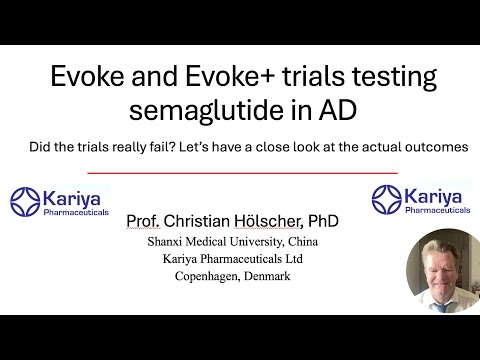
Here’s the video, worth watching (and short):
2 Likes
Very interesting. The issue is duration and intensity of therapy to show a result. A positive result should not be improvement, but should be slowing in the expected rate of decline.
I suspect that just like statins for CAD, it may take many years of therapy to show results.
However, my major interest is in prevention - I personally don’t manage any individuals who already have a diagnosis of AD, but do take care of individuals who have PD, but without advanced disease.
3 Likes