Hi, I typically use this protocol here Using AI for Health and Longevity and Research - Your Favorite Prompts - #17 by RapAdmin
do evaluate a transcript of the video, to save time and to fact-check the claims.
Here is the result from ChatGPT:
A. Executive Summary
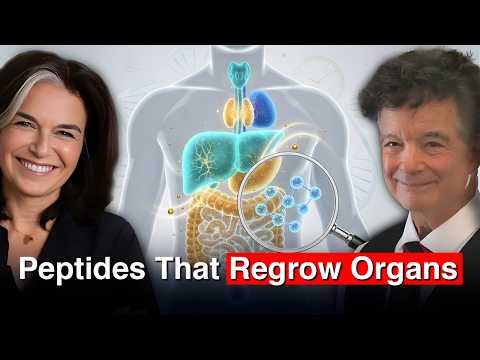
This episode features Dr. Bill Lawrence presenting long-awaited results from an 8-year telomere study and a 5-year epigenetic (DNA methylation) study evaluating Russian-discovered bioregulator peptides. Trained directly under Professor Vladimir Khavinson, Lawrence situates his work as a U.S.-based confirmation of decades of Soviet and Russian clinical research originally developed for military, spaceflight, and occupational health resilience.
Bioregulator peptides are short, organ-specific amino acid sequences derived from animal tissues that allegedly home to corresponding human organs, modulating gene expression, DNA repair, and tissue regeneration. Lawrence argues they act as normalizers, not stimulants—restoring youthful cellular function rather than boosting or suppressing systems.
Central claims include:
- Dramatic mortality reductions (up to ~50–60%) in elderly populations using pineal and thymus peptides alone;
-
Organ regeneration, including retinal tissue in degenerative eye diseases;
-
Biological age reversal or deceleration, measured via telomere length and increasingly granular epigenetic clocks assessing up to 19 organ systems.
Lawrence emphasizes that pineal and thymus peptides consistently outperform others, calling them foundational to all protocols. He reports that oral natural peptide extracts, while slightly less potent than injectable organ extracts, retain ~90% of their long-term telomere effects and are suitable for multi-year use.
Importantly, observed benefits reportedly require long durations (1–4 years), contrasting with fast-acting synthetic peptides. Lawrence frames the intervention not as “anti-aging” but as system-wide repair, aligning with Khavinson’s view that aging cannot be reversed wholesale but can be profoundly modulated at cellular and epigenetic levels.
B. Bullet Summary (15–18 bullets)
- Bioregulator peptides originated in Soviet military and space medicine during the Cold War.
- Peptides are short amino acid chains (2–4 AAs) derived from specific animal organs.
- These peptides are claimed to be organ-specific via receptor “docking” mechanisms.
- Pineal and thymus peptides were the first discovered and remain the most impactful.
- Russian trials showed ~50% reductions in mortality using only pineal peptides.
- Combining pineal + thymus peptides further reduced mortality in older cohorts.
- Effects were observed even when peptides were administered for only ~3 years.
- Lawrence launched U.S.-based confirmation studies beginning ~2017.
- Biological aging was assessed using telomeres and DNA methylation clocks.
- Epigenetic testing evolved from single-age outputs to multi-organ aging profiles.
- Newer labs claim direct measurement (not prediction) of organ-specific aging.
- Protocols are adjusted based on accelerated aging in specific organs.
- Oral natural peptide extracts are ~90% as effective as injectable extracts long-term.
- Synthetic peptides act faster but are less suitable for long-duration longevity goals.
- Peptides appear to normalize function rather than stimulate or suppress systems.
- Claimed mechanisms include restoration of DNA repair systems.
- Reported organ regeneration includes retinal tissue in degenerative eye diseases.
- Meaningful results typically require 1–4 years of consistent use.
D. Claims & Evidence Table
| Claim |
Evidence Presented |
Assessment |
| Pineal peptide reduces mortality by ~50% |
Russian elderly cohort studies (12-year follow-up) |
Speculative (extraordinary effect; limited independent replication) |
| Pineal + thymus peptides reduce mortality to ~33% in ages 75–89 |
Russian “old people” study |
Speculative |
| Bioregulator peptides are organ-specific |
Animal-derived peptide homing observations |
Weak–Speculative |
| Peptides restore DNA repair systems |
Khavinson-published studies (not detailed here) |
Weak |
| Oral peptides are ~90% as effective as injectables |
Internal telomere comparisons shared verbally |
Unsupported (no published data shown) |
| Retinal degeneration can be reversed |
Visual field imaging examples; anecdotal cases |
Weak–Speculative |
| Telomere length increases after peptide use |
Lawrence’s 8-year study (data not shown yet) |
Speculative |
| Epigenetic age can be reversed or slowed |
5-year DNA methylation data (not shown) |
Speculative |
E. Technical Deep-Dive (Relevant)
The proposed mechanism centers on epigenetic modulation and DNA repair normalization. Khavinson’s hypothesis suggests peptides bind nuclear DNA regulatory regions, influencing transcription and improving fidelity of DNA repair machinery. Improved repair theoretically reduces mutation burden, stabilizes telomeres, and restores tissue-specific protein expression. This places peptides upstream of many aging hallmarks—but this remains mechanistically under-characterized in Western molecular biology terms.
F. Fact-Check of Important Claims
-
Mortality reductions of 40–60%: These figures far exceed effects seen with any validated longevity intervention (e.g., statins, caloric restriction mimetics). Independent replication outside Russia is lacking.
-
DNA repair “restoration”: No widely accepted evidence shows peptides can globally reset DNA repair systems in humans.
-
Retinal regeneration: Conflicts with current ophthalmologic consensus; extraordinary claim requiring randomized controlled trials.
Bottom line: The claims are biologically intriguing but extraordinary, and currently rest on limited-access Russian literature, unpublished data, and anecdote. Independent replication, peer-reviewed U.S./EU trials, and mechanistic validation are essential before acceptance into evidence-based longevity medicine.