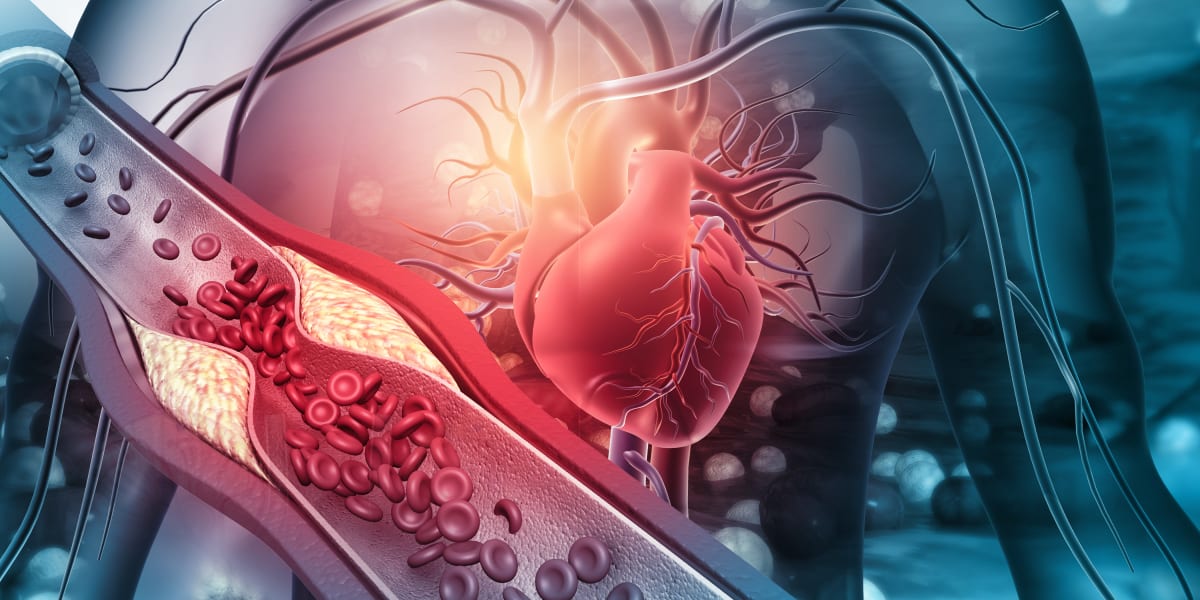
I suspect this Substack article is likely on the right track if we want to significantly lower the biggest risk of premature death in North America:

You already know that keeping your cholesterol level low is a critical part of preventing cardiovascular disease. But what you may not have wondered enough about is: exactly how low is low? And how does anybody know what that number is?

Our “Normal” May Not Be Normal

In the 1950s, British researchers George Shaper and Peter Jones compared rural Ugandans with urban Indians living in the same region. The results were astonishing: rural Africans had cholesterol levels half those of Westerners — and they had virtually no coronary heart disease.

This pattern has been replicated worldwide. Traditional hunter-gatherer societies, rural East Africans, and pre-industrial Pacific Islanders typically show LDL levels in the range of 40–70 mg/dL — levels that would strike many doctors as being extremely, and perhaps excessively, low. Yet heart attacks in these very low cholesterol populations were almost unknown.

Our so-called “normal range” of an LDL of 100–130 mg/dL is not based on evolutionary biology or the dietary conditions that our bodies evolved in — it’s based on what’s statistically common in a metabolically sick population. In other words, what is “normal” in America may be abnormal for human physiology.

Additionally, atherosclerosis can begin forming at a young age, yet this single LDL number does not account for potential cumulative damage. Just how long have your arteries been bathing in LDL particles?

Large-scale Mendelian randomization studies — genetic natural experiments involving hundreds of thousands of people — show a direct, linear relationship between cumulative LDL exposure and cardiovascular events. Each decade of high LDL adds microscopic layers to the arterial wall.

In a JAMA Cardiology analysis, individuals with genetically low LDL levels from birth had a lifetime risk of heart disease up to 3 times lower than those who achieved similar LDL reductions later in life with drugs (Zhang et al., 2021).

An LDL that is within a medically accepted range may still be capable of causing long-term damage.

The Myth of “Dangerously Low” LDL

For decades, doctors feared that driving LDL too low might trigger other problems — hemorrhagic stroke, cognitive decline, or hormone imbalances. (The brain needs cholesterol for the integrity of neuronal membranes, and cholesterol also serves as the backbone for some hormone molecules.)

But massive trials like FOURIER and FOURIER-OLE — involving tens of thousands of patients treated with the powerful, new cholesterol-lowering agent, the PCSK9 inhibitors (evolocumab, alirocumab) — have now rewritten that story. Patients whose LDL dropped below 20 mg/dL had progressively fewer cardiovascular events, with no signal of harm over years of follow-up (Sabatine et al., 2017).

Recent meta-analyses confirm the same:

“Very low LDL-C values are associated with major reductions in cardiovascular events without an increase in serious adverse events.” (MDPI, 2023).

In other words, there’s no scientific consensus on what the lower limit for LDL cholesterol should be— and there’s no credible evidence that LDL levels currently considered “very low” harm the brain or body.

Cholesterol is essential — it forms cell membranes, makes hormones, and fuels the brain’s electrical activity. So how can the brain, for instance, function normally if LDL levels in the blood are lowered considerably? Because blood cholesterol and brain cholesterol are different pools.

About 95% of the body’s cholesterol lives inside cells, not in the bloodstream.
The brain — which contains nearly half the body’s total cholesterol — is behind the blood–brain barrier and synthesizes its own supply locally. Lowering LDL in the blood doesn’t drain cholesterol from the brain any more than closing the highway drains fuel from parked cars.

People with genetic PCSK9 loss-of-function mutations, who naturally have LDL levels of 10–40 mg/dL, can live long, healthy, and, as far as science can tell thus far, cognitively normal lives. The brain is perfectly capable of manufacturing the cholesterol it needs — as long as the arteries aren’t being pummeled with excess LDL from the outside.

Read the full story here:

16 Likes

Great article. I think the most poignant fact is that people who have genetically low LDL in the 10-40 range live normal and long lifespans.

They probably don’t have many heart attacks or strokes either. So their lifespans should be about 2.5 years longer than the average population. Is this the case?

(Avoiding death by heart attack or stroke would supposedly increase lifespan by 2.5 years on average.)

4 Likes

Short answer: Yes

People who are genetically programmed to have lifelong LDL-C in the 10–40 mg/dL range generally do live longer and have dramatically lower rates of cardiovascular disease. But the evidence is genetic-association and natural-experiment data, not RCTs, and there are rare exceptions.

Below is the straight, unsweetened summary.


:white_check_mark: What the evidence actually shows

1. PCSK9 loss-of-function mutations (LDL ~15–30 mg/dL)

This is the cleanest human dataset.

Key facts:

  • Individuals with PCSK9 loss-of-function have LDL levels down to 15–40 mg/dL from birth.
  • They have 60–88% lower lifetime risk of coronary artery disease .
  • Cohort data suggest reduced all-cause mortality, primarily via reduced cardiovascular mortality.
  • No increase in cancer, infection, neurocognitive decline, or hemorrhagic stroke.

This is strong evidence that LDL naturally “set low” from birth is compatible with long life — and usually protective.

Representative studies:

  • Cohen et al. NEJM 2006 (PCSK9 LOF → 28% lifetime LDL decrease → 88% reduction in CAD).
  • Horton et al. JCI 2009.
  • Various population cohorts (ARIC, Dallas Heart Study) follow-ups show normal lifespan or better.

Full response:

5 Likes

It’s more like their levels were decreased by 10-40 mg/dl, not had such low levels. In the Cohen 2006 study the average level was around 70 mg/dl.

1 Like

In a conversation with my cardiologist at Brigham he said basically that there is “no floor” as to how low we should go with LDL in high risk patients or really anyone targeting CVD

11 Likes

So refreshing that doctors are finally starting to appreciate this. Hopefully it trickles down from the Brigham cardiologists to the regular GPs and family doctors and they’ll stop telling you that 110mg/dl LDL-C is nothing to worry about, and just try to eat a bit less fat :wink:

4 Likes

Correct - in high risk patients. It is not so clear that we should take a patient who is at low risk based on our various risk calculators, and has an LDL of, say, 75 mg/dL and prescribe her something that will lower her LDL to, say, 40 mg/dL. We don’t really know that the benefit outweighs the risk in that instance.

Now, some middle-aged guy like me with a history of high LDL scores, with a family history (father’s 1st MI at age 41), with a high CAC score, and with some atherosclerosis (based on imaging, but not enough to justify a stent), the calculation is different. I am in that class of patients your cardiologist was talking about.

I take a statin, ezetimibe, and a GLP-1, and my LDL is currently 33 mg/dL and I wish it were even a bit lower.

6 Likes

My father just got his results back today. His LDL is 37 on 10 mg Atorvastatin, Ezetemibe and BA.

8 Likes

I agree that we don’t know the risk/reward tradeoff here, and it’s actually pretty hard to calculate. But we all have to try.

I come from a family where many adults live quite easily (with many bad habits and obesity) to their late 90s. I’m hoping to push that out an extra 10+ years in good and active health and don’t want heart disease to be a limiting factor, so I want to agressively work towards preventing that issue as its , probabilistically speaking, the highest risk issue I may face.

With a statin, ezetimibe and bempadoic acid my LDL-C is about 46. I’m happy with that right now. When I look at the risk & side effect profiles of these drugs, they are pretty low risk drugs. So - when I look at the risk/reward comparison I see death by heart disease on one side of the scale, and mostly simple issues like increased gastro issues, possibly some muscle soreness, etc. None of which I’m seeing. So the risk/reward for me at least, looks pretty reasonable to continue on this plan.

My biggest concern in the side effect profile is the risk at 0.05% of tendon rupture with Bempadoic acid, so I’ve dug into that in more depth below. I take an SGLT2 inhibitor, so my uric acid level are actually very low, so I have no worries in that area.

Your mileage may vary…

Here are the common side effects of these drugs:

Here’s the straight, clinical, risk-focused comparison of atorvastatin, ezetimibe, and bempedoic acid. No fluff, just the practical side-effect profiles as seen in trials and real-world use.


1. Atorvastatin (Statin)

Risk Profile: Moderate; well-characterized; dose-dependent

Common / Expected

  • Muscle symptoms (myalgia, weakness): ~5–10% clinically; higher in self-reported cohorts.
  • Mild liver enzyme elevations (ALT/AST): up to 1–3%.
  • GI discomfort, headache: minor, transient.

Bottom line: Effective and usually tolerated, but muscle complaints + metabolic effects are the main pain points.


2. Ezetimibe (NPC1L1 inhibitor)

Risk Profile: Very mild; one of the safest lipid medications

Common / Expected

  • Usually nothing noticeable .
  • Occasionally:
    • Mild GI symptoms
    • Fatigue
    • Mild headaches

Bottom line: Among all LDL-lowering drugs, this is one of the easiest on the body. Minimal systemic effects.


3. Bempedoic Acid (ACL inhibitor)

Risk Profile: Cleaner than statins; a few unique metabolic side effects

Common / Expected

  • Increased uric acid:
    • Can trigger gout in susceptible people (≈1–2%).
  • Tendon rupture (rare but real):
    • Achilles most commonly; seen in ~0.5%.
  • Muscle symptoms are uncommon
    • Only activated in the liver (not muscle), so very low myopathy risk.

Bottom line: Good for statin-intolerant patients; watch uric acid and tendons.


Overall Comparison (Practical Ranking)

Safest → More Side Effects

EzetimibeBempedoic AcidAtorvastatin

Most Serious Rare Risk

  • Atorvastatin: rhabdomyolysis
  • Bempedoic acid: tendon rupture / gout
  • Ezetimibe: minimal

Metabolic Effects

  • Atorvastatin: slight diabetes risk
  • Bempedoic acid: increases uric acid
  • Ezetimibe: none

Tendon Rupture Risk

Below is a concise, clinically grounded synthesis of what is known about tendon rupture risk with bempedoic acid, integrating FDA labeling, CLEAR Outcomes trial data, and mechanistic considerations. Evidence is still sparse; patterns are emerging rather than definitive.


1. Known Risk Modifiers (Based on Clinical Trial Subgroup Signals + Analogies to Fluoroquinolone Tendinopathy)

A. Age

  • ≥60 years had higher incidence in CLEAR Outcomes.
  • Mechanistically plausible: age-related collagen turnover slows; tendon elasticity declines.

B. Chronic Kidney Disease (CKD)

  • Higher uric acid elevation and altered tendon matrix metabolism likely increase risk.
  • Most trial cases were in mild-to-moderate CKD (eGFR 30–60), but numbers were small.

C. Elevated Uric Acid or History of Gout

  • Bempedoic acid raises uric acid by ~0.8 mg/dL on average.
  • Hyperuricemia is independently associated with tendon degeneration , particularly Achilles.

D. Concomitant Corticosteroid Use

  • Although not formally quantified in the trials, steroids are a well-documented cause of tendon weakening.
  • Reasonable to assume risk is additive.

E. Fluoroquinolone Exposure (Recent or Repeated)

  • No trial data linking the two, but tendon tissue vulnerability persists for months after fluoroquinolone use.

F. High BMI / Metabolic Syndrome

  • Observational literature (not specific to bempedoic acid) shows increased Achilles tendinopathy risk.
  • Possibly due to systemic inflammation + mechanical load.

2. Other Predisposing Conditions (Biologically Plausible but Not Fully Proven)

A. Diabetes or Prediabetes

  • Glycation of collagen and impaired tendon repair are known issues.
  • CLEAR Outcomes showed slightly higher rupture rates in diabetics , but data are thin.

Full CGPT Response here:


2 Likes

Unfortunately, I think I have Achilles Tendinopathy. I’ve been trying to avoid it, but my Achilles tendon in my left foot keeps having shooting pains when I walk and it’s only getting worse. I guess I need to lay off the BA for a while. :frowning: I’ve been afraid I will collapse while walking from the sudden shooting pain.

This is supposed to be quite rare, but with my luck, I should go out and buy a lottery ticket.

Hopefully it’s not the BA, but the only other thing I can think of us is that I cross my legs more than I should with that leg.

4 Likes

I would be careful, and pause the BA too… a tendon rupture is pretty bad, and likely a long healing period. Let us know how it goes.

1 Like

N-1 here but the couple times I tried BA I had horrible leg cramps.

For past couple of years, taking Repatha (PCSK9i), and Ezetimibe for lipids and metformin because of the moderately small increase in blood glucose from the Repatha. No problems.

1 Like

In a perfect world, we’d have all-cause mortality (ACM) RCTs for people in your cohort who took these meds or took a placebo. I doubt we will get that in our lifetimes.

For people with high heart disease risk (or sometimes secondary protection - the folks have already had a heart attack), we typically don’t get ACM data, but when we do get it, it has been beneficial. So that is encouraging.

Here is a thought experiment: imagine a high risk group (which is generally who have been studied) had a 1:4 chance of dying of heart disease in the next 10 years, and a 1:100 chance of dying of something else, untreated. That adds up to 25% + 1% = 26%.

Then if the treatments cut their heart disease risk by 50% but tripled their risk of dying of something else, it is still a great benefit. Now their ACM risk is 12.5% + 3% = 15.5%.

But if we treated the healthy person, whose risk profile was 1:50 for heart disease and 1:100 of something else, untreated, and got the same effect, we get 2% + 1% = 3% untreated. Treated suddenly it is 1% + 3% = 4%, actually worse.

(All numbers completely made up, just to illustrate the concept.)

Does it work this way? I doubt it. I suspect it is normally better to treat CVD risk factors, excepting perhaps some edge cases.

As you said, we don’t know the risk/reward tradeoff here, but we have to make our best guess and take our chances. I think your approach is highly likely to be the correct one.

Good luck!

I didn’t know any of this, so thanks for posting. I happen to be on colchicine (gout medicine) for CVD prevention, so it might be something to at least research for those on BA.

It seems you are saying that higher uric acids can contribute to tendon ruptures. I think my level is fine, and I also take dapagliflozin, but what do you try to keep yours below? BA does very little for me, but I will take any help I can get.

I can guarantee it does.
“Uric acid and urea nitrogen are both nitrogenous waste products cleared by the kidneys, and though they have different metabolic origins, their levels are closely linked by shared kidney function. Elevated levels of either can indicate kidney dysfunction.”

Though it won’t affect your EGFR, so you’re left wondering, “Why do I have one marker that says I may have a kidney problem and another marker that indicates that my kidney function is okay?”

So still another supplement or med, along with creatine, that you may want to stop for a few days before your bloodwork.

1 Like

Dr Attia preaches that ApoB is the parameter to get down. His is around 35, same as 20 yr old, and says you can take Artherosclerosis off the table by getting to these levels of no plaque formation. He takes Repatha, ROSUVASTATINA + EZETIMIBA 10/10 mg to get there. Im 79 and only take ROSUVASTATINA + EZETIMIBA 10/10 mg and Apob is 56. LDL 36. Have to take PCSK9 drugs to get real low. Had CT angiogram 1 yr ago, looking for soft plaque, only found calcified, score of 30. Heart function outstanding. Now I will focus on Metabolism with GLP 3, peptide

4 Likes

Most statin trials are only 4-6 years. But lifelong lowering of even a little bit produces massive reductions in mortality. From abstract -

Sequence variations in PCSK9, low LDL, and protection against coronary heart disease Sequence variations in PCSK9, low LDL, and protection against coronary heart disease - PubMed

these mutations were associated with a 28 percent reduction in mean LDL cholesterol and an 88 percent reduction in the risk of CHD

Of the 9524 white subjects examined, 3.2 percent had a sequence variation in PCSK9 that was associated with a 15 percent reduction in LDL cholesterol and a 47 percent reduction in the risk of CHD

2 Likes

Strongly agree. After all, it’s the number 1 killer, by far, and we understand the mechanisms really well. If all of us believe in probability, it just doesn’t make sense to leave your LDL-C at anything above 70mg/dl unless you have a really really good reason.

4 Likes

Hanging out with this crowd makes me feel like my ApoB of 58 is living life too dangerously. :wink:

Then I talk to my friends in RL who are fine with an LDL of 120 because their doctor said it’s normal.

5 Likes

After investiging, it appears the pain in my left lower calf region may be an ergonomic issue due to a crappy office chair that I am using. I’m still looking into it though.

Here’s hoping it’s not Achilles Tendinopathy.

2 Likes