AI Video Summary
Here is the summary and analysis of the provided transcript featuring Professor Dom D’Agostino.
A. Executive Summary
This interview features Professor Dom D’Agostino and host Nick discussing advanced protocols for longevity, brain health, and metabolic optimization. The dialogue moves beyond basic wellness advice into “elite biohacker” strategies. D’Agostino advocates for the use of melatonin not merely as a sleep aid, but as a potent, non-hormone-suppressing neuroprotective antioxidant that crosses the blood-brain barrier to reduce mitochondrial oxidative stress.
The conversation shifts to creatine, emphasizing its role in brain energy metabolism and longevity. D’Agostino dispels myths regarding creatine-induced kidney damage (distinguishing between elevated creatinine from muscle turnover vs. renal failure) and suggests high dosing (10–20g) for cognitive benefits, ideally taken with food to minimize GI distress.
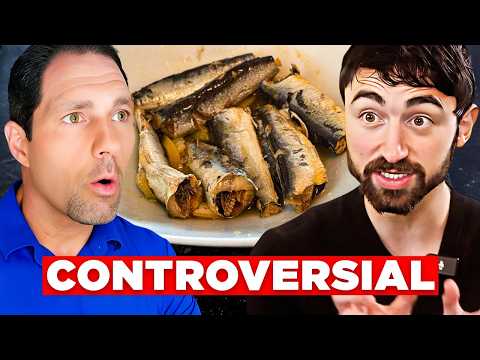
Finally, the discussion conceptualizes “Sardine Fasting”—a nutritional protocol consuming exclusively sardines (approx. 1 can per 50 lbs body weight). This method is presented as superior to water-only fasting for preserving lean muscle mass via four mechanisms: nutritional ketosis, protein intake, FGF-21 signaling, and the anti-inflammatory properties of Omega-3s. The interview concludes by analyzing a case study of a 117-year-old supercentenarian, suggesting that mindset, social purpose, and microbiome diversity (specifically via yogurt consumption) likely outweigh traditional biomarkers like telomere length or LDL levels in extreme longevity.
B. Bullet Summary
-
Melatonin Mechanism: Melatonin is a potent antioxidant that crosses the blood-brain barrier, reducing superoxide production and protecting neurons from oxidative stress.
-
Melatonin Safety: Contrary to rumors, exogenous melatonin does not suppress endogenous production or the Hypothalamic-Pituitary-Gonadal (HPG) axis (testosterone/estrogen) in humans.
-
Creatine for Brain Health: While 5g saturates muscle, higher doses (10–20g) may be required to saturate brain creatine stores for cognitive protection during sleep deprivation or fatigue.
-
Creatine Absorption: To avoid GI bloating, consume creatine with meals (protein/fat) rather than on an empty stomach; avoid taking simultaneously with caffeine.
-
Creatinine False Positive: High creatine intake and muscle mass elevate creatinine levels; this is a metabolic byproduct, not necessarily a sign of kidney dysfunction.
-
Sardine Fasting Defined: A modified fast consisting of sardines and water. Dosage is ~1 can (in olive oil/brine) per 50 lbs of body weight per day.
-
Metabolic Advantage: Sardine fasting preserves lean mass better than water fasting by providing sufficient protein and Omega-3s while maintaining low insulin and inducing ketosis.
-
Heavy Metals: Sardines, anchovies, and mackerel have the lowest heavy metal accumulation (mercury/arsenic) compared to higher trophic fish like swordfish or tuna.
-
Supercentenarian Paradox: A 117-year-old subject exhibited short telomeres, challenging the utility of telomere length as a sole predictor of longevity.
-
Longevity Variables: Mindset, curiosity, social connection, and low-level physical activity (gardening) are likely “multipliers” that amplify biochemical health.
-
Bio-accumulation Trade-off: Farmers exposed to high levels of toxins (glyphosate/DDT) often outlive general populations, suggesting purpose and outdoor activity may mitigate chemical toxicity risks.
-
Lipid Myopia: The medical focus on crushing LDL often ignores inflammatory markers (hs-CRP) and Omega-3 indices, which may be more relevant to health outcomes.
D. Claims & Evidence Table
| Claim Made |
Evidence Provided |
Assessment |
| Melatonin does not suppress natural hormone production. |
D’Agostino cites his own PhD/Post-doc research and lack of human literature showing negative feedback on LH, FSH, or testosterone. Notes suppression exists in hibernating animals, not humans. |
Strong (Supported by current human clinical data). |
| Creatine acts as a brain-energy buffer. |
Explains mechanism of “spillover” from muscle/liver to brain circulation at high doses (10-20g), aiding in sleep deprivation states. |
Strong (Supported by neurobiological consensus on phosphocreatine systems). |
| Sardine Fasting retains muscle better than water fasting. |
Mechanisms cited: 1. Nutritional Ketosis, 2. Protein availability, 3. Omega-3 anti-catabolic effects, 4. FGF-21 release due to protein restriction relative to standard diet. |
Speculative/Plausible (Mechanistically sound, but lacks direct clinical trials comparing sardine fasting to other fasting-mimicking diets). |
| Short telomeres do not preclude extreme longevity. |
Case study of 117-year-old woman with short telomeres but high “epigenetic youth” and metabolic health. |
Strong (Case study data; aligns with evidence that telomere length is a weak mortality predictor in oldest-old). |
| Farming environments increase longevity despite toxicity. |
Anecdotal observation of farmers exposed to glyphosate/DDT living 10+ years longer due to purpose/community/outdoor activity. |
Speculative (Confounding variables like physical activity and selection bias are high). |
E. Actionable Insights
-
Melatonin Protocol: Consider 2.5mg sublingual melatonin primarily for neuroprotection and antioxidant benefits, regardless of sleep issues.
-
Creatine Loading: If targeting cognitive enhancement, titrate creatine dose up to 10g/day, split into meals to prevent GI distress.
-
Timing Creatine: Do not mix creatine directly with caffeine; take it with protein-rich meals.
-
Sardine Fasting Protocol: To reboot metabolism without muscle loss, consume only sardines (skin-on, bone-in, olive oil) for a set period. Aim for 4 cans daily for a 200lb individual.
-
Fish Selection: Prioritize sardines, anchovies, and mackerel to minimize mercury intake while maximizing Omega-3s.
-
Microbiome Support: Look for yogurts containing Streptococcus thermophilus and Bifidobacterium delbrueckii subsp. bulgaricus (referenced in the supercentenarian case).
-
Blood Work Adjustments: Request hs-CRP (inflammation) and an Omega-3 Index test alongside standard lipid panels; do not fixate solely on LDL if inflammatory markers are low.
-
Mindset Integration: Treat social connection, curiosity, and outdoor activity (e.g., gardening) as critical “drugs” for longevity, equal to dietary interventions.
H. Technical Deep-Dive
1. Melatonin as a Mitochondrial Antioxidant
While classically known for circadian rhythm regulation via the suprachiasmatic nucleus, D’Agostino highlights melatonin’s role as a potent scavenger of Reactive Oxygen Species (ROS). Unlike other antioxidants, melatonin and its metabolites can cross the blood-brain barrier (BBB) and cell membranes to enter mitochondria directly. There, it neutralizes superoxide anions ($O_2^{\bullet-}$), mitigating hyperoxia-induced oxidative stress and preserving mitochondrial function in neurons (hippocampal neuroprotection).
2. Creatine Kinetics & Renal Markers
-
Phosphocreatine Shuttle: Creatine supplements increase intramuscular and cerebral phosphocreatine (PCr) stores, facilitating the rapid regeneration of ATP from ADP via creatine kinase. This is critical during high metabolic demand (e.g., sleep deprivation).
-
Creatinine Variance: Creatinine is a breakdown product of creatine phosphate in muscle. High dietary creatine intake or high muscle mass naturally increases serum creatinine. In the absence of reduced Glomerular Filtration Rate (GFR) or other kidney pathology, isolated elevated creatinine is a physiological artifact of supplementation/mass, not renal injury.
3. Mechanisms of Sardine Fasting
This protocol functions as a “Fasting Mimicking Diet” (FMD) with specific macronutrient advantages:
-
FGF-21 Signaling: Moderate protein restriction (relative to a surplus diet) signals the liver to release Fibroblast Growth Factor 21 (FGF-21). FGF-21 enhances insulin sensitivity and induces uncoupling in adipose tissue.
-
Anti-Catabolic Effect: The high content of EPA/DHA (Omega-3s) in sardines sensitizes muscle to anabolic stimuli and reduces proteolysis (muscle breakdown).
-
Ketogenesis: The macronutrient profile (high fat, moderate protein, near-zero carb) maintains low insulin levels, allowing hepatic ketogenesis to occur, providing ketones (acetoacetate/beta-hydroxybutyrate) as an alternative fuel for the brain.
I. Fact-Check Important Claims
Claim: Melatonin does not suppress the HPG axis (Testosterone/Estrogen).
-
Consensus: Verified. Human studies consistently show that exogenous melatonin (even at pharmacological doses) does not alter the secretion of LH or FSH, nor does it affect gonadal steroid production in healthy adults. The “suppression” myth stems from seasonally breeding animals (e.g., hamsters/sheep) where melatonin signals seasonal changes to gonadal function.
-
Correction: None needed; D’Agostino is correct.
Claim: Sardines are lower in heavy metals than Salmon.
-
Consensus: Verified. Being low on the trophic chain (primary/secondary consumers), sardines bio-accumulate significantly less mercury than apex predators (swordfish) and less than mid-tier predators (salmon), though wild salmon is also relatively low.
-
Correction: None needed.
Claim: 117-Year-Old (Maria Branyas Morera) had short telomeres.
-
Consensus: Verified. Research on Maria Branyas Morera indicated her telomere length was not exceptional for her age, yet her epigenetic age (DNA methylation clocks) was significantly younger than her chronological age. This supports the “GrimAge” theory that methylation is a better predictor of mortality than telomere length.