Notícias

RapAdmin

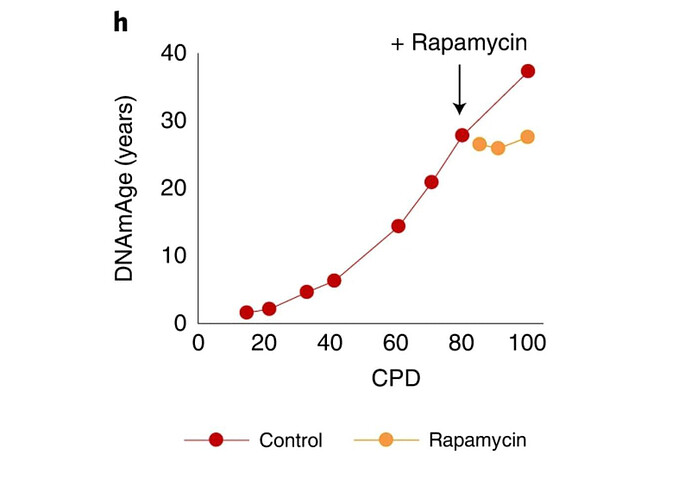
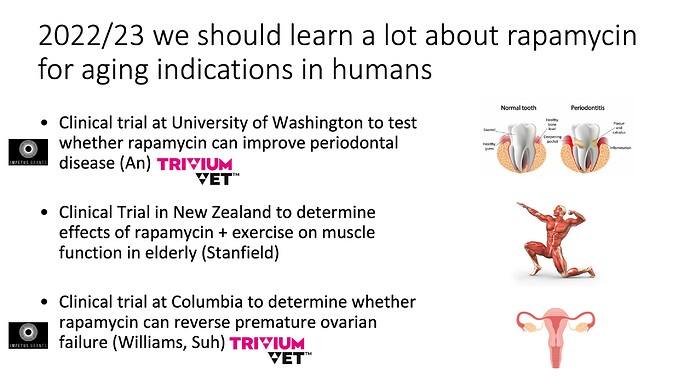
We continue to see a ramping up the clinical validation testing of rapamycin in humans for anti-aging applications. (slide source above from Matt Kaeberlein).

The PEARL clinical study on rapamycin is ongoing with a few hundred participants.

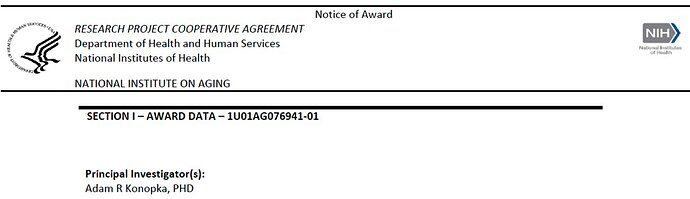
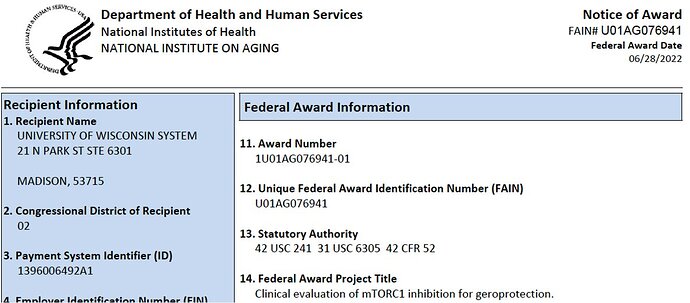
This week Adam announced a new study he is PI on, to test whether a rapamycin analog (rapalog) can improve physiological and molecular hallmarks of aging in humans.

This adds to 3 other recently-funded human clinical trials for rapamycin in different applications:

Jonathan An at the University of Washington got funding for his study on rapamycin for prevention of periodontal disease.

A clinical trial is underway at Columbia University to determine whether rapamycin can reverse premature ovarian failure (improve fertility) in women - as early research has suggested.

Dr. Brad Stanfield (in New Zealand) is working on funding for a study focused on testing rapamycin to delay muscle aging in the elderly.

https://twitter.com/maml_UWMadison/status/1541863463223451650?s=20&t=3SpSjtOiOXetg52Oa7i68g


Dudley Lamming tweeted:

It’s beyond time to rigorously test the hypothesis that#mTOR inhibition can safely promote healthy aging in humans. With@maml_UWMadison and many other clinical & translational researchers@uw_medicine, over the next three years we will find out!

Matt Kaeberlein commented on twitter:

Congratulations to@lamminglab@maml_UWMadison and colleagues. Agree - beyond time. Exciting to see multiple clinical trials starting this year to assess the impact of rapamycin on different age-related endpoints. Guess I need to update my slide before tomorrow…

RapAdmin

Good news for all the rapamycin and SCFA (short chain fatty acids, e.g. inulin) fans…

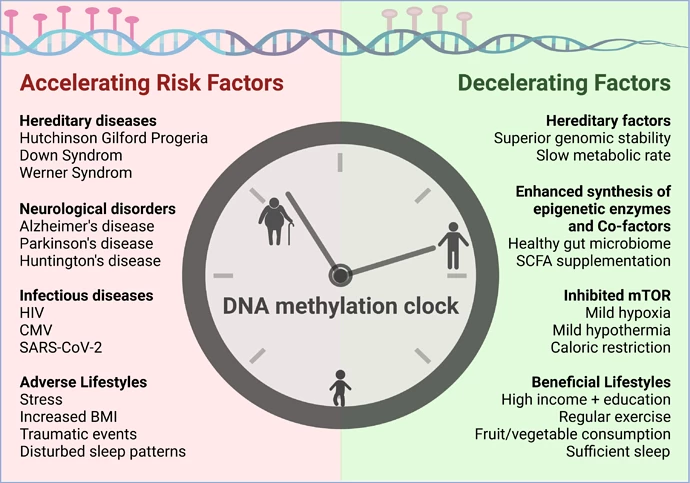
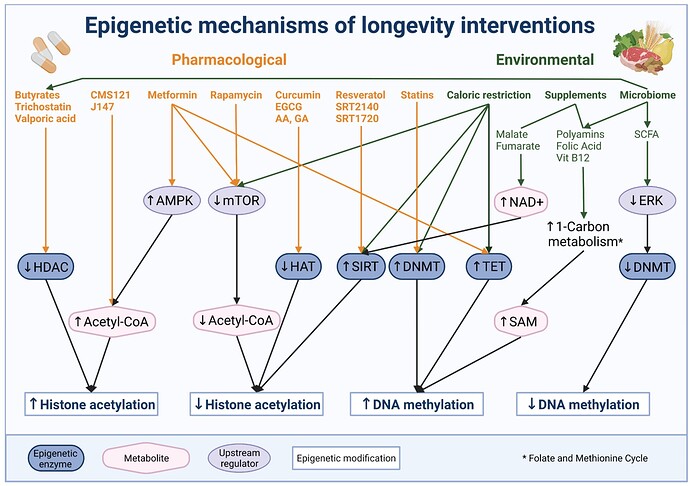
Importantly, a number of other drugs suggested to increase life span impact epigenetic mechanisms [255]. For example, rapamycin, a prominent inhibitor of mTOR, that was shown to increase the median life span of mice by 23-26% [314], does not only cause a corresponding decrease in DNA methylation age [315] but was also reported to directly affect a number of histone marks [316]. Acting through mTOR complex 1 and 2, rapamycin treatment for instance significantly reduces p300 and histone H3 acetylation thereby regulating autophagy and lipogenesis [317,318]. These findings demonstrate that life prolonging effects of rapamycin are, at least partially, mediated via epigenetic alterations.

Metformin, another mTOR signaling inhibitor, is also reported to increase life span in various animal models [319,320]. Originally developed as anti-diabetic drug, metformin is reported to have multiple targets [321]. As one of the targets is AMP-activated kinase, which impacts epigenetics, it is speculated that metformin may impact histone modifications [322]. Indeed, metformin treatment increases histone acetylation, as well as protein acetylation [323] and alters histone marks in different cancer cell lines [324]. Moreover, metformin fosters AMPK-mediated phosphorylation and stabilization of TET2, thereby modifying 5-hydroxymethylcytosine levels and linking diabetes to cancer via an epigenetic mechanism [325]. However, in a longitudinal study employing the DNAm based epigenetic clock of Horvath et al. its effect on epigenetic aging could not be detected in human participants [251]. More work is needed to elucidate whether metformin treatment can attenuate age-associated epigenetic deregulations

Another drug family originally not intended to act on epigenetic aging are statins. Used for decades to lower cholesterol levels in patients with atherosclerotic heart disease, there is evidence that statins also lower DNA methylation through inhibition of DNMTs [326]. Statin-induced epigenetic modifications can result in enhanced expression of genes with anti-atherosclerotic actions and are also reported to prevent silencing of tumor suppressor genes in cancer [326]. The relevance of these mechanisms for the preventive effect of this drug still needs to be assessed. However, in view of these findings, statins might also be considered as epigenetic drugs to extend health span. An overview of pharmacological and environmental interventions and their impact on downstream targets is given below in Figure 4.

Full Paper Here:

https://www.mdpi.com/2073-4409/11/3/468/htm

RapAdmin

Leonid Peshkin, Ph.D., is an unconventional man working at an Ivy League research university in a field he believes is rightfully viewed with “great skepticism” by mainstream biologists. …

The Russian-born Peshkin, who lectures in systems biology at Harvard, wants to make clear he is “not a rotten socialist,” but he does think commercialization in the aging field is killing the science. The great temptation is to form companies that become slave to investors and start hiding the negatives and inflating the positives, he says.

Evidence to date points to two possible ways to extend lifespan and only one of them—the once-obscure immunosuppressive agent rapamycin (sirolimus)—is a pharmaceutical, he says. The other, seemingly more effective remedy is calorie restriction. …

He says he particularly likes one theory, which has yet to be adequately investigated, that rapamycin works by turning on autophagy—the body’s way of cleaning out damaged cells. It’s the same process that gets triggered by intermittent fasting.

..

Peshkin points to an initiative called the Intervention Testing Program (ITP), a multi-institutional program of the National Institute on Aging for evaluating agents (mostly drugs or nutraceuticals) on the aging process in mice. The program launched in 2004, … is the only study out of the hundreds producing lifespan results that is well designed and properly run, he says.

Peshkin doesn’t believe any one drug is ever going to be a cure-all for healthy aging. Rather, he favors the approach of piecing together clues across many different drugs about the important mechanisms behind slowing the aging process.

Drugs As Questions

In addition to ITP, Peshkin credits Longevica with another laudable if oddball initiative that a decade ago put mice on 1,000 different pharmacological compounds to test the effects, if any, on their lifespan. As announced by the company last year, it plans to launch supplements based on its research suggesting five substances significantly increase longevity—inulin, pentetic acid, clofibrate, Proscillaridin A, and D-Valine—by between 16% and 22%.

Leia a matéria completa no link abaixo:

Related Stories on Leonid Peshkin’s Work:

https://hms.harvard.edu/news/age-old-problem

rivasp12

Here’s a very comprehensive look at epigenetic aging well worth the time investment. The 3 variables associated with epigenetic aging: nutrient sensing, stem cells and mitochondrial function have all been shown in various studies to be positively impacted by rapamycin. Some surprises here as well.

““nutrient sensing” rapamycin was used and it was effective in reducing epigenetic age. Mitochondrial and stem cell health was associated with epigentic age, while telomere length, cellular senescence, and DNA breakage did not.”

Read the full paper at the link below:

The relationship between epigenetic age and the hallmarks of ageing in human cells

https://www.nature.com/articles/s43587-022-00220-0

RapAdmin

How an HIV Drug Restores Youthful Memory Linking

A recent study published in Nature reveals that the immune receptor CCR5 and its ligand CCL5 act as a molecular clock in the mouse hippocampus, segregating memories that occur at different times. In aging mice, this chemokine system becomes overactive, prematurely closing the temporal window required to connect related events. By inhibiting CCR5 using either genetic knockout models or the FDA-approved HIV drug Maraviroc, researchers successfully reversed age-related memory linking deficits. This identifies a highly specific neuroinflammatory pathway as a novel therapeutic target for cognitive rejuvenation.

The human brain must balance two competing tasks when processing daily events. It must link related memories that occur close in time to build a coherent understanding of the world, while simultaneously segregating events separated by longer intervals to prevent chaotic associations. Until now, the biological mechanisms that actively separate memories across time have remained elusive. Researchers investigated the dorsal CA1 region of the hippocampus, an area critical for contextual memory. They discovered that learning triggers a delayed increase in the expression of the CCR5 receptor and its ligand CCL5. This increase occurs 12 to 24 hours after a memory is formed.

When CCR5 levels rise, the receptor suppresses neuronal excitability. This dampening effect prevents the same ensemble of neurons from participating in the formation of subsequent memories, effectively closing the temporal window for memory linking.

The critical breakthrough for longevity research lies in the aging data. As mice reach middle age, their baseline levels of CCR5 and CCL5 in the hippocampus increase significantly. This elevated state of chronic neuroinflammation means the temporal window for memory linking is prematurely closed, leading to documented cognitive deficits. To test if this decline could be reversed, researchers administered Maraviroc, an FDA-approved CCR5 antagonist originally developed to treat HIV. When infused into the brains of middle-aged mice, Maraviroc successfully rescued their ability to link memories separated by a five-hour interval. The mice behaved identically to their younger counterparts, proving that this specific mechanism of cognitive aging is not a permanent structural loss but a reversible biochemical blockade.

Context/Source

  • Paywalled Paper: CCR5 closes the temporal window for memory linking
  • **Institution:**University of California Los Angeles (UCLA)
  • Country: USA
  • Journal: Nature
  • Impact Evaluation: The impact score of this journal is 64.8, evaluated against a typical high-end range of 0–60+ for top general science, therefore this is an Elite impact journal.

Leitura Relacionada:

RapAdmin

[updated May 26, 2022]
The Hevolution Foundation is a major new longevity science-focused funding organization that has just been announced. It had been rumored and hinted at by Nir Barzilai and others over the past year that major Middle East money would be the source for the funding for the $40 million TAME study. At the same time there has also been some excitement around the formation of the Hevolution Foundation, a Saudi-backed non-profit that will “provide investments in biotech to incentivize healthspan science across disciplines and borders.” Details are still sparse, but it is apparent that these two developments are likely the same thing and Hevolution is funded with $ Billions of dollars (rumored to be as much as $20 Billion). To put this in perspective, the National Institutes of Health puts only about $300 million/year into the basic biology of aging research (The Division of Aging Biology) and most of that has been on Alzheimers research which has yielded little. Only around $5 million a year is put into the NIA ITP program that tests new compounds for anti-aging effects, the most interesting and promising project in the entire NIA for healthy longevity.

If the rumors are accurate this will be, by far, the biggest funding for longevity science ever attempted. Depending on the exact yearly budget allocation/investment plan this single foundation could be investing many times more each year than the entire US government does in the biology of aging. So this is a really, really big deal. And, finally the required translational human clinical trials for all the successful examples of “drugs extending animal lifespan” studies (e.g. rapamycin, canagliflozin, acarbose, metformin etc.) may get the needed funding to see conclusively if they also work in humans as we expect.

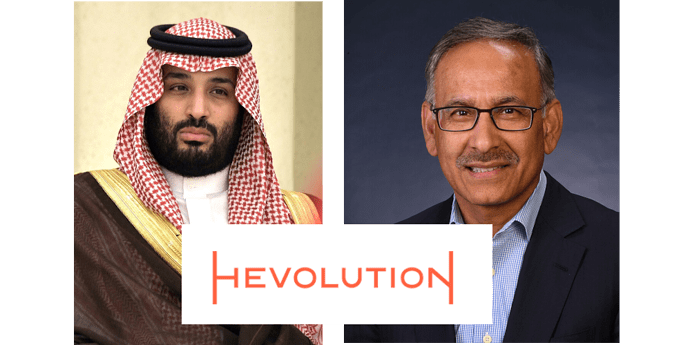
At the American Aging Association Annual Conference in San Antonio today (May 18, 2022), Felipe Sierra (who was the Director, Division of Aging Biology, National Institute on Aging, NIH, but who now seems to have taken over the role of Chief Scientific Officer at the Hevolution Foundation) officially introduced the new endowment for the Hevolution Foundation. The project was initiated (I suspect) at the behest of Saudi Prince Mohamad Bin Salman (MBS) and was pushed through by Royal Decree (the second of such decrees made in the last century, some people say). The formal launch of the foundation will be in a few week’s time.

The Hevolution Foundation aims to be positioned as a global leader, catalyst, partner, and convener, to increase the number of scientists entering the field, to increase the investable opportunities in the field of aging, to help shape the regulatory and government environment

“Its vision is to expand healthy human lifespan for the benefit of all humanity”

Their goals seem to be proactive prevention to keep people from getting sick. And also to address problems in the Geroscience field: insufficient funding, lack of coordination, the difficult regulatory environment, scientific uncertainty (needed research), lack of public awareness. And they will fund research.

The organization itself is a nonprofit. They are still determining big-picture matters such as whether they will form an institute. The name is based on: Health + Evolution = The Hevolution Foundation. The leader of the project is: Dr. Mehmood Khan and he’s already participating in the Longevity Biotech Association. And, I suspect that Hevolution is the source of the $1 Billion investment in the new Longevity Science Foundation in Switzerland.

It will be interesting to see how this organization and its efforts progress. Will it ultimately look more like a non-profit “Softbank Vision Fund” for geroscience and longevity startups, or an aggressive and flexible “National Institute on Aging”? or an “Impetus Grants” organization on steroids? Or a completely new model?

The Good News

Billions of dollars are to be invested in geroscience research to translates the discoveries gained from animal research into therapies for humans. This is truly a huge benefit for humankind and will help move the needle of healthcare worldwide from “sick care” towards true “healthcare”, i.e. keeping people healthier, longer and not just waiting for people to get sick and then treating their diseases.

There are perhaps a dozen drugs and supplements that have, in rigorous studies, already been shown to increase lifespans and health spans in animals. This research has been done over the past decade, and been repeated by multiple labs. These life-extending compounds are revolutionary, but little to nothing has happened since then in the way of validating these compounds in humans. There is a vast unaddressed need for human clinical trials on these compounds (both individually, and in combination) to take them to the next level, to confirm that they work or do not work, in humans.

But in many cases these compounds are generic medications, so there is no financial incentive to do the expensive human clinical trials (but because they are generic, they would also be cheap and easily available for everyone). So to validate these longevity drugs in human clinical trials, and give people an additional 10, 20 or 30 years of healthy life, would be a huge development that would revolutionize healthcare.

The other good news is that it seems like they’ve recruited Felipe Sierra, who was the Director, Division of Aging Biology, National Institute on Aging, NIH. Given his focus at the NIA, he seems like a good hire that adds some gravitas to the team. While this organization is not well defined yet, it would be great to see some leaders with a mindset and track record more similar to Rick Klausner and Hal Barron of Altos Labs who have a history of moving biotech products into commercialization successfully. I hope they balance the team with some younger biotech executives who have more of a sense of urgency than the typical NIH employee. I love the NIH, but it just moves too slowly with far too much bureaucracy.

This new foundation has the potential to really amplify progress in the longevity biotech and longevity drug market, and by doing this begin the transition to a greater focus of healthcare systems on “prevention”. I suspect that all we need is one well-validated longevity drug, and the world’s healthcare systems and the NIH would be awakened to the idea that this is a viable and most cost-effective approach to improving healthy lifespans worldwide. After one longevity drug is confirmed, I believe that the national healthcare systems in all the developed countries will see that this path is the best path for improving its citizen’s health. At that point the vast amount of money that currently goes into disease-oriented sick care, can start to be transitioned into Longevity / Geroscience focused on optimizing health and disease prevention, and the process will speed up dramatically.

The Bad News

While I completely agree with the stated goals of the Hevolution Foundation, I am concerned about a few issues that may get in the way of the success of this new foundation.

While its great to see the large investment into the field, I really wish it could have come from a source with “cleaner hands” than MBS and the Saudi royal family; a group known much more for protecting their self-interests, and killing and imprisoning journalists, than they are for caring about the health and welfare of the rest of humanity. Given all the negative news on Saudi Arabia / Kashoggi, etc. over the past 4 years, there is a large segment of the US and European population that view MBS and Saudi Arabia very negatively. The most recent 2022 Gallup poll saw that only 5% of Americans had a “very favorable” view of Saudi Arabia while 65% of Americans had an unfavorable view. Only 20% of Americans trust MBS to do the right thing in world affairs (and most of that 20% are probably people who don’t follow the news). So, while its great that MBS has seen the potential for longevity science and is investing in it, the best thing he could do now if he wants Hevolution to succeed is to step far away from the organization and let smart people implement the vision. The greater the separation between the Hevolution Foundation and the Saudi Royal family / Saudi Arabia, and the more independent the foundation is, the greater its chance for success. Ideally Hevolution would be headquartered where the research is being done - in Europe or the USA - so that it can move fast, and work in close co-ordination with the researchers, and not be so linked to Saudi Arabia in people’s minds. Conversely, the more closely the Hevolution Foundation is associated with Saudi Arabia and MBS, the bigger the problems outlined below will be.

The only group less trusted than the Saudi government these days are Putin and the Russian oligarchs. And, as it turns out, there is also a strong Russian oligarch connection for the Hevolution Foundation. Evgeny Lebedev, the son of a sanctioned Russian oligarch and former KGB officer, identifies himself as a member of the Hevolution foundation’s Trustees on his UK House of Lords profile. The UK security services don’t trust Evgeny Lebedev; it was reported by The Sunday Times that British security services warned that granting Lebedev a peerage posed a national security risk but Boris Johnson went ahead with it despite the security service assessment. I hope that official news reporters will research what safeguards Hevolution has implemented so that the Russian oligarchs and Putin will not get early access to longevity therapeutics coming out of the organizations that the Hevolution Foundation funds.

And, really, could they have chosen a less inappropriate “public face” of the foundation? I mean choosing a former executive from Pepsico as the public-facing head of a health and longevity foundation is like if Mark Zuckerberg headed up a foundation who’s stated goal was minimizing the harm of social media and digital addiction by teenagers. While Dr. Kahn may be an excellent manager, the irony and negative symbolism of a former executive from Pepsi running a health and longevity foundation will not be lost on people (Pepsi’s products have probably done more to shorten people’s lives than all but those from Coke and Philip Morris - See Pepsi and the Obesity Epidemic). The optics are just bad, and makes the organization’s declared goals seem disingenuous. It would be best to have Felipe Sierra (or someone like him with public health credibility) as the public face of the organization and Dr. Kahn as the COO / Operational leader operating behind the scenes.

And to make things even more suspicious about the organization, if you look around at the cached pages of the Internet you can see that the Hevolution Foundation had a complete website that covered their organization up until recently, and that they have deleted that entire website and removed everything about it (almost) from the web.

Given the many critical and skeptical news stories we’ve already seen around the “Billionaires wanting to live forever” narrative for the Bezos, Thiel, Sergei Brin/Larry Page investments in biology of aging research, I’m sure the press (and some portion of the public) is going to have a field day with this new announcement. Hevolution had better hire a world class PR firm to try to spin away the “Dictators wanting to live forever” issue that has always come up when people point to potential downsides of longevity biotech and geroscience research. To improve public perceptions of Hevolution it would be beneficial to get some added investment from more trustworthy, reputable medical foundations, like The Gates Foundation, The Welcome Trust, Howard Hughes Medical Institute (HHMI), etc. And, if Hevolution really wants to get ahead of the negative publicity, they should also make some serious, significant plans to preemptively address the inequality problem that is inherent in this research (perhaps working with some group like the Stanford Center for Longevity to do this, leverage existing analysis on pharma R&D and pricing, and also create country-by-country lifespan-oriented Gini coefficient). A large percent of the population is skeptical of the idea that longevity science benefits will “eventually” trickle down to the common person, or will do so very slowly, so a plan needs to address this issue and be publicized. While off-patent, small molecule drugs like rapamycin are inexpensive, many other very promising veins of longevity research like cellular reprogramming, gene therapy, stem cell treatments, and young blood factors/plasma dilution are more likely to be very expensive in clinical applications, and may not come down in price much over time.

People are also concerned about “unintended consequences” around longevity biotech. We see frequently that new technologies and innovations result in serious problems that were unanticipated, or ignored early on. The Internet was thought initially to level the playing field so that small businesses and individuals around the world could sell everywhere easily, but it instead greatly enabled the creation of monopolies, so companies like Amazon and Google dominate global e-commerce. Social media was developed with the goal of “building community and bringing the world closer together” but instead it frequently fosters deadly conflict and misinformation, and polarizes people with personalized information bubbles. What does society look like if the top 1% of the wealthiest have life expectancies that increase 10%, 30% or 60% faster than the life expectancy increases of the bottom 95% of the population? Prices for longevity technologies may come down over time, but the wealthy will repeatedly get the most effective and expensive therapies as they become available, so the “lifespan inequality gap” will always grow. And, of course, wealth inequality and lifespan inequality will be mutually reinforcing; the more money you have, the longer you live, the longer you live the more money you get… How long will it be before human society starts looking like that of the bee colony, where the queen bee lives 5 to 10 times longer than the worker bees? What if longevity science identifies a technology that will allow lifespans 10X longer, but costs $10 Million in medical procedures? What if monthly $50,000 “young blood transfusions” allowed 5X lifespan improvement? All indications are that lifespan inequality will quickly become a big problem unless specifically targeted early on. It would be prudent for Hevolution to put some significant investments into groups focused on identifying and modeling potential problems in longevity biotech at the macro level and identify solutions in advance, or find actions that obviate the problems. By doing so, the foundation would signal that they are taking their stated mission seriously, and not hiding behind it to justify MBS’s dreams of living forever.

The aforementioned issues and concerns will also likely negatively impact the Hevolution Foundation’s ability to partner with reputable organizations, and to engage, recruit/hire and motivate the PhDs and Postdocs doing the actual labwork and clinical trials to move the science forward. Its hard to keep people motivated if it looks like the true beneficiaries of geroscience research are most likely to be the guys on the Hevolution board of trustees, and their oligarch, monarch, and billionaire friends. The people who are driving the progress in the longevity field are a group of academics and researchers (many of whom are in California, Boston, London, Singapore, etc.) that tend to be liberal and left-leaning, and the geroscience and longevity biotech markets are hot (Altos Labs, and dozens of new startups are hiring a lot of people, and academic geroscience labs are busy filling the positions of people they’ve lost to the startup companies) so people can, and will, avoid Hevolution projects due to perceived negative associations. Leading geroscientists have many options in the longevity space right now and competition is fierce for talent. Why would any good geroscience researcher work with Hevolution and potentially tarnish their reputation, when they could go to Altos Labs and avoid the taint? Perhaps it will only be the 2nd and 3rd tier researchers that will take money or partner with Hevolution, because of the reputational risk. We will see…

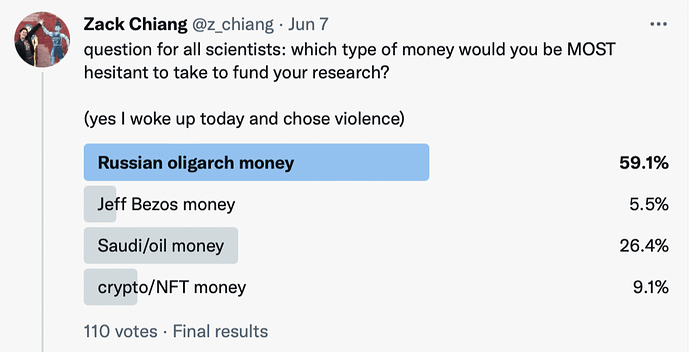
Given that Hevolution seems to be a combination of the Saudi/oil money and the Russian Oligarch choices (because of the Oligarch-son, board member), it seems that this poll suggests that somewhere between 26.4% and 85% of researchers would be hesitant to take funding from the group.

I look forward to the investment in geroscience research, but I’m more than a little concerned about how this is going to play out in the press, and the court of public opinion, which is concerned about dictators, royalty and billionaires being the primary beneficiaries of this research. The increasing health and income inequality in society is a huge and urgent issue in the world today and many people are concerned that geroscience and longevity biotech may make the problem even worse, potentially by an order of magnitude. Public opinion is already largely negative on the issue of significant life extension via biotechnology and geroscience. Longevity science investments by the world’s aristocracy may make society much more volatile if the benefits are not distributed broadly. Most people probably wouldn’t accept a world where their lifespan varies in direct proportion to the size of their bank account. However, an early “win” with a positive clinical trial for a generic drug like rapamycin, metformin, or acarbose, because they are cheap and available, would go a long way in assuaging concerns, and in redeeming MBS/Hevolution, geroscience and longevity science in any detractor’s eyes and help build public and NIH/NHS support and momentum.

Ultimately some of these issues (e.g. dictators living longer) exist with or without geroscience research because the wealthy already have much better medical care (see Saudi Royal family spends $1.5 million for a health checkup at the Mayo Clinic). And the issue of who benefits (e.g many bad people with too much money, oligarchs, etc.) would come up no matter who funded the longevity or even more broadly any who benefits from any medical R&D. On the whole this investment could be a very positive development for most of humanity if it is managed well. The negatives are a matter of degree, not of kind (at least right now). Given that a number of the identified longevity compounds are already generic drugs, I have no question that the public at large has a potential to really benefit from them if they are proven as effective in humans as they are in animals.

If the Hevolution Foundation wants to be seen as focused on helping all humanity, and not just the vanity project of a prince, it needs to seriously invest and address the legitimate concerns that people have about geroscience research.

Humanity will also have to resolve any of the downsides that we do encounter and dictators are a problem today whether they live 70 or 120 years. Even today the children of dictators and royalty (e.g. Kim Jung Un in North Korea) frequently replace their elder family members, so dictatorships are an issue no matter how long the ruler’s life is.


June 7th, 2022 Update:

The MIT Technology Review has posted a new article on the Hevolution Foundation. See below:

But the publication doesn’t cover many of the problems and issues around the Hevolution Foundation’s board of trustees stacked with the royal family, billionaires, and the son of a Russian oligarch, as well as omissions in terms of addressing the open issues that the public is concerned about longevity research - like potential inequalities, unintended consequences, etc. I hope other publications cover these issues in more depth.
RapAdmin

This afternoon I swung by the Bay Area Aging Meeting, which was taking place at UC Berkeley. It was an overflow crowd, and standing room only inside. The general structure of the day was auditorium presentations from geroscience research groups all day, then snacks and drinks outside at 4pm with a chance to talk to a bunch of Poster presenters.

As they state on the Bay Area Aging Meeting website:

Bay Area Aging Meetings are sponsored by the Glenn Foundation for Medical Research. The symposia rotate across host institutions, including Gladstone Institutes/UC San Francisco, Stanford University, UC Berkeley and the Buck Institute for Aging Research. Meetings are open to the public.

Representative faculty members from each institution, who are experts in the aging field, organize the meetings. These one-day gatherings consist of oral and poster presentations by graduate students and postdoctoral fellows from universities and institutes in the Bay Area, who are conducting research on the biology of aging and age-related disease.

While there were a lot of interesting papers presented, my specific interest is more on what might be called “translational geroscience”; the compounds and/or services targeting key aspects of aging that are either already becoming available for people, or which might become available in the very near future. In other words, things that we can take action on today, or very soon.

GlyLo

The only paper/research discussion that I saw where the product is immediately available was a presentation and poster session by the Buck Institute, focused on a supplement combination they called “GLYLO”. The compound (its a mixture that is in the process of being patented by the Buck Institute) has, in mice, seems to extend lifespan, and also help reduce Advanced Glycation End-products (AGEs), reduce weight, improve insulin sensitivity. It seems to be utilizing a new pathway that is not the same pathway seen in caloric restriction, etc. The compound has been licensed to a company called Juvify Bio, and the product is already available on Amazon - see here: GLYLO Healthy Aging & Weight Management Pill.

The company’s web site describes GLYLO as a patented mixture of “generally recognised as safe” micronutrients. Specifically these: 150mg alpha-lipoic acid, 200mg nicotinamide, 15mg piperine, 50mg Vitamin B6 and 100mg Vitamin B1/thiamine (so its pretty easy to purchase these compounds individually if the price for the GLYLO combination product is too high).

Meclizine, Approx 15% Lifespan Increase, mTORC1 Inhibitor

The second presentation of interest was on focused on a novel mTORC1 inhibitor which in the class of drugs called Piperazines. The drug, called Meclizine, (e.g. brand name Dramamine II) is a common over the counter (available for purchase without prescription) drug for motion sickness.

Apparently this drug is an mTORC1 inhibitor that they identified and tested, and which in the NIA ITP program has been revealed to increased mice lifespans by approximately 15% (median lifespan) based on the preliminary data shown with about 75% of the mice deceased (note, this data may be from just one of the 3 ITP sites). The lifespan study is/was being done by Richard Miller and his groups in the ITP program, and the full results have not yet been published or announced.

The results with Meclizine have been good, but they are looking for other drug targets within that general class of mTORC1 inhibitors for something that has a better binding affinity than Meclizine (binding affinity is a key measure of a drug’s ability to target a specific area, the tighter the binding, the fewer “off-target” effects).

Note: In the ITP 2019 study they have been testing 800 ppm in mice). My quick and dirty calculations suggest that 800ppm in mice equates to something like a dose of 300mg/day for a 72kg/160lb human. The key side effect of dramamine is “drowsiness”, so its generally considered a much more benign drug than rapamycin (which can have many negative side effects at high daily doses used in organ transplant and cancer patients).

Another person gave me this dosing calculation (from Louis:

My calculation shows that the ITP fed the mice a human equivalent dose of about 730mg of Dramamine per day for a 70kg person.

Here is the math: The ITP used 800ppm in food (see attached photo). And 800ppm is 0.08%. A typical mouse weighs about 0.025kg and eats about 4g of food per day, so 0.08% is 3.2mg of Dramamine for the mouse per day. That is a dose of 3.2mg/0.025kg=128mg/kg. Divide by 12.3 to allometrically scale to humans, to get a human equivalent dose of (128mg/kg)/12.3=10.4mg/kg. So for a 70kg human, that would be 728mg of Dramamine per day.

So Meclizine looks to be another drug for longevity that people may want to research. If Meclizine has no impact on mTORC2 in long term administration (it showed no mTORC2 inhibition in a short-term assay), it seems that a dosing strategy in humans that might be evaluated would be some sort of dosing combination of rapamycin and Meclizine. Since people only dose rapamycin for anti-aging once every week or two, perhaps there is a dosing strategy where Meclizine is dosed on some of the days that rapamycin is not taken, that would further increase lifespan and healthspan. This seems to be an area ripe for additional research and/or personal experimentation.

Note: Dr. Richard Miller mentioned the Meclizine studies they are doing in this recent podcast interview with him - I’ve queued up the video for where he discusses this at this link here.

Click on this link for details: BAAM Presentations - GLYLO and mTORC1 Inhibitor

RapAdmin

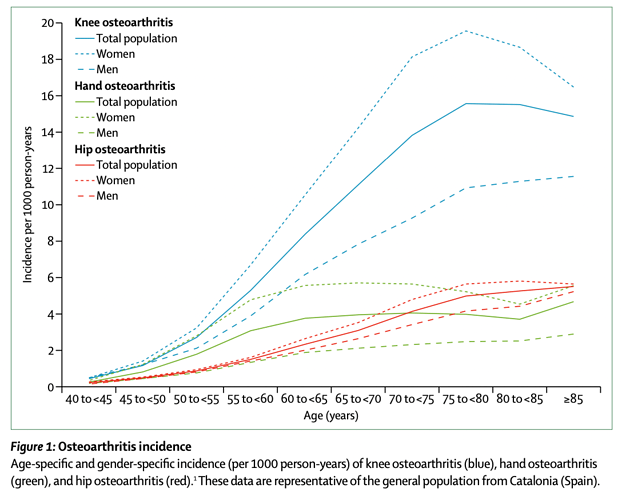
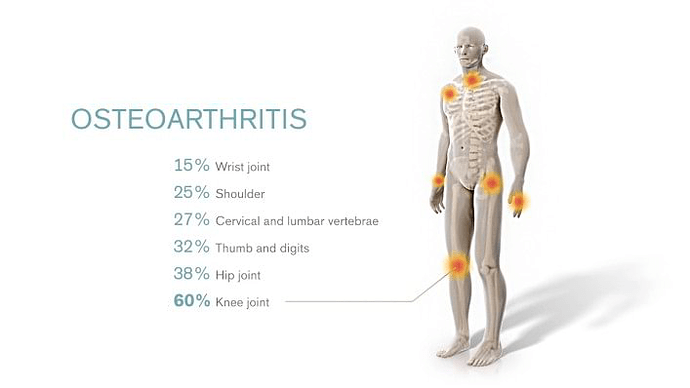
Osteoarthritis is a leading cause of disability and source of societal cost in older adults. Osteoarthritis is a condition that arises increasingly commonly after people age past 50 years, especially in women.

At the American Aging Conference, May 17 to 20, 2022 Dennis Minton is presenting on new research that suggests that rapamycin can delay onset of osteoarthritis.

These preliminary data demonstrate that common marmosets develop bone and cartilage-related hallmarks of OA in an age-related fashion and suggest that treatment with Rapamycin may compress severe OA pathology to late life.

Rapamycin delays age-related osteoarthritis in the common marmoset.

Dennis M Minton, Angela J Marolf, Kelly S Santangelo, Adam B Salmon, and Adam R Konopka,University of Wisconsin-Madison William S. Middleton Memorial Veterans Hospital Colorado State University UT Health San Antonio.

Mechanistic target of rapamycin (mTOR) activity is increased in osteoarthritis (OA), and the mTOR-inhibitor rapamycin (Rap) can attenuate experimental OA in young mice. However, it remains unknown if Rapamycin can protect in a model which better recapitulates the age-related OA most commonly seen in humans.

We evaluated if common marmosets, a translational non-human primate model of aging, can serve as a novel model of age-related OA, and if chronic Rapamycin can decrease OA severity.

Common marmosets (2.6-16.5 years) were orally administered Rapamycin (n=22; 13M/9F; 1mg/kg) or a yogurt vehicle (n=34; 18M/16F) daily from mid-life until natural death. Following necropsy, micro-computed tomography (µCT) and histopathology were performed and graded in a blinded fashion to assign a bone-related OA score and articular cartilage structural damage (ACS) score, respectively. Marmosets were stratified as adult (<8 years), aged (8-12 years), and geriatric (>12 years) for grouped analysis.

In both control (R2=0.18, P=0.01) and Rapamycin-treated (R2=0.54, P=0.0001) marmosets, OA score increased significantly with age. Differences between trendline slopes approached significance between groups (P=0.06), suggesting different OA progression rates between groups, and a longer period unburdened by OA early in life with Rapamycin.

When stratified into age groups, adult Rapamycin-treated marmosets displayed lower OA scores than control (P=0.03), while there was no treatment effect in aged or geriatric marmosets. In the subset of available marmosets (n=36), ACS score correlates with µCT OA score (R2=0.4; P<0.0001). Whole-joint ACS correlated with age in Rapamycin-treated marmosets (R2=0.38, P=0.02) but not in control marmosets (R2=0.12, P=0.12). When stratified by age, there were no significant differences in ACS score in any age bracket, despite adult Rapamycin-treated marmosets displaying ACS scores 50% lower than control (3.10.4 vs 6.02.5; P=0.49).

These preliminary data demonstrate that common marmosets develop bone and cartilage-related hallmarks of OA in an age-related fashion and suggest that treatment with Rapamycin may compress severe OA pathology to late life.

Speaker at American Aging Conference, May, 2022

Related Reading

Rapamycin (RAPA, an mTORC1 pathway blocker) upregulation of Parkin-mediated mitophagy tends to attenuate mitochondrial impairment caused by TNF-α in preosteoblasts. The experiment in vivo demonstrated that the combination therapy with TNF-α neutralizing antibody and RAPA significantly reduced osteoporosis in AIA mice. Drug inhibition of this pathway can be a potential treatment for osteoporosis in patients with RA

.

https://www.sciencedirect.com/science/article/pii/S1567576922008918

RapAdmin

A new research paper suggests that they’ve found the reason why (male) rapamycin users experience a lot more erections (as reported by Matt Kaeberlein previously)…

https://twitter.com/mkaeberlein/status/1431080619186868224?s=20&t=s5oXgCvCuzz2w1SEGVDX_w

A Western style high-fat, high-sucrose diet has recently been used to induce erectile dysfunction (ED) in rodents, in which elevated Nox has been implicated in ED pathogenesis. The objective of this study was to determine if mTOR is an upstream mediator of Nox in the penis in response to the Western diet (WD) and to determine if this pathway is relevant in WD-induced ED.

Results: Erectile function was significantly impaired in mice fed the WD in the vehicle condition, while Rapamycin restored erectile function in the WD condition.

New Paper: Rapamycin Suppresses Penile NADPH Oxidase Activity to Preserve Erectile Function in Mice Fed a Western Style High-Fat, High-Sucrose Diet

https://pubmed.ncbi.nlm.nih.gov/35556456/

RapAdmin

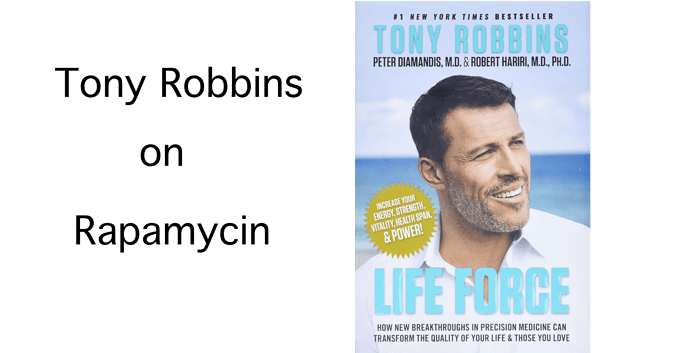
In February of this year, Tony Robbins (with co-authors Peter Diamandis, M.D. and Robert Hariri, M.D., PH.D.) came out with a new book titled “Life Force: How New Breakthroughs in Precision Medicine can Transform the Quality of Your Life and Those You Love.”

It seemed to have a “longevity” spin, and with Peter Diamandis as one of the authors I thought it might be interesting to check out. And of course I was curious if it covered rapamycin at all. I didn’t have high hopes, as most popular longevity books are generally pretty terrible at accurately representing the science.

But, I’ve been pleasantly surprised with the book. It doesn’t got into much depth in any one area (the rapamycin section is only about 7 paragraphs in total) but it generally seems to provide a reasonably good overview of many topics.

And, if the rapamycin section is any guide, its actually pretty accurate. Its not perfect; they seem to have missed the higher lifespan results of the 2009 ITP program studies with higher dose (42ppm) rapamycin that resulted in median lifespan improvements of 22% for males, and 28% for females. But the information other than this one mistake, seems pretty good. You can see for yourself below in this excerpt:

“The second treatment is rapamycin and has been used since 1999 to prevent transplant patients from rejecting their new organs. In 2007, it won additional FDA approval to treat metastatic renal cell carcinoma, the most common kidney cancer. Off-label, it’s widely called upon to protect against graft-versus-host disease and to coat coronary stents.

But what has the healthspan and longevity world buzzing is rapamycin’s unmatched anti-aging track record in animal trials. The National Institute on Aging’s Intervention Testing Program has tested middle-aged mice with dozens of drugs, supplements, foods, plant extracts, hormones, and peptides. Only six substances have shown significant lifespan benefits. Resveratrol, fish oil, and green tea all failed the test. Aspirin did a little better. But rapamycin beat all comers, extending median survival by as much as 18 percent for females and 10 percent for males. When combined with metformin (which had little impact on its own), rapamycin racked up a 23 percent average survival dividend for both sexes, plus a sizable increase in maximum lifespan.

In a study by Dr. Matt Kaeberlein at the University of Washington, a three-month course of rapamycin increased remaining life expectancy in middle-aged lab mice by up to 60 percent. In the healthspan arena, Dr. Kaeberlein and coauthor Veronica Galvan concluded, rapamycin “delays, or even reverses, nearly every age-related disease or decline in function in which it has been tested… including cancers, cardiac dysfunction, kidney disease, obesity, cognitive decline, periodontal disease, macular degeneration, muscle loss, stem cell function, and immune senescence.”

So what’s the catch? At typical clinical doses, rapamycin is part of a powerful immunosuppressant regimen for transplant patients that makes people significantly more vulnerable to bacterial infections. It can impair wound healing. And as yet, there’s no clinical trial data to show that its remarkable lifespan-enhancing results in animals can be replicated in people”
…
“Even so, scientists like resTORbio cofounder Joan Mannick believe that rapamycin—or synthetic facsimiles known as rapalogs—will ultimately break through as a safe and effective anti-aging therapy. The key, Dr. Mannick says, is to use lower and more intermittent dosing than the standard for transplant patients.”

So, overall, a moderate “thumbs up” for the book as an overview for some of the newer and more interesting longevity and health areas that are gaining traction these days.