Notícias

Krister_Kauppi

Here is a snapshot summary of 10 longevity leaders who take rapamycin and their dosing. See also the in-depth post on Longevity Leaders who are taking rapamycin. Have I missed someone? One interesting thing is that most take it weekly and the average weekly dose for females (4.5 mg) and males (8.66mg) is good aligned with the statistics what 346 people are also doing (5.36mg and 7.93mg - see previous post)

Additional Rapamycin Information Summaries

RapAdmin

Periodontal disease (periodontitis) is a chronic oral disease impacting over 70% of older adults, where inflammation of the tissues supporting the teeth results in loss of connective tissue attachment, bone, and ultimately the tooth. The greatest underlying risk factor for periodontitis is age, and its association with other age-related diseases, such as heart disease, diabetes, and Alzheimer disease, highlights the importance of oral health.

Beyond the important health factors, there are also significant visual and cosmetic aspects of dental and oral health. A somewhat common expression for when a person looks “old” is the description of a person getting “long in the tooth”. The reference here is the immediate and significant visual differentiation of younger vs. older people based on the perceived length of their teeth. Two primary factors that make the teeth look longer with age are gum recession and bone loss from periodontal disease. The teeth are the same length, you’re just seeing more of the tooth if structures around them erode. Importantly, both of these issues seem to be reversed by rapamycin. In other words, research suggests that not only can rapamycin improve your oral health, but it may also make you look significantly younger.

Towards these goals, I am trying rapamycin toothpaste to improve my oral health, and prevent oral health issues. In addition to the weekly use of oral rapamycin tablets, I’m going to start trying this rapamycin toothpaste / floss paste, based on the research done previously on rapamycin and oral health: Rapamycin Rejuvenates Oral Health in Aging Mice

There is also a new clinical trial (being done at University of Washington/Jonathan An) trying to further increase oral health with topical rapamycin toothpaste, etc, as outlined in this study initiative: New Study Funded: Towards reversing periodontal disease using Rapamycin

My plan will be to check with dentist measures of tooth pocket depth and compare over time, pre and post treatment.

On the next page I document my step by step process for creating my rapamycin toothpaste and flossing paste (I’ll dip my floss sticks into the formulation prior to use, and before brushing).

Read More: DIY Rapamycin Toothpaste / Flossing Paste

RapAdmin

Our latest survey of our Rapamycin User’s Group members has been started and in early results suggests that approximately 87% of people who have tried Rapamycin are likely to continue to use the medication (adding up the “Very Likely” and “Somewhat Likely” groups of respondents). An additional 3% say they are undecided, and 10% say its unlikely they will continue with the drug.

Typical discontinuation rates for medication is in the range of 25% to 50% (see sources here and here) so by that measure Rapamycin is doing extremely well. And, the typical medication compliance rate is only about 40% to 50% according to academic studies, so compared to that statistic the rapamycin intent to be compliant with the medication seems very high.

Whatever the case, the vast majority of rapamycin users are saying that, based on the research studies they’ve read, and their personal experiences, they’re going to continue with the rapamycin for the foreseeable future.

See the full survey results here (and please contribute answers to the survey if you are taking rapamycin, as the survey is still open): Rapamycin User Survey #2.

Last week we initiated the first survey on typical rapamycin use patterns and dosing (and please answer the questions if you have not completed the survey yet): Rapamycin User Survey #1.

RapAdmin

Rapamycin continues to be the most compelling drug in the anti-aging / longevity field because of its high level of effectiveness, its low cost, and its worldwide availability. Given the many years of successful animal studies, human clinical research is now being initiated at an increasing rate (though it will likely take years for us to see the final results). Today three new human clinical studies were announced and fully funded by the Impetus Grants (in partnership with The Hevolution Foundation). Given the increasingly rapid adoption of rapamycin by thousands of people for anti-aging applications (off-label), there remains an immediate need for a large scale, double-blind, placebo-controlled human clinical study.

Multi-omic biomarkers and mechanistic insights from a clinical evaluation of rapamycin in women

Professor Yousin Suh, Professor Zev Williams (Columbia University)

In the previous Impetus grant round, two teams were awarded funding to conduct a double-blind, randomized, placebo-controlled trial to evaluate the ability of rapamycin to extend women’s reproductive health at Columbia University (PI, Zev Williams) and to reverse periodontal disease at the University of Washington (PI, Jon An). Leveraging these clinical trials, the team from Columbia University will conduct multi-omic analyses of clinical samples obtained from the same study population, with the goals of identifying robust biomarkers and deriving mechanistic insights from a clinical evaluation of rapamycin treatment for women’s health.

Related, See: Women Taking Rapamycin for Enhanced Fertility / Menopause Prevention?
e: The Case for Rapamycin, and Female Fertility

Clinical Evaluation of mTORC1 inhibition for Geroprotection: Biomarker Study

Professor Adam Konopka, Professor Dudley Lamming (University of Wisconsin-Madison)

This Phase 2, double-blind, clinical trial aims to identify how mTORC1 inhibition influences physiological and molecular hallmarks of aging across multiple tissues and systems. The team also aims to determine if proposed biomarkers of aging are amenable to mTORC1 inhibition and identify key biomarkers for future geroscience-guided phase 3 clinical trials.

and

Geroprotective effects of rapamycin on inflammaging in older adults with periodontitis

Professor Jonathan An (University of Washington), Professor Vandana Kalia (Seattle Children’s Research Institute)

The project will complete longitudinal immune profiling at a single-cell level in clinical trials of humans taking rapamycin.

Related article: Rapamycin Rejuvenates Oral Health in Aging Mice
Related article: New Study Funded: Towards reversing periodontal disease using Rapamycin

RapAdmin

We’ve done our first Rapamycin user survey on the site, with a focus on the short-term benefits and side effects. Measuring any lifespan and/or healthspan improvements will, of course, take much longer to accomplish. You can see the full survey results by going to our survey page. Please answer the survey if you are taking rapamycin.

If you have ideas for future survey topics and measures, please post them and we’ll try to incorporate them in future user polls / surveys.

More in-depth information on rapamycin user-perceived benefits and side effects are included in the Rapamycin Frequently Asked Questions and Answers, here: Anti-aging Benefits of Rapamycin, Personal Experiences and here: Side effects seen with Rapamycin.

Elizabeth_Kirby

Rapamycin, one of the most promising geroprotective drugs that was originally used as an immunosuppressant in transplantation patients, is now being tested for many uses, including hair regeneration. One study found that not only does rapamycin stimulate hair regrowth, it can also partially reverse hair graying. EGCG is a polyphenol found in green tea and a potent antioxidant that has shown effectiveness against various conditions, including androgenic alopecia.

I hope it works in people too, and there is data that suggests it likely will: Rapamycin for Hair Growth and Hair Pigmentation

And this could be combined with the minoxidil oral medication that seems to have very good effects, as recently reported: Minoxidil Tablet, not lotion, for Hair Growth and there are other drugs (in a topical application) that seem to revive stem cells and reverse gray hair. Details here: Reverse Gray Hair, Hair Repigmentation

Research Paper Here:
RapamycinMicroneedlespharmaceutics-14-01404.pdf (3.7 MB)

RapAdmin

Here are a few recent podcasts that touch upon rapamycin; below I’ve linked directly to the section on rapamycin in each video.

A good intro and overview of rapamycin by Peter Attia if you’re new to the topic. And Valter Longo provides a contrarian view on rapamycin (at least contrarian to what most of at this site believe). The next in the series is the recent Tim Ferriss podcast with Matt Kaeberlein that covered a lot of rapamycin research, and the last podcast link is the StemTalk podcast interview with Matt.

And if you have questions about rapamycin, be sure to check our Rapamycin Frequently Asked Questions and Answers section. Its updated regularly, and you can always reach it at the top of the homepage of the site (on desktop/laptop and tablet computers, but not visible on phones).

And if you like podcasts, be sure to visit our full list of them: The Best Podcasts Focused on Health and Longevity.

Peter Attia on Rapamycin (on Rich Roll Podcast)

Valter Longo on Rapamycin (on Rich Roll Podcast)

Matt Kaeberlein on Rapamycin (and more) (on Tim Ferriss Podcast)

Matt Kaeberlein on Rapamycin (and much more) on the StemTalk Podcast

https://www.ihmc.us/stemtalk/episode-139/

RapAdmin

The Longevity Forum podcasts look interesting. I had not heard of them before, but they seem to cover everything from longevity biotech, to longevity inequality, retirement and much more (and in some cases covering similar areas as does the Stanford University Longevity Podcast).

In the latest Longevity Forum podcast (see link at bottom of this post) we hear from Kristin Fortney at BioAge who we’ve covered here and here, and James Peyer at Cambrian BioPharma here. As might be expected, rapamycin is a topic of conversation; in this case because Cambrian is hoping to come up with a similar mTOR inhibitor that can provide greater inhibition and fewer off-target effects.

This most recent podcast got me thinking about how the typical person here in our forums who is interested in anti-aging (longevity) drugs might best take advantage of the progress in human testing of these new compounds as these companies work through, report on, and ultimately complete their clinical testing programs.

It seems that one way that individuals might be able to get faster and lower cost access to something functionally similar to these new drugs being developed by BioAge and Cambrian (and many other longevity biotech companies) is to identify the pathway / targets of the drugs that they are putting through clinical trials, then identify other drugs that have already been FDA approved that target the same pathway with similar or better efficacy. Ideally, of course, these approved drugs would already be off-patent, and therefore inexpensive.

As an example, BioAge labs discusses on their website their drug development pipeline. Regarding one of the specific drug candidates they note:

“Apelin is a small secreted peptide hormone that regulates multiple aspects of muscle physiology, including cell growth and survival, regeneration, and repair. BioAge’s analysis of our proprietary longitudinal aging data revealed that higher apelin signaling activity correlates with improved muscle function, reduced frailty, and longer lifespan. Apelin levels decline with age, and activation of apelin signaling reverses age-related sarcopenia in mice. BGE-105, an oral agonist of the apelin receptor APJ, could ameliorate muscle aging”.

Perhaps there are already small molecule drugs on the market today (for other indications) that are an agonist of the apelin receptor APJ. If we can identify these drugs (that may be generic, like rapamycin and everolimus) we may be able to get access to similar drugs at much lower cost, and much earlier than waiting for FDA approval of the proprietary compound from BioAge.

Similarly, BioAge has in-licensed a drug they call BGE-175, a DP1 receptor antagonist discovered by Shionogi & Co based in Japan. BioAge has identified it (through their multi-omics screening process) as a good potential drug for reversing or countering immune system aging. The drug was originally developed for treatment of asthma and the Japanese company took the compound successfully through phase 2 human clinical trials in Japan (so we know its safe), but then the drug failed in a phase 3 trial for asthma. If it looks like BGE-175 is effective at Immune system aging, then biohackers could look for other drugs that are also DP1 receptor antagonists, that might function in the same manner and with the same benefits as BGE-175.

In essence, we biohackers could take the reverse approach that Cambrian is doing with their mTOR inhibitor effort. Whereas they have seen the success of rapamycin in longevity and are seeking to find a molecule that is even better than rapamycin with lower side effect that they can patent. Biohackers can follow their research, then look for preexisting drugs (e.g. in the Anti-aging Drug Database or other drug pathway databases) that target the same pathways or receptors, and would likely provide similar benefits to the new molecules that companies like BioAge and Cambrian are identifying, but earlier and at a fraction of the cost of the new drugs.

LongevityForum website: https://thelongevityforum.com

Latest Podcast:

Kristen: “We’re just at the tip of the iceberg, and there are a lot of promising, complementary mechanisms that can work together to impact aging."

Full list of their podcasts:

RapAdmin

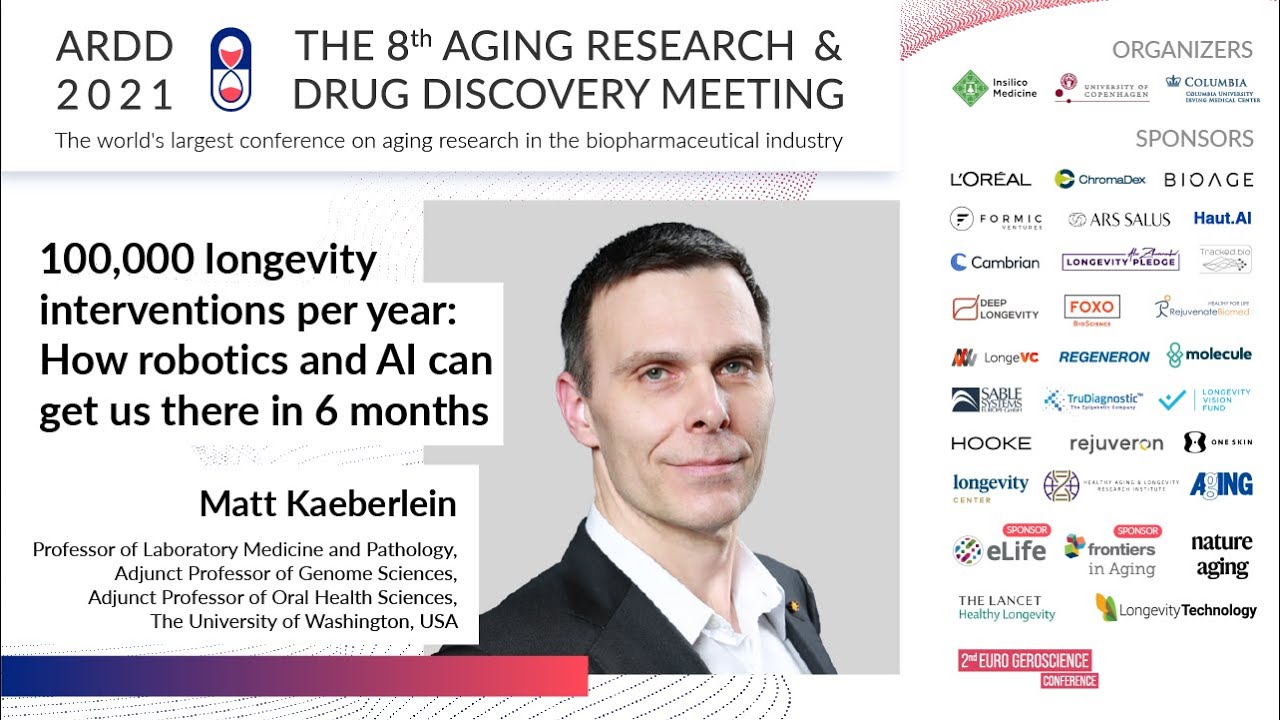
Matt Kaeberlein is starting a new longevity biotech company with another University of Washington researcher Mitchell Lee (CEO), based on their work on high-throughput drug target screening using c. elegans (nematode worms that live 10 days), and artificial intelligence.

I think this new effort is based on the past work that Matt presented at last year’s ARDD meeting - see video below. This sounds like an approach that is very much needed right now, to greatly increase the number compounds evaluated for possible longevity benefits. This process seems that it could greatly speed the process of identifying candidate drugs and compounds (and combinations of compounds) that provide longevity benefits, and then ultimately to get the identified compounds to market faster.

Its likely that the company will patent the drug candidates and combinations that they identify in this process, and will then either out-license the compounds for commercialization by other companies, or continue on with the testing and clinical trial process towards commercialization themselves.

Mitchel Lee clarified in a tweet below that their focus is on combinations of compounds. And this clarification is important as it is truly a huge issue that they are addressing. As we’ve seen here in our own forums, everyone who is taking rapamycin (for example) is likely already taking, or very interested in taking, other compounds (supplements or drugs) for longevity. But the key problem we quickly run into is that we have little or no data on how these different compounds work together. So the testing of all different combinations of compounds is key for human translation.

Ora Biomedical is the only new company is the only one I’m aware of that is focusing on this huge issue. Its a very important addition to the field. See: The Challenge of Predicting Outcomes when Mixing Longevity Therapeutics - How are you thinking about this?

Ora Biomedical’s business plan sounds a little bit like that of the company “Longevica”, but will be screening many orders of magnitude more compounds, in a much shorter period of time, which sounds like a winning strategy. Ora Biomedical’s plan also sounds very similar to that of Gerostate Alpha, a spinout of the Buck Institute that also plans to use c. elegans for screening and identifying longevity compounds, but Gerostate Alpha seems to have raised only a small amount of funding, and its not clear to me how much time and effort the Buck Institute founders are actually putting into this effort. See Gerostate Alpha website. It seems increasingly like all the Buck Institute researchers have side gigs / longevity biotech companies that they do in addition to their “day jobs”. Doing a startup company as a part-time job is not typically a model that has a track record of success (at least in the technology startup world where I’m from), given the amount of work that a startup demands is typically orders of magnitude over that required in a typical job. But, I also know that in the academic / biotech / longevity research field spinout efforts like Gerostate Alpha are more common, as the academics typically don’t want to give up their tenured positions to join the risky startup, and instead they function more like scientific advisors to the new startup.

Mitchell Lee also comments:

https://twitter.com/mitchellblee33/status/1542597314925105152?s=20&t=cWjk3XCt5LsqyZSEvULgIw

@mkaeberlein introducing the longevity biotech community to Ora Biomedical, a new pharma company using massively high-throughput drug screening to identify the next generation of healthy aging therapeutics!!! Great talk Matt!" from Mitchell Lee tweet.

See video: 100,000 Longevity Interventions per year: How Robotics and AI can get us there in 6 months.

RapAdmin

We continue to see a ramping up the clinical validation testing of rapamycin in humans for anti-aging applications. (slide source above from Matt Kaeberlein).

The PEARL clinical study on rapamycin is ongoing with a few hundred participants.

This week Adam announced a new study he is PI on, to test whether a rapamycin analog (rapalog) can improve physiological and molecular hallmarks of aging in humans.

This adds to 3 other recently-funded human clinical trials for rapamycin in different applications:

Jonathan An at the University of Washington got funding for his study on rapamycin for prevention of periodontal disease.

A clinical trial is underway at Columbia University to determine whether rapamycin can reverse premature ovarian failure (improve fertility) in women - as early research has suggested.

Dr. Brad Stanfield (in New Zealand) is working on funding for a study focused on testing rapamycin to delay muscle aging in the elderly.

https://twitter.com/maml_UWMadison/status/1541863463223451650?s=20&t=3SpSjtOiOXetg52Oa7i68g


Dudley Lamming tweeted:

It’s beyond time to rigorously test the hypothesis that#mTOR inhibition can safely promote healthy aging in humans. With@maml_UWMadison and many other clinical & translational researchers@uw_medicine, over the next three years we will find out!

Matt Kaeberlein commented on twitter:

Congratulations to@lamminglab@maml_UWMadison and colleagues. Agree - beyond time. Exciting to see multiple clinical trials starting this year to assess the impact of rapamycin on different age-related endpoints. Guess I need to update my slide before tomorrow…