Notícias

RapAdmin


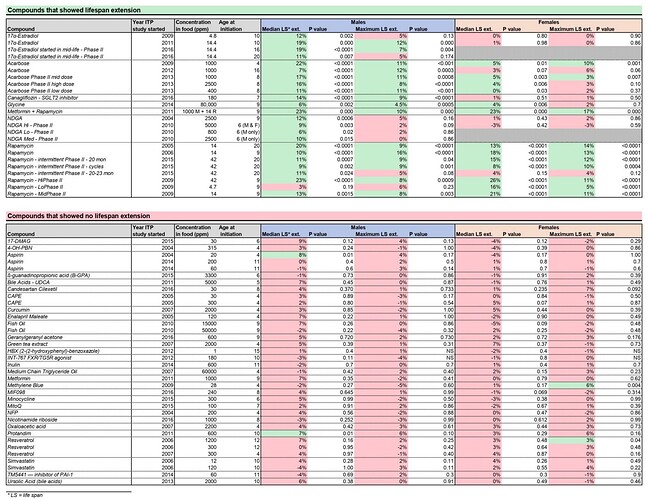
A good new review article by Apollo Health Ventures on the most promising Longevity drugs… (sent to me by @ajmch ).

The ability of rapamycin to extend lifespan so dramatically, even when given later in life, became one of the most important discoveries in geroscience at that time. Later, rapamycin in similar dosage was also tested in mice starting from 4 month of age. Amazingly, the results closely resembled those of the late-stage treatment. In yet another ITP study, in 2009, rapamycin administered to young mice in a higher dose led to a maximum lifespan increase of 8% in males and 20% in females and a median lifespan increase of 22% in males and 28% in females.

Today rapamycin is one of the best-known molecules in the longevity field. It works, at least in part, by inhibiting mTORC1 (mammalian target of rapamycin complex 1) which regulates cellular growth signaling and autophagy. Simply put, rapamycin tells cells to switch from growth to repair and maintenance.

… we at Apollo Health Ventures believe that rapamycin holds great promise, and we are very excited about these studies.

some doctors may be prescribing rapamycin off label already, as an anti-aging supplement particularly to prevent/delay Alzheimer´s and treat osteoarthritis.
…
In the most recent ITP trial, still unpublished, combining acarbose with rapamycin led to 29% median lifespan extension in males, the best result to ever come out of the ITP for any sex. The addition of acarbose did not lead to a synergistic effect in females, though.

I found this particularly interesting:

17a Estradiol´s Application in Humans

We at Apollo Health Ventures are very optimistic, given that 17-α estradiol is one of only a handful of drugs that caused life extension in ITP trials. Due to the promising results in animals Apollo Health Ventures (Apollo.vc) has started the company Apollo Alpha Inc. and is currently working on developing 17-α estradiol as a human drug.

Read our detailed report on 17-alpha estradiol here.

Read the full article here: The Most Promising Longevity Drugs To Date

Note, there are many good articles by Apollo Health Ventures in their “Insights” page on Medium that I also recommend people read.

RapAdmin

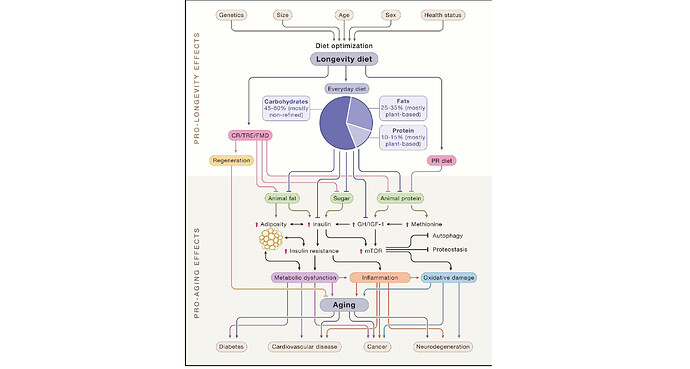
The authors report that the key characteristics of the optimal diet appear to be moderate to high carbohydrate intake from non-refined sources, low but sufficient protein from largely plant-based sources, and enough plant-based fats to provide about 30 percent of energy needs. Ideally, the day’s meals would all occur within a window of 11-12 hours, allowing for a daily period of fasting, and a 5-day cycle of a fasting or fasting-mimicking diet every 3-4 months may also help reduce insulin resistance, blood pressure and other risk factors for individuals with increased disease risks, Longo added.

He described what eating for longevity could look like in real life: “Lots of legumes, whole grains, and vegetables; some fish; no red meat or processed meat and very low white meat; low sugar and refined grains; good levels of nuts and olive oil, and some dark chocolate.”

Summary

Diet as a whole, encompassing food composition, calorie intake, and the length and frequency of fasting periods, affects the time span in which health and functional capacity are maintained. Here, we analyze aging and nutrition studies in simple organisms, rodents, monkeys, and humans to link longevity to conserved growth and metabolic pathways and outline their role in aging and age-related disease. We focus on feasible nutritional strategies shown to delay aging and/or prevent diseases through epidemiological, model organism, clinical, and centenarian studies and underline the need to avoid malnourishment and frailty. These findings are integrated to define a longevity diet based on a multi-pillar approach adjusted for age and health status to optimize lifespan and healthspan in humans.

Read the full story: Click Here > Longevity Diet - New Research

RapAdmin

no-brain·er

INFORMAL
noun: no-brainer; plural noun: no-brainers

  1. Something that requires or involves little or no mental effort.
  2. An easy or obvious conclusion, decision, solution, task, etc.; something requiring little or no thought.

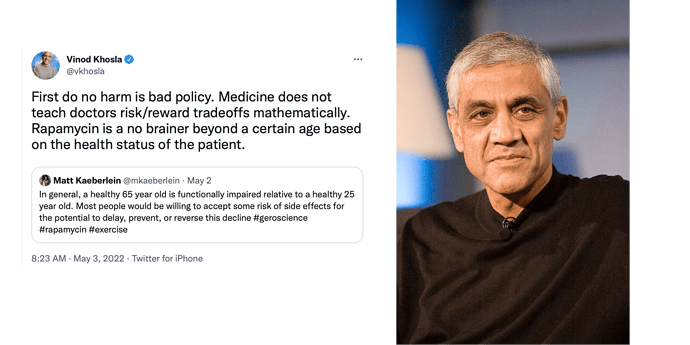
While there are many tech entrepreneurs and longevity experts who are enthusiastic about rapamycin (including Tim Ferriss, Kevin Rose, Brian Armstrong of Coinbase, Peter Diamandis, David Sinclair and Peter Attia and other health and longevity experts), this is the first we’ve heard from Vinod Khosla and his very positive assessment of people’s use of rapamycin.

Vinod’s position on rapamycin is important for a few reasons:

  1. Over the past four decades Vinod has repeatedly shown he’s an extremely astute evaluator of risk / reward. First he was a co-founder of Sun Microsystems and helped grow that company into a multibillion dollar business. Then Vinod joined Kleiner Perkins, the legendary venture capital company, and still later started his own VC firm (Khosla Ventures) which has grown into a significant and successful force in the industry, in the process increasing his net worth to an estimated $6.5 Billion according to Forbes magazine.

  2. He is a leading investor in the longevity biotech market, so he and his team are sophisticated and experienced in the issues, pathways and technologies in longevity biology. In the past decade he has increasingly focused on innovative healthcare and biotech startups with investments including BioAge Labs, Loyal, the dog aging company, Fountain Therapeutics, Turn Biotechnologies and Cellino Biotech. And he has the support of an entire team of biology and medical experts so his opinion on rapamycin is likely not something formed from just a cursory review of the literature. His team of bio/medical professionals includes: Alex Morgan, Gwen Cheni, Hesam Motlagh, Jun Jeon, Samir Kaul.

  3. He has nothing financial to gain from his support of rapamycin, in fact quite the opposite - his investments in other longevity biotech companies suggests that he would actually be hurt financially if rapamycin (an extremely low-cost, generic medication) is successful in becoming widely adopted, because it makes the adoption of the products by these new longevity biotech companies more difficult (due to greater competition).

  4. Lastly, Vinod has increasingly been focused on philanthropy related to health and well-being (recently donating $10 Million towards India’s Covid 19 battle) - so he obviously has considerations beyond just making more money.

I saw Vinod Khosla speak at the Rock Health (San Francisco Digital Health Startup Incubator) conference in 2012 - he has an extremely refreshing view on the healthcare and biotech markets, and innovation in this area. I encourage you to watch this video to better understand where he’s coming from. As he says, “Innovation starts on the fringes…” and right now, rapamycin is on the fringes. But in the coming years I expect this fringe to grow into the mainstream, and change the world in the process.

Youtube Video Interview: Keynote Interview with Vinod Khosla - Rock Health Innovation Summit 2012

https://twitter.com/vkhosla/status/1521510762883125249?s=20&t=NDLhoVWXGLxItpb1TIazNg

RapAdmin

Novo artigo de pesquisa que apoia pesquisas anteriores (e por que muitas pessoas pensam que a rapamicina reduzirá o risco de Alzheimer ). Pesquisas em ratos e humanos sugerem que a rapamicina (e o everolimus ainda mais) é capaz de penetrar a barreira hematoencefálica (veja os links no final deste post).

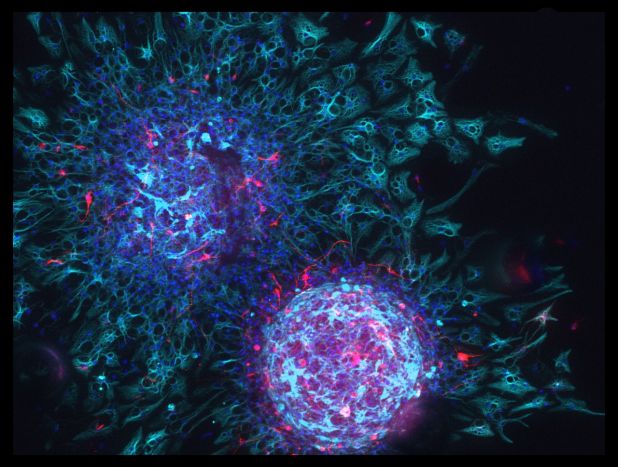
estimular a autofagia pela rapamicina não apenas revitalizou a viabilidade das células progenitoras neurais (NPCs) do adulto médio , mas também facilitou a neurogênese na zona subventricular / subgranular do adulto médio (SVZ / SGZ). Mais importante ainda, a ativação autofágica pela rapamicina também melhorou a sensibilidade olfativa e as capacidades cognitivas em camundongos adultos de meia idade .

https://pubmed.ncbi.nlm.nih.gov/34546510/

Pré-impressão do artigo completo aqui:

Ativação_de_autofagia_ameliorates_idade-relacionada_ne.pdf (1.2 MB)

Leituras Relacionadas:

Para mais discussões sobre isso, consulte este tópico: Rapamicina e a questão de atravessar a barreira hematoencefálica

RapAdmin

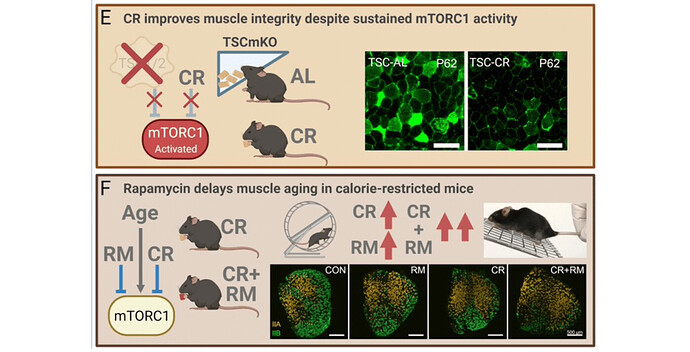
A new research paper came out today with more good news on how rapamycin can slow aging. This time the focus of the research is rapamycin’s effect on muscle aging, and how it could complement caloric restriction, another well-proven anti-aging strategy.

The issue of rapamycin impact on aging muscle has been of significant interest in our discussion forum and there is a good, long discussion thread on the science and personal experiences of people using rapamycin, and its positive impact on muscle. And there is another thread here on rapamycin use with muscle training, etc. (with photos of results).

This new study seems to suggest that fasting, in combination with rapamycin, might provide even more positive impact in terms of slowing the aging of our muscles. This study seems to confirm some of what we (the rapamycin users here) are seeing in our own lives.

Here we show that long-term CR and rapamycin unexpectedly display distinct gene expression profiles in geriatric mouse skeletal muscle, despite both benefiting aging muscles. Furthermore, CR improves muscle integrity in mice with nutrient-insensitive, sustained muscle mTORC1 activity and rapamycin provides additive benefits to CR in naturally aging mouse muscles. We conclude that rapamycin and CR exert distinct, compounding effects in aging skeletal muscle, thus opening the possibility of parallel interventions to counteract muscle aging.

Full paper here: Distinct and Additive Effects of Calorie Restriction and Rapamycin in Aging Skeletal Muscle

https://twitter.com/RueggLab/status/1516392217363251205?s=20&t=3py_cKhu_lyJ4hf2rsRJqw

RapAdmin

Toronto-based Laura Minquini has a company (Mykigai) and a great consumer-focused newsletter focused on the “longevity lifestyle” that I recommend people check out and subscribe to.

This week in her newsletter she summarizes what she sees as the “case for rapamycin” and announced that she will begin taking rapamycin and documenting her results with a specific focus on her fertility. Female fertility aging is an area that has been under-researched and under-invested in for far too long, and I applaud her efforts in this area.

People who are visiting this site probably already know that Rapamycin has a large number of studies showing lifespan extension effects in the range of 15% to 30% in most organisms.

Less well known is that research has shown that rapamycin can help maintain female fertility during aging. While we’ve touched upon this in our post on “The Case for Starting Rapamycin Earlier in Life”, there is good evidence in mice and rats that rapamycin delays (and possibly reverses) reproductive aging in females. Here are some of the studies that report on this benefit:

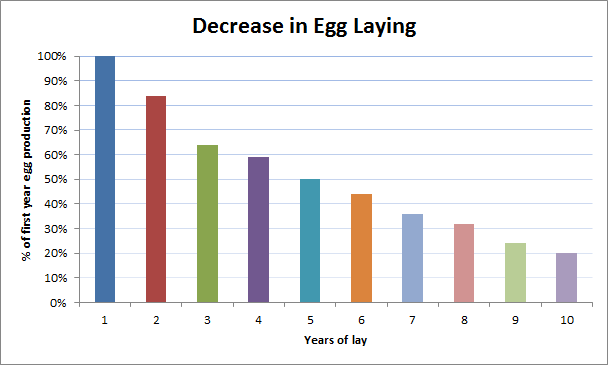
We also have a person experience of one of this website founders’ who has shared that he began giving his chickens rapamycin a year and a half ago on the same schedule that he takes it himself, and his chickens have maintained the youthful egg laying frequency of 1 per day at age 4, when the norm for a 4 year old chicken is 50% to 60% that rate. So, at least in this anecdote, the chickens have retained their youthful egg laying abilities despite their aging. The now 4 year old chicken is still laying eggs at the same rate as when it was 1 year old. This doesn’t mean much scientifically, since its only N=2, but is interesting, and correlates with the aforementioned research.

So, obviously there should be significant interest in Rapamycin for women in their 30s and 40s who are interested in having children and want to maintain their fertility during this time, or into their 50s and even later in life.

As her kickoff story on her personal rapamycin fertility trial, Laura has started with a great introductory article on Rapamycin where she outlines the case for rapamycin and why she’s decided to pursue it now. She’s going to continue to write about her experience going forward, so if you’re interested in this be sure to subscribe to her newsletter.

I think she points to two great “market signals” on why she’s looking at rapamycin now, and why rapamycin is the first, the best (and likely only, for at least the next decade) widely available and inexpensive longevity drug:

Why bet on Rapamycin :money_with_wings:

Aside from the trials and growing interest, I can pinpoint two market signals on its short term potential:

Last year, Unity Biotechnology’s co-founder Nathaniel David declared at the Salt conference (yes, it was a good conference) that the only significant development that will probably happen in longevity the next decade is the “micro-dosing of Rapamycin”. The guy has been in the industry for a while, one would think he knows a thing or two.

I think James Peyer might have been taking notes while in the same panel. Just last month, fresh from a $100 million Series C round, the CEO of Cambrian Biopharma, (the company “building the medicines that will redefine healthcare in the 21st century – therapeutics to lengthen healthspan,”) licensed a Rapamycin-like drug from Novartis.

“The licensed assets are structural analogs of the FDA-approved drug rapamycin, which has been shown to prevent or reverse multiple age-related health deficits in mice and extend their average lifespan by up to 31%.”

I mean, one does not have to be a genius to think Rapamycin is going to be important if you simply “follow the money”.

Here are the highlights of Laura’s rapamycin article:

  • Rapamycin: The Viagra of Longevity
  • A brief history of the drug that was almost left undiscovered
  • Key longevity scientists - so far
  • Reasons it is worth thinking of for longevity
  • Resources and ongoing trials
  • Why bet on it
  • My personal bet

Her story is a great read, and I recommend you check it out.

Read the full article here: The Case for Rapamycin

RapAdmin

mTOR Inbititors and Why Rapamycin is the gold standard for longevity interventions.

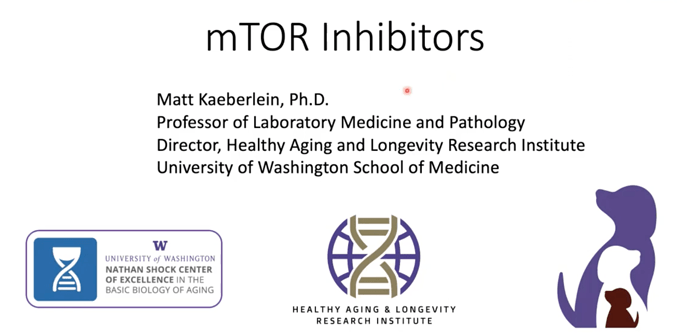
A new video presentation by University of Washington professor/researcher Dr. Matt Kaeberlein discussing rapamycin and other mTOR inhibitors for the Euro-Geroscience Task Force “Challenges in Developing Geroscience Drug Trials” held March 23, 2022 inToulouse, France.

Click here to watch the video

RapAdmin

An interesting new presentation by professor Vera Gorbunova where she discusses her research on profiling the genetic action of lifespan-improving therapeutics so that they can screen for new drugs and compounds that do the same.

And, as is usually the case when looking at anti-aging drugs and interventions, Rapamycin is at the top of the list.

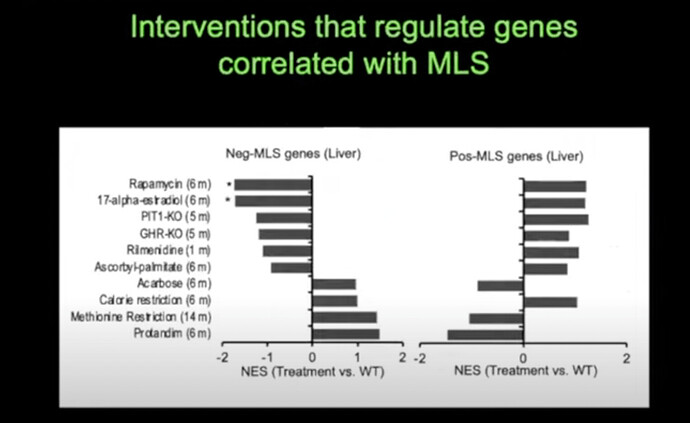
They looked at rapamycin, 17-alpha estradiol, caloric restriction, etc. and found that some interventions work to decrease the activity, or down-regulate the genes associated with shorter maximum lifespans, while up-regulating the genes associated with longer maximum lifespans (MLS). Others, like calorie restriction do a mix of both.

Strangely, some, like protandim and acarbose operate opposite to what we would expect, increasing the function of genes associated with decreased maximum lifespan, while decreasing the genes associated with increased maximum lifespan.

See the YouTube video here: From long-lived animal species to human interventions | Prof Vera Gorbunova

RapAdmin

Dr. Matt Kaeberlein, Dr. Jon An and their teams at the University of Washington have partnered with Dr. Alan Green and other colaborators (including us) and have today launched a new study on rapamycin and its effects on healthy people. The study is being funded by an Impetus Grants.

We encourage everyone who visits here (from anywhere in the world) to participate - whether you are currently taking rapamycin or not (they also need a control group - so if you have any interest in healthy lifespans, please join the study).

Also, please tell your doctor (that prescribed you rapamycin) about the study and encourage him/her to contact the study and get their other Rapamycin-using patients (who may not be aware of the study) to get involved. The larger the number of people in the study, the better the data will be, and the better we can all understand the effects of rapamycin in healthy people.

From Matt Kaeberlein:

We will hold special online Q&A sessions for study participants where I and my colleagues will be available to answer questions and discuss the science around rapamycin and the biology of aging more broadly

To learn more about the study you can visit the study’s Frequently Asked Questions Page.

The study is survey based and consists of short modules that will each take only a few minutes. It does not have to be completed all at once. Collectively, the information will provide us with a better understanding of the effects of rapamycin, particularly its potential effects on the aging process. We are also collecting data from people who do not take rapamycin, so as to have a control group for comparison. Your data will be kept confidential with compliance to HIPAA regulations and we will let you know what our findings are.

Please go to the study website (https://rapamycinstudy.org/) where you will be asked to complete an informed consent. Once this has been done, you will be provided with a unique identifier within 24 hours and directed to the survey.

If you have any questions about the survey or have any difficulties with it, please send an email to rapamycinstudy@uw.edu

Summary of why you should join in the study:

  1. It helps move the rapamycin science forward faster
  2. You get direct access to some of the top Rapamycin reseachers (Matt Kaeberlein et al) via study participant Q&As.
  3. Even non-users of rapamycin are needed for the control group.
  4. Its Quick and Easy - All you have to do are complete some Health/Online Surveys
  5. It just might extend your lifespan 🙂.

Sign up Today: rapamycinstudy.org